


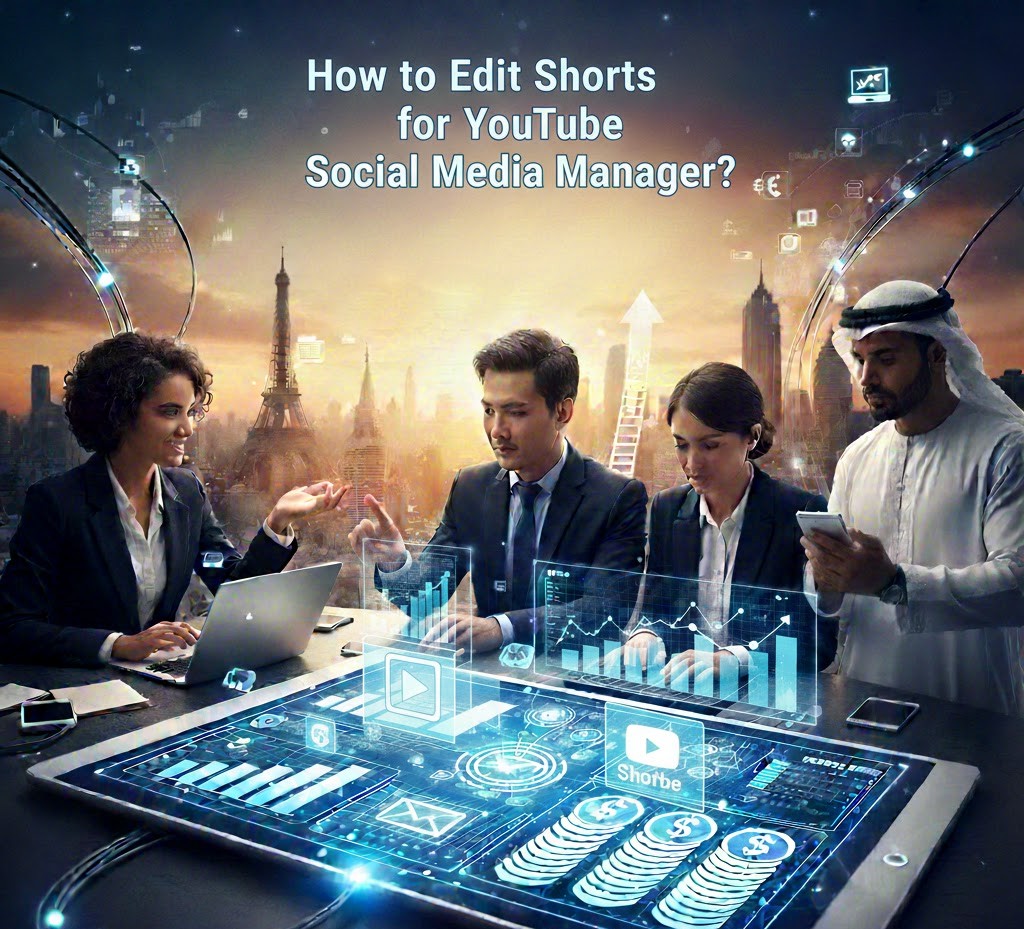
How to Edit Shorts for YouTube
Introduction
Have you ever uploaded a video you felt proud of, only to watch it struggle to get views while someone else’s simple 20-second clip explodes overnight? That’s not luck. More often than not, it’s editing.
YouTube Shorts has changed the way people consume content. Students, beginners, and new creators now have a real chance to grow without expensive cameras or big audiences. But the competition is fierce. Every day, millions of Shorts are uploaded, and only the most engaging ones earn attention.
That’s where editing becomes your unfair advantage.
Learning how to edit Shorts is not just about cutting clips. It’s about storytelling, psychology, timing, and understanding what keeps viewers watching. When done well, editing can turn an ordinary idea into a powerful, shareable piece of content.
In this guide, you’ll learn how YouTube Shorts really work, what makes them engaging, how to edit step-by-step, which tools beginners should use, common mistakes to avoid, and how this skill can even become a career. No fluff. Just practical knowledge explained clearly.
What Makes YouTube Shorts Different from Regular Videos
Before opening any editing app, you need to understand what makes Shorts unique.
YouTube Shorts are vertical videos (9:16 ratio) that are up to 60 seconds long. But the real difference is not the format it’s the viewer behavior.
People don’t “watch” Shorts the same way they watch long videos. They scroll quickly. Their attention is fragile. You often have less than two seconds to convince someone to stay.
This means editing for Shorts is not about perfection. It’s about retention.
Good Shorts editing focuses on:
-
Grabbing attention instantly
-
Maintaining fast pacing
-
Removing boring moments
-
Making the story easy to follow without effort
-
Encouraging rewatches
If your edit feels slow, confusing, or visually dull, people swipe away. If your edit feels tight, engaging, and emotionally clear, people stay.
How the YouTube Shorts Algorithm Works (In Simple Terms)
You don’t need to be a tech expert, but understanding the basics helps you edit smarter.
YouTube promotes Shorts based largely on viewer behavior, such as:
-
How long people watch your Short
-
Whether they rewatch it
-
Whether they like, comment, or share
-
Whether they watch more of your content after
Editing directly influences all of these signals.
For example:
-
A strong hook in the first second improves watch time
-
Clean cuts and fast pacing reduce drop-offs
-
Clear captions increase understanding (especially on mute)
-
A satisfying ending increases replays
Think of the algorithm not as a robot, but as a mirror of human behavior. Edit for people, and the algorithm usually follows.
The Core Elements of Great YouTube Shorts Editing
Editing Shorts is not about fancy effects. It’s about mastering a few powerful fundamentals.
Hook: The First 1–2 Seconds Decide Everything
Your opening moment must earn attention instantly. This is where most beginners fail.
Strong hooks can be:
-
A bold statement (“I tried waking up at 5am for 30 days…”)
-
A visual surprise (before/after transformation)
-
A question (“Why do most students fail at this?”)
-
A problem (“This mistake is ruining your videos”)
Editing tip: Cut directly into the most interesting moment. Remove intros, greetings, and logos. Start with impact.
Pacing: Remove Every Unnecessary Second
Shorts need rhythm. Every pause, filler word, or slow moment hurts performance.
Professional editors often cut:
-
Long pauses between sentences
-
Repeated words
-
Unnecessary “um” and “uh”
-
Moments where nothing visually changes
A good exercise: Watch your Short and ask, “Would I scroll away here?” If the answer might be yes, cut tighter.
Visual Movement Keeps the Brain Engaged
Even when the content is simple talking-head, you can make it visually dynamic.
Use:
-
Jump cuts between sentences
-
Subtle zooms in and out
-
B-roll clips that support what you’re saying
-
Text appearing on screen for key points
This doesn’t mean overloading with effects. It means giving the eye something to follow so attention stays locked.
Captions Are No Longer Optional
Many people watch Shorts with the sound off. Captions make your content accessible and more engaging.
Good captions are:
-
Easy to read
-
Timed properly with speech
-
Highlighting important words
-
Not covering key visuals
Avoid dumping long sentences. Break captions into short, punchy phrases that match your pacing.
Music and Sound Design Shape Emotion
Audio is half the experience.
Background music can:
-
Make content feel more emotional
-
Add energy to boring clips
-
Create suspense or humor
-
Improve overall professionalism
Keep music subtle. It should support your voice, not compete with it. Sound effects (like clicks, swooshes, or pops) can enhance moments, but overusing them feels amateur.
A Beginner-Friendly Workflow for Editing YouTube Shorts
Many beginners feel overwhelmed because they jump straight into the app without a system. A simple workflow makes everything easier.
Step 1: Start with a Clear Idea
Good editing cannot fix a weak idea. Before editing, define:
-
What is the main message?
-
What emotion should the viewer feel?
-
What is the best ending?
A simple structure works well:
-
Hook (grab attention)
-
Value (teach, entertain, or inspire)
-
Payoff (satisfying ending or twist)
Step 2: Trim the Footage Ruthlessly
When importing your clips, don’t fall in love with everything you recorded.
Cut aggressively:
-
Keep only the strongest takes
-
Remove awkward moments
-
Shorten every sentence
A 30-second Short might come from 5–10 minutes of raw footage. That’s normal.
Step 3: Add Captions and Visual Emphasis
Once the structure is solid:
-
Add captions
-
Highlight key words
-
Add zooms where emotion or emphasis is needed
-
Insert B-roll if it improves clarity
Editing should enhance the story, not distract from it.
Step 4: Watch Like a Stranger
This step is critical and often skipped.
Watch your Short as if:
-
You don’t know the creator
-
You’re scrolling late at night
-
You have hundreds of other videos competing
If any part feels boring, confusing, or slow, refine it.
Best Tools for Editing YouTube Shorts (Beginner-Friendly)
You don’t need expensive software to start.
Mobile-friendly options:
-
CapCut
-
VN Editor
-
InShot
Desktop options:
-
DaVinci Resolve (free and powerful)
-
Adobe Premiere Pro (industry standard, paid)
The tool matters less than your understanding of pacing, storytelling, and clarity. A well-edited Short made on a phone often outperforms a poorly edited one made on expensive software.
Real-World Example: Why One Short Gets 5,000 Views and Another Gets 500,000
Imagine two students upload similar content: “Study tips for exams.”
Student A:
-
Starts with “Hi guys, welcome back to my channel…”
-
Talks slowly
-
No captions
-
Long pauses
-
Ends without impact
Student B:
-
Starts with “This study mistake is why most students fail.”
-
Cuts tightly between sentences
-
Adds bold captions
-
Uses B-roll of books and notes
-
Ends with a strong takeaway
Same topic. Completely different results.
The difference isn’t luck. It’s editing psychology.
Common Myths Beginners Believe About Shorts Editing
“I need expensive equipment to succeed”
False. Many viral Shorts are recorded on basic phones. Editing and storytelling matter far more than camera quality.
“More effects make videos better”
Over-editing often hurts content. Clean, intentional edits outperform flashy chaos.
“If the content is good, editing doesn’t matter”
Great ideas can die with poor editing. Editing is how your idea reaches the viewer’s brain clearly.
“Shorts success is random”
There’s unpredictability, yes. But consistent patterns exist. Creators who understand hooks, pacing, and retention consistently outperform those who don’t.
Practical Editing Skills Students Should Start Learning Today
If you want to grow faster, focus on these specific skills.
-
Writing strong hooks before filming
-
Cutting videos tighter than feels comfortable
-
Using captions strategically
-
Understanding basic color correction
-
Learning simple sound balancing
-
Studying viral Shorts in your niche
One powerful habit: Each week, analyze 10 successful Shorts. Ask yourself:
-
How do they start?
-
How fast are the cuts?
-
Where do they place captions?
-
How do they end?
This builds instinct faster than any tutorial.
How YouTube Shorts Editing Can Become a Career Skill
This is where things get exciting for students.
Short-form video is not a trend. It’s a long-term shift. Brands, influencers, educators, startups, and companies all need short-form editors.
Learning Shorts editing can lead to:
-
Freelancing on platforms like Fiverr and Upwork
-
Editing for YouTubers and creators
-
Social media content roles
-
Digital marketing careers
-
Building your own monetized channel
Many editors start by editing their own content, build a portfolio, and then get paid to edit for others. It’s a real, in-demand skill.
FAQs About Editing YouTube Shorts
How long should a YouTube Short be for best performance?
There’s no perfect length, but many high-performing Shorts are between 15–40 seconds. Focus more on retention than duration.
Do captions really make a difference?
Yes. Captions improve watch time, accessibility, and engagement, especially for mobile viewers watching without sound.
How often should beginners post Shorts?
Consistency matters more than volume. Aim for 3–5 quality Shorts per week rather than daily low-quality uploads.
Can I grow using only my phone?
Absolutely. Many creators build entire channels using only smartphones. Strong ideas and clean editing matter more than gear.
What’s the biggest editing mistake beginners make?
Leaving videos too long. Most beginners don’t cut enough. Tight editing is one of the biggest growth levers.
Conclusion: Why Shorts Editing Is a Skill Worth Mastering
Editing YouTube Shorts is not just a technical task. It’s a form of communication. When you learn how to control pacing, emotion, clarity, and attention, you gain the ability to influence how people feel and respond to your content.
For students and beginners, this is one of the most practical digital skills you can learn today. It doesn’t require expensive equipment, formal education, or connections. It requires practice, observation, and patience.
Every Short you edit teaches you something. Every mistake sharpens your instincts. Over time, you stop guessing and start understanding what works.
If you commit to learning the craft not chasing virality, but mastering the fundamentals you give yourself a powerful long-term advantage. Whether your goal is to grow a channel, build a freelance career, or simply express yourself better, strong editing will open doors.
And the best time to start is not tomorrow. It’s your next video.
Tags :
No Tags
0 Comments