



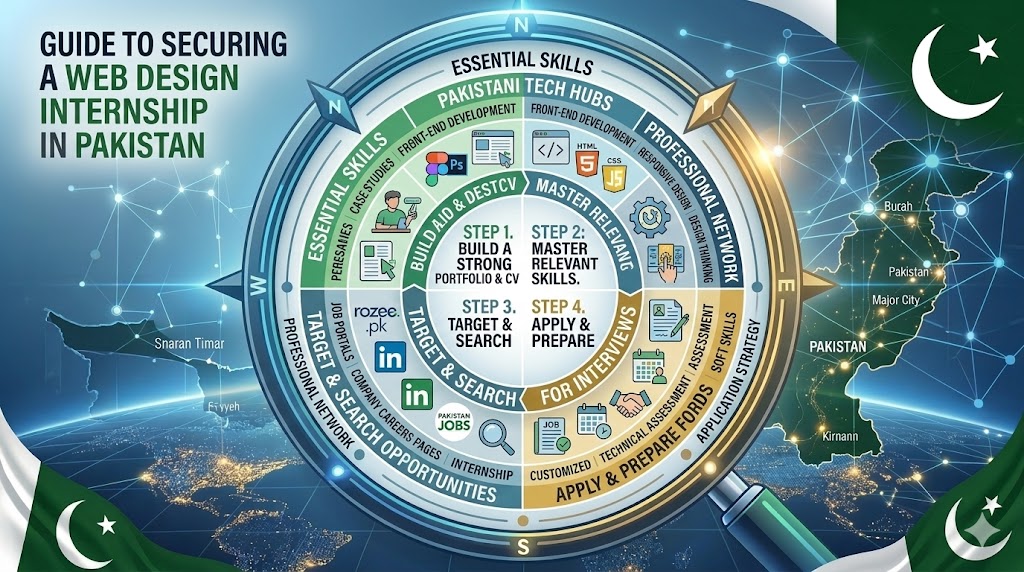
How to Get a Web Design Internship in Pakistan
Introduction
Imagine this: you’ve spent months learning HTML, experimenting with Canva, or building small websites for practice. You scroll through job portals and see companies asking for “experience” even for internships. It feels frustrating. How are you supposed to get experience if no one gives you a chance?
This is the reality for many students in Pakistan who want to enter the web design industry. The good news? Web design is one of the most accessible digital careers today. Startups, software houses, agencies, and even small local businesses constantly need website designers. The challenge isn’t the lack of opportunities it’s knowing how to position yourself correctly.
In this guide, you’ll learn exactly how to get a web design internship in Pakistan, even if you’re a beginner. We’ll cover skills you actually need, how to build a strong portfolio, where to apply, how to approach companies professionally, and how to stand out in a competitive market.
By the end, you’ll have a clear roadmap not just theory, but practical steps you can start implementing today.
Understanding What Companies Really Want from Web Design Interns
Before applying anywhere, it’s important to understand something: companies don’t expect interns to know everything.
What they look for instead:
-
Basic technical skills
-
Creativity and design sense
-
Willingness to learn
-
Problem-solving ability
-
Professional attitude
In Pakistan’s growing tech ecosystem especially in cities like Lahore, Karachi, Islamabad, Rawalpindi, and Abbottabad most software houses hire interns to support senior designers. You won’t be leading projects. You’ll assist, learn, and improve.
The real question is: Are you internship-ready?
Step 1: Learn the Core Web Design Skills
You don’t need to master everything, but you must understand the fundamentals.
1. HTML and CSS (Non-Negotiable)
Even if you plan to design in WordPress or use no-code tools, knowing basic HTML and CSS gives you confidence and credibility.
You should be able to:
-
Structure a simple webpage
-
Style elements with CSS
-
Understand responsive design basics
Free resources: YouTube tutorials, free coding platforms, and practice projects.
2. Basic UI/UX Principles
Web design is not just about colors and fonts. It’s about user experience.
Learn:
-
Layout hierarchy
-
White space usage
-
Typography basics
-
Mobile-first design
-
Call-to-action placement
Companies value designers who think about users, not just visuals.
3. Design Tools
In Pakistan, most agencies use:
-
Figma
-
Adobe XD
-
Photoshop
-
Canva (for basic graphics)
You don’t need expert-level mastery. But you should comfortably create a landing page mockup in at least one professional tool.
4. WordPress (Highly Recommended)
Many Pakistani businesses use WordPress. If you know how to:
-
Install themes
-
Customize layouts
-
Use page builders like Elementor
-
Optimize basic settings
You instantly become more employable.
Step 2: Build a Portfolio Even If No One Hired You Yet
This is where most students fail. They wait for a job before building a portfolio.
Instead, build first apply later.
What Should Be in Your Portfolio?
-
3–5 website designs (real or mock projects)
-
Before-and-after redesign examples
-
Landing page concepts
-
Personal website (strongly recommended)
If you don’t have clients, create fictional brands. For example:
-
A bakery website
-
A clothing brand landing page
-
A digital marketing agency homepage
-
A local restaurant website
Show your design thinking. Explain why you chose certain colors, layouts, and structures.
A simple Behance profile or a personal WordPress website works perfectly.
Step 3: Gain Experience Before the Internship
Here’s a powerful truth: you can create your own experience.
1. Offer Free or Low-Cost Work
Approach:
-
Small local shops
-
Tuition centers
-
NGOs
-
Friends starting businesses
Offer to build their website at a minimal cost or free in exchange for a testimonial.
2. Work on Freelance Platforms
Even small Fiverr or Upwork gigs help build confidence.
3. Join Online Communities
Facebook groups like:
-
Pakistan Web Designers
-
WordPress Pakistan
-
Freelancers in Pakistan
Many internship opportunities are shared there before they reach job portals.
Step 4: Where to Find Web Design Internships in Pakistan
Now let’s talk about actual job hunting.
1. LinkedIn
Search for:
-
“Web design internship Pakistan”
-
“UI UX intern”
-
“WordPress intern”
Make sure your LinkedIn profile:
-
Has a professional photo
-
Clearly mentions “Web Design Student”
-
Shows your portfolio link
Recruiters actively search for interns there.
2. Rozee.pk and Mustakbil
These platforms frequently list internships from software houses.
3. Company Websites
Many agencies don’t post internships publicly. Instead:
-
Visit their website
-
Check the careers page
-
Send a professional email
This direct approach often works surprisingly well.
Step 5: How to Send a Professional Internship Email
This is where you can truly stand out.
Keep your email:
-
Short
-
Respectful
-
Clear
-
Portfolio-focused
Structure:
-
Introduce yourself
-
Mention your skills
-
Express interest in learning
-
Attach or link portfolio
-
Politely ask for internship consideration
Avoid copying generic templates. Personalize each message based on the company.
Step 6: Prepare for the Internship Interview
If you get called for an interview, don’t panic.
Common questions:
-
What tools do you use?
-
Show us your portfolio.
-
Why do you want to become a web designer?
-
What is responsive design?
-
How do you improve user experience?
Be honest if you don’t know something. Companies prefer teachable interns over overconfident ones.
Common Mistakes Students Make
Let’s address some realities.
1. Waiting Until Graduation
You don’t need a completed degree to start. Many students begin internships in their first or second year.
2. Ignoring Soft Skills
Communication matters. Clients don’t hire silent designers.
3. Applying Without Portfolio
No portfolio = no internship.
4. Expecting High Salary
Many internships in Pakistan are unpaid or offer modest stipends. Focus on learning first.
Paid vs Unpaid Internships: What Should You Choose?
If you can afford it, a short unpaid internship in a strong company may be more valuable than a paid internship in a weak company.
Ask yourself:
-
Will I learn?
-
Will I work on real projects?
-
Is there mentorship?
Experience builds earning power later.
Future Career Opportunities After Internship
A web design internship is not the final goal. It’s the starting point.
After 3–6 months of internship experience, you can move toward:
-
Junior Web Designer
-
UI/UX Designer
-
WordPress Developer
-
Front-End Developer
-
Freelance Web Designer
With 1–2 years of experience, many designers in Pakistan earn competitive income locally or work with international clients remotely.
How the Web Design Industry Is Evolving in Pakistan
Pakistan’s digital economy is growing rapidly. Startups, e-commerce brands, and service businesses all need online presence.
Trends to watch:
-
Mobile-first design
-
E-commerce website demand
-
SaaS startup websites
-
AI-assisted design tools
-
UX-focused interfaces
Students who combine creativity with technical skill will stay ahead.
Practical Action Plan (Start This Week)
Here’s a realistic 30-day roadmap:
Week 1–2
-
Learn HTML/CSS basics
-
Practice Figma
-
Design one landing page
Week 3
-
Create 2 more sample projects
-
Build simple portfolio site
Week 4
-
Apply to 10 companies
-
Send personalized emails
-
Update LinkedIn
Consistency beats talent in this field.
FAQs (People Also Ask)
1. Can I get a web design internship without a degree in Pakistan?
Yes. Many companies prioritize skills and portfolio over degree. A strong portfolio matters more than your academic background.
2. Are web design internships paid in Pakistan?
Some are paid with stipends, others are unpaid. It depends on the company size and location.
3. What skills are most important for web design interns?
HTML, CSS, Figma, WordPress basics, and understanding of responsive design are highly valuable.
4. How long does a web design internship usually last?
Most internships range from 2 to 6 months.
5. Can I work remotely as a web design intern?
Yes. Many companies now offer remote or hybrid internships, especially after the digital shift in recent years.
Conclusion
Getting a web design internship in Pakistan isn’t about luck. It’s about preparation, positioning, and persistence.
If you focus on building real skills, creating a strong portfolio, and approaching companies professionally, your chances increase dramatically. The digital industry rewards doers not just certificate collectors.
Web design is more than a skill. It’s a gateway into the broader world of digital marketing, tech startups, freelancing, and global remote work. The earlier you start, the more confident and competitive you become.
Your journey doesn’t begin when someone hires you. It begins when you start building.
Take the first step today.
Tags :
No Tags
0 Comments