



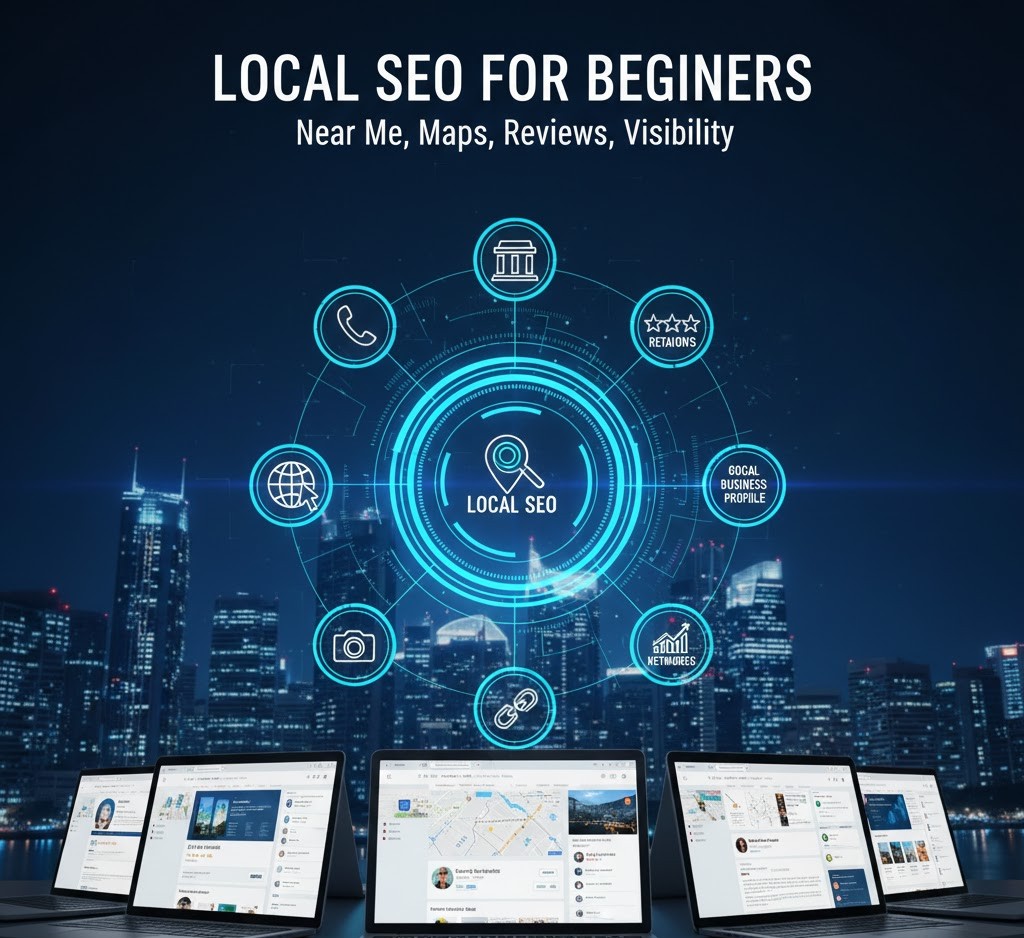
Local SEO for Beginners
Introduction
Imagine this: you’ve just opened a small coffee shop, tutoring service, or freelance design studio. You tell your friends, post on social media, and wait. Days pass. Business is slow. Meanwhile, a competitor across the street is fully booked and when you search Google for “best coffee near me” or “math tutor in my area,” their name shows up everywhere.
That difference often comes down to one powerful skill: local SEO.
For students and beginners, local SEO can feel mysterious or overly technical. But in reality, it’s one of the most practical and learnable areas of digital marketing. It doesn’t require a huge budget, advanced coding, or years of experience. It requires understanding how people search, how search engines think, and how to make your online presence visible in the right places.
In this guide, you’ll learn what local SEO really means, how it works behind the scenes, and how you can start building real-world skills today. Whether your goal is to promote a small business, start freelancing, or build a digital marketing career, this foundation will serve you for years.
What Local SEO Really Means (Beyond the Definition)
Most beginners hear a simple definition: “Local SEO is about ranking your business in local search results.” That’s true, but incomplete.
Local SEO is really about connecting real people with nearby solutions at the exact moment they need them.
When someone searches:
-
“Dentist near me”
-
“Best pizza in Brooklyn”
-
“Laptop repair in Chicago”
-
“English tutor in my area”
They’re not just browsing. They’re showing intent. They’re ready to act.
Local SEO focuses on helping search engines understand:
-
Who you are
-
What you offer
-
Where you are located
-
Why you’re trustworthy
When done well, it puts your business in front of high-intent users at the most valuable moment in their decision-making process.
For students, this is powerful because:
-
You can practice with real local businesses
-
You can see measurable results
-
You can build portfolio-worthy experience
-
You can offer services that are always in demand
How Search Engines Work (In Simple Terms)
Before diving into tactics, it helps to understand how Google actually works.
Think of Google as a massive digital librarian. Its job is to:
-
Discover content (through crawling)
-
Understand content (through indexing)
-
Rank content (based on relevance and trust)
Crawling
Google uses bots (often called spiders) to scan websites and online listings. They follow links, read pages, and collect information.
Indexing
Once content is discovered, Google stores it in a massive database. This is called the index. If your business or website isn’t properly indexed, it won’t appear in search results.
Ranking
When someone types a search query, Google quickly scans its index and decides which results are most:
-
Relevant to the query
-
Trustworthy
-
Helpful
-
Local to the searcher (for local queries)
For local searches, Google also considers:
-
Proximity (how close the business is)
-
Prominence (how well-known and reputable the business is)
-
Relevance (how well the business matches the search)
Understanding this logic makes SEO feel less like magic and more like strategy.
The Core Components of SEO (With a Local Focus)
SEO is usually divided into three main areas. Local SEO touches all of them, but with a geographic lens.
On-Page SEO: Optimizing What You Control
On-page SEO refers to everything you optimize on your website itself.
For local SEO, this includes:
Content that reflects real services and locations
A local bakery shouldn’t just have a generic “Our Services” page. It should have content like:
-
Custom cakes in Austin
-
Wedding cakes in South Austin
-
Best cupcakes near Downtown Austin
This doesn’t mean stuffing keywords. It means writing naturally while being specific about what you offer and where.
Title tags and headings that make sense
Instead of:
“Home | Welcome to Our Website”
Use:
“Affordable Plumbing Services in Dallas | ABC Plumbing”
This helps both users and search engines understand your page.
Clear contact information
Your business name, address, and phone number should be easy to find. Ideally, they should appear:
-
On the homepage
-
On a dedicated contact page
-
In the footer
Consistency matters. If your address appears differently across your site, it creates confusion.
Location-based pages (when appropriate)
If a business serves multiple areas, it can be helpful to have separate pages for each location, as long as the content is genuinely useful and not just copied and slightly modified.
Beginner takeaway: On-page SEO is about clarity. Make it easy for both humans and search engines to understand who you are, what you do, and where you operate.
Technical SEO: Making Your Site Easy to Access
Technical SEO sounds intimidating, but for beginners, it’s mostly about avoiding common mistakes.
For local SEO, key technical factors include:
Mobile friendliness
Most local searches happen on phones. If a website is hard to use on mobile, users leave quickly, and rankings suffer.
Page speed
A slow site creates a poor user experience. People searching locally often want quick answers. Speed matters.
Secure website (HTTPS)
Websites with proper security certificates build trust with both users and search engines.
Clean site structure
Pages should be logically organized. Users and search engines should be able to navigate easily.
You don’t need to be a developer to understand technical SEO. But knowing the basics helps you communicate better with developers and avoid costly errors.
Beginner takeaway: Technical SEO isn’t about tricks. It’s about building a website that works smoothly for real users.
Off-Page SEO: Building Trust Beyond Your Website
Off-page SEO is about how the rest of the internet views your business.
In local SEO, this is especially important.
Google Business Profile (formerly Google My Business)
This is often the most powerful local SEO asset. A well-optimized profile can rank even without a strong website.
A strong profile includes:
-
Accurate business name, address, and phone number
-
Correct categories
-
High-quality photos
-
Regular updates
-
Genuine customer reviews
-
Clear business description
Online reviews
Reviews act as digital word-of-mouth. They influence:
-
Rankings
-
Click-through rates
-
Customer trust
It’s not just about having many reviews. It’s about consistency, authenticity, and how businesses respond to feedback.
Local citations
Citations are mentions of your business on other websites, such as directories, maps, or local platforms. Consistency across these listings reinforces trust.
Local backlinks
When local blogs, newspapers, schools, or organizations link to a business, it signals credibility and community relevance.
Beginner takeaway: Off-page SEO is about reputation. You’re building digital trust in real-world communities.
How Local SEO Fits Into the Bigger Digital Marketing Picture
Local SEO doesn’t exist in isolation. It works best when aligned with other channels.
Social media supports visibility
While social media signals don’t directly control rankings, active profiles drive awareness, traffic, and engagement. People often discover a brand on Instagram and then search for it on Google.
Content marketing strengthens authority
Helpful blog posts, guides, and resources position a business as a local expert. For example, a fitness trainer writing about “Best beginner workouts at home” builds trust before someone ever books a session.
Paid ads complement organic results
Businesses often use local ads alongside SEO. The long-term value of SEO is that it keeps generating traffic even when ad budgets pause.
Brand building amplifies everything
The stronger the brand, the more people search for it by name, leave reviews, and recommend it. Local SEO thrives when marketing works together.
For students, understanding this ecosystem makes you more than just someone who “does SEO.” It makes you a well-rounded digital marketer.
Real-World Examples: How Local SEO Actually Plays Out
Example 1: A Small Hair Salon
A new salon struggled to get bookings. They optimized their Google Business Profile, added professional photos, and encouraged happy customers to leave reviews. Within a few months, they began appearing in the local map results for “hair salon near me.” Appointments increased without spending on ads.
Example 2: A Private Tutor
A freelance math tutor created a simple website with clear pages:
-
Math tutor for high school students in Seattle
-
SAT math tutoring in Seattle
They also listed their services on local directories. Over time, they started receiving consistent inquiries from organic search.
Example 3: A Local Restaurant
A family restaurant started posting weekly updates, photos of dishes, and events on their business profile. They responded to every review. Their visibility improved, and tourists searching for food nearby began choosing them over competitors.
These aren’t giant corporations. They’re ordinary businesses using smart fundamentals.
Common Local SEO Myths Beginners Often Believe
Myth 1: SEO is about tricking Google
Reality: Sustainable SEO is about helping users. Google’s entire mission is built around rewarding useful, trustworthy content.
Myth 2: You need to know advanced coding
Reality: While technical knowledge helps, most effective local SEO work is strategic, not technical.
Myth 3: Results happen overnight
Reality: SEO is a long-term investment. Local results can appear faster than national SEO, but consistency is key.
Myth 4: More keywords always mean better rankings
Reality: Keyword stuffing hurts readability and trust. Natural, helpful writing performs better.
Myth 5: Only big businesses can win
Reality: Local SEO often favors small, authentic businesses that are genuinely connected to their communities.
Understanding these myths early prevents frustration and builds the right mindset.
Practical Local SEO Skills Students Should Start Learning Today
If you’re serious about learning SEO, focus on skills you can practice in real life.
Keyword research with local intent
Learn how people search for local services. Notice the difference between:
-
“Lawyer”
-
“Lawyer in Miami”
-
“Best family lawyer near me”
Understanding intent is more important than memorizing tools.
Writing helpful, clear content
Practice explaining topics simply. Write service pages, blog posts, or guides that solve real problems.
Optimizing Google Business Profiles
Offer to help a friend’s business, family shop, or local organization improve their profile. This hands-on experience is invaluable.
Understanding analytics basics
Learn how to interpret traffic, clicks, and user behavior. It teaches you what’s actually working.
Communication and strategy
Many SEO professionals succeed not because they know every technical detail, but because they can explain concepts clearly and guide clients confidently.
Local SEO is one of the best training grounds for building both technical and strategic marketing skills.
How SEO Careers and Opportunities Are Evolving
SEO is no longer just about rankings. It’s becoming more integrated with broader marketing, user experience, and brand strategy.
Today’s opportunities include:
-
Local SEO specialist
-
Content strategist
-
Digital marketing executive
-
Freelance SEO consultant
-
In-house marketing roles for local brands
-
Agency-based client work
Businesses of all sizes need visibility in search. As more commerce shifts online, demand for SEO skills continues to grow.
For students, local SEO offers a unique advantage: you can build experience without waiting for permission. You can practice on:
-
Your own blog
-
A community project
-
A small family business
-
A volunteer organization
This real-world learning often matters more than certificates.
Frequently Asked Questions
Is local SEO different from regular SEO?
Yes. While the principles overlap, local SEO focuses on geographic relevance, map results, business profiles, and proximity-based ranking factors.
How long does it take to see results with local SEO?
Some improvements, like optimizing a business profile, can show results within weeks. Strong, lasting visibility usually takes a few months of consistent effort.
Do I need a website for local SEO?
A website helps a lot, but it’s possible to gain visibility with just a well-optimized business profile. For long-term growth, a website is strongly recommended.
Can students really build a career in SEO?
Absolutely. Many professionals started by learning fundamentals, practicing on small projects, and gradually building portfolios and client experience.
Is local SEO still worth learning in the future?
Yes. As long as people search for nearby services, local SEO will remain essential. The tools may evolve, but the core principles will remain valuable.
Conclusion
Local SEO is not just a marketing technique. It’s a practical, real-world skill that connects businesses with the people who need them most. For students and beginners, it offers a rare combination of accessibility, impact, and career potential.
You don’t need to master everything at once. Start by understanding how search works. Practice writing clear content. Learn how to optimize a business profile. Pay attention to how people search in everyday life. Over time, these small skills compound into real expertise.
The most successful SEO professionals didn’t begin with advanced tools or secret knowledge. They began with curiosity, consistency, and a willingness to learn by doing. If you commit to the process, local SEO can become more than a skill. It can become a long-term opportunity.
Tags :
No Tags

0 Comments