



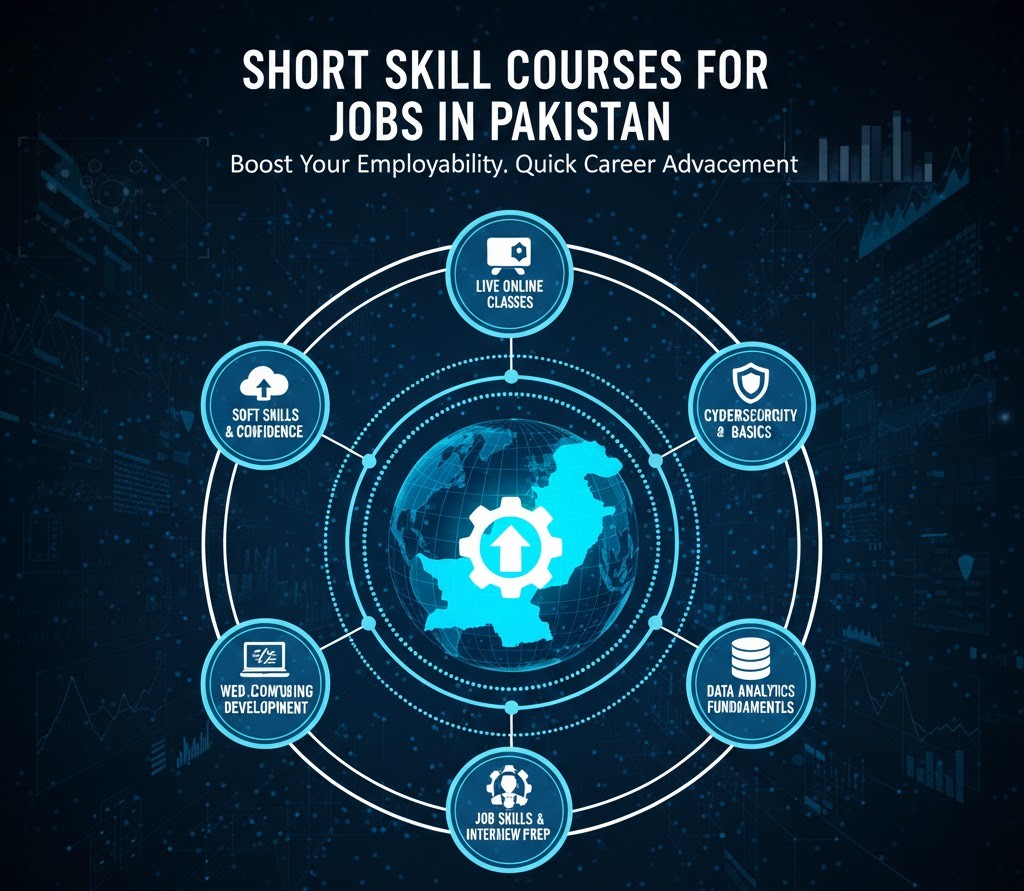
Short Skill Courses for Jobs in Pakistan
Introduction
A few years ago, the default advice for young people in Pakistan was simple: get a university degree and a good job will follow. Today, that promise feels far less certain. Every year, thousands of graduates enter the job market with similar degrees, limited practical experience, and growing frustration. At the same time, companies are struggling to find people who can actually do the work they need done whether that’s managing social media accounts, building websites, running digital ads, or handling basic data tasks.
This gap between education and employable skills is where short skill courses come in. These are focused, practical programs designed to teach job-ready abilities in months, not years. For students and beginners, especially those who want to start earning sooner or work online, short courses can be a powerful alternative or complement to formal education.
In this article, we’ll break down what short skill courses really are, why they matter in Pakistan’s current job market, which skills are most in demand, and how students can choose the right path. The goal is clarity—not hype—so you can make informed decisions about your future.
Understanding Short Skill Courses Beyond the Buzzwords
Short skill courses are often marketed aggressively, promising quick income and easy success. In reality, they’re neither magic nor useless. Their value depends on what you learn, how you practice, and how well the skill matches real market demand.
At their core, short skill courses focus on specific, practical abilities. Instead of broad academic theory, they teach tasks employers are willing to pay for. These courses usually range from a few weeks to six months and are offered by training institutes, online platforms, government programs, and sometimes private companies.
What makes them appealing in Pakistan is simple:
-
They’re affordable compared to full degrees
-
They require less time
-
They often align with freelancing and remote work, which pays in foreign currency
For beginners, this means a lower barrier to entry into the job market.
Why Short Skill Courses Matter in Pakistan Today
Pakistan’s economy is changing faster than its education system. Traditional jobs are limited, but digital and skill-based work is expanding.
Several factors are driving this shift:
-
Youth population: A large percentage of Pakistan’s population is under 30, creating intense competition for jobs.
-
Digital growth: Businesses of all sizes now need websites, online marketing, design, and tech support.
-
Global freelancing market: Pakistan consistently ranks among the top freelancing countries in the world.
-
Currency realities: Earning in dollars through online work can significantly improve income stability.
Short skill courses respond directly to these realities by focusing on employability rather than certificates alone.
High-Demand Short Skill Courses for Jobs in Pakistan
Not all skills are equal in the job market. Below are some of the most practical and in-demand short skill courses for students and beginners in Pakistan.
Digital Marketing Skills
Digital marketing is one of the fastest-growing fields because every business wants online visibility.
Common areas include:
-
Social media marketing
-
Search engine optimization (SEO)
-
Google and Facebook ads
-
Content marketing and email campaigns
These skills are valuable because they combine creativity with measurable business results. Even beginners can start with internships, small clients, or freelance projects.
Practical takeaway: Start with one area, like social media management, then expand once you understand how businesses measure results.
Graphic Design and Creative Skills
Visual communication is essential in marketing, branding, and online content.
Popular design-related skills:
-
Graphic design (logos, social media posts, ads)
-
UI/UX basics for apps and websites
-
Video editing and motion graphics
Tools like Adobe Photoshop, Illustrator, Figma, and CapCut are commonly taught. What matters most is not the software, but your ability to solve visual problems for clients.
Practical takeaway: Build a strong portfolio early. In creative fields, your work speaks louder than certificates.
Web Development and Technical Skills
Web and software-related skills are more technical but often better paid.
Common short courses include:
-
Front-end web development (HTML, CSS, JavaScript)
-
WordPress development
-
Basic app development
-
No-code and low-code tools
These skills are especially valuable for freelancing and remote jobs, where clients care about functionality, speed, and reliability.
Practical takeaway: Focus on real projects instead of endless tutorials. Build simple websites or tools you can show to employers.
Data, IT, and Office Automation Skills
Not everyone wants to be a designer or developer. Many businesses need support roles that require technical literacy.
In-demand skills include:
-
Advanced MS Excel and Google Sheets
-
Data entry with accuracy and speed
-
Basic data analysis and reporting
-
IT support and networking fundamentals
These skills are widely applicable across industries like finance, logistics, education, and e-commerce.
Practical takeaway: Combine technical skills with communication skills to stand out for office-based roles.
Freelancing and Online Work Skills
Freelancing itself is a skill. Many students struggle not because they lack ability, but because they don’t know how to find or manage work.
Short courses often cover:
-
Creating profiles on platforms like Upwork and Fiverr
-
Client communication and proposals
-
Pricing, contracts, and time management
When paired with a technical skill, freelancing knowledge can significantly increase earning potential.
Practical takeaway: Treat freelancing like a business, not a side hobby.
How Short Skill Courses Fit into a Long-Term Career
One common misconception is that short courses are only for quick income. In reality, they can be stepping stones to long-term careers.
For example:
-
A student starts with a short SEO course
-
Gains freelance clients and experience
-
Moves into a full-time digital marketing role
-
Eventually specializes or builds an agency
The key is continuous learning. Skills evolve, tools change, and those who adapt stay relevant.
Short courses work best when you:
-
Apply skills in real situations
-
Keep updating your knowledge
-
Combine multiple related skills over time
Common Myths Students Believe About Short Skill Courses
“One course will guarantee a job”
No course can guarantee employment. Skills increase opportunities, but effort, practice, and persistence matter just as much.
“Certificates are more important than skills”
Employers care about what you can do. Certificates help, but portfolios and experience matter more.
“Short courses are only for students who can’t get degrees”
Many degree holders take short courses to stay relevant or switch careers. Learning never stops.
Practical Skills Students Should Start Learning Today
If you’re unsure where to begin, focus on skills that build strong foundations:
-
Basic digital literacy
-
Written and verbal communication
-
Problem-solving and research
-
Time management and self-discipline
These skills support every technical course and make you easier to work with as an employee or freelancer.
How Job Opportunities Are Evolving in Pakistan
The future of work in Pakistan is increasingly skill-based. Employers are hiring for outcomes, not just qualifications. Remote work, contract roles, and project-based hiring are becoming normal.
This shift favors students who:
-
Learn practical skills early
-
Build real-world experience alongside education
-
Stay flexible and curious
Short skill courses align perfectly with this new reality.
Frequently Asked Questions
Are short skill courses better than a university degree?
They serve different purposes. Degrees provide broad education, while short courses focus on practical skills. Many students benefit from combining both.
How long does it take to start earning after a short course?
It depends on the skill and effort. Some students start small projects within months, while others take longer to build confidence and experience.
Are online courses reliable in Pakistan?
Many are, but quality varies. Look for courses with practical projects, instructor support, and real-world examples.
Which skill is best for freelancing in Pakistan?
Digital marketing, graphic design, web development, and content writing are among the most popular and accessible options.
Do employers value short courses?
Yes, especially when paired with demonstrable skills and experience. Employers care about results.
Conclusion
Short skill courses are not shortcuts, but they are powerful tools. For students and beginners in Pakistan, they offer a practical way to enter the job market, explore interests, and build confidence without waiting years for results. When chosen wisely and backed by consistent practice, these skills can open doors to local jobs, remote work, and long-term career growth.
The most important step is starting with the right mindset. Learn with purpose, apply what you learn, and stay patient. In a world where skills matter more than ever, investing in yourself through focused learning may be one of the smartest decisions you can make.
Tags :
No Tags
0 Comments