



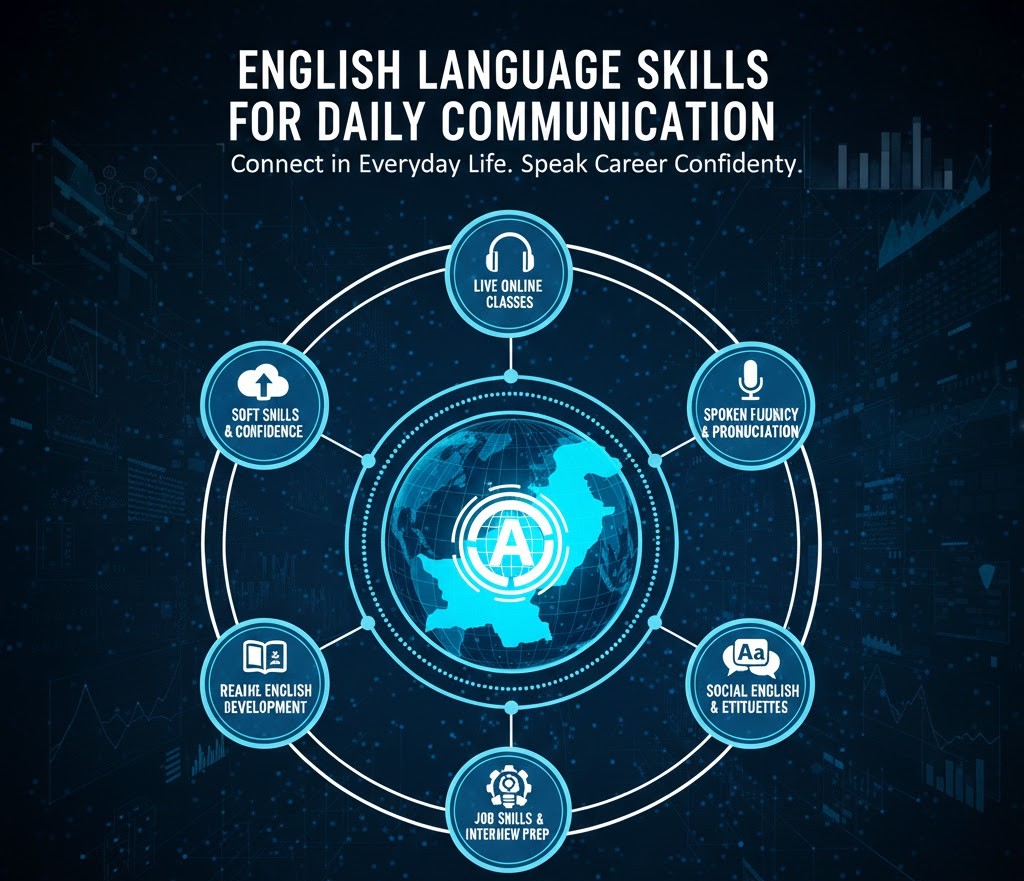
English Language Skills for Daily Communication
Introduction
Have you ever known exactly what you wanted to say, but the words just didn’t come out right? Maybe you hesitated during a class discussion, struggled to explain something at work, or felt unsure starting a conversation with someone new. You’re not alone. For students and beginners, English often feels hardest not in exams or textbooks, but in everyday, real-life situations.
English is more than a school subject. It’s the language of classrooms, workplaces, online platforms, customer service desks, and global conversations. Strong daily communication skills in English can boost confidence, improve academic performance, and open doors to better career opportunities. Yet many learners focus too much on grammar rules and too little on how English is actually used in daily life.
In this article, you’ll learn what English language skills for daily communication really involve, how spoken and written English work in real-world settings, and which practical skills matter most for beginners. We’ll also clear up common myths, share realistic examples, and offer actionable steps you can start using today to communicate more clearly and confidently in English.
What English Language Skills Really Mean in Daily Life
When people hear “English skills,” they often think of perfect grammar or a large vocabulary. In daily communication, however, English is much more practical and flexible than that.
Daily English skills focus on understanding and being understood. This includes:
-
Expressing ideas clearly, even with simple words
-
Listening carefully and responding appropriately
-
Adjusting tone depending on the situation
-
Using natural phrases instead of textbook sentences
In real life, native speakers don’t speak in perfect sentences all the time. They pause, rephrase, and use informal expressions. For beginners, the goal isn’t perfection it’s effective communication.
Communication vs. Accuracy
Accuracy matters, but communication comes first. If someone understands your message, your English is working. Over time, accuracy improves naturally through practice and exposure.
A student who confidently asks, “Can you explain this again?” is communicating better than someone who stays silent out of fear of making a mistake.
How Daily Communication in English Actually Works
English communication is built on four core skills: listening, speaking, reading, and writing. In daily life, these skills work together rather than separately.
Listening: The Foundation of Communication
Listening is often underestimated, but it’s the most important daily skill.
In real conversations, people speak at different speeds, use accents, and shorten words. Beginners often struggle not because they don’t know English, but because they’re not used to how it sounds in natural settings.
Practical ways to improve listening include:
-
Watching English videos with subtitles, then without
-
Listening to podcasts made for learners
-
Paying attention to common phrases, not every word
Understanding the main idea is more important than understanding every sentence.
Speaking: Communicating, Not Performing
Speaking English daily doesn’t mean giving speeches. It means:
-
Asking questions
-
Sharing opinions
-
Making requests
-
Responding politely
Fluency grows when you speak regularly, even if your sentences are simple. Confidence matters more than complexity.
Instead of trying to sound “advanced,” focus on sounding clear and natural.
Reading: Learning Real Language Patterns
Daily reading helps you see how English is actually used. This could include:
-
Emails
-
Text messages
-
News articles
-
Social media posts
Reading short, real-world content helps beginners learn sentence flow, common expressions, and tone.
Writing: Everyday Written English
Daily writing doesn’t mean essays. It includes:
-
Messages and emails
-
Short notes
-
Online comments
-
Forms and applications
Clear writing focuses on simplicity. Short sentences are often more effective than long ones.
Key Components of Strong Daily English Communication
Vocabulary That Matches Real Life
Many learners memorize rare or academic words they never use. Daily communication relies on common, practical vocabulary.
For example, knowing words like:
-
schedule
-
explain
-
confirm
-
comfortable
-
improve
is far more useful than knowing advanced literary terms.
Focus on words you can use in conversations, emails, and everyday situations.
Sentence Patterns, Not Isolated Rules
Grammar becomes easier when you learn patterns, not just rules.
For example:
-
“I’m looking for…”
-
“Could you please…?”
-
“I’m not sure if…”
These sentence structures appear again and again in daily English. Learning them as complete units helps you speak faster and more naturally.
Pronunciation and Clarity
You don’t need a perfect accent. You need to be understandable.
Clear pronunciation, correct word stress, and natural rhythm matter more than sounding native. Mispronouncing a key word can cause confusion, even if your grammar is correct.
English Communication in the Real World: Everyday Examples
In the Classroom
Students use English to:
-
Ask questions
-
Participate in discussions
-
Give presentations
-
Work in groups
Simple phrases like “Can you repeat that?” or “I agree with this point” make participation easier and less stressful.
At Work or Internships
Workplace English is often polite, direct, and purpose-driven.
Examples include:
-
Writing professional emails
-
Asking for clarification
-
Explaining tasks or problems
Clear communication builds trust and shows professionalism, even for beginners.
Social and Online Communication
Daily English also includes casual conversations, chats, and online interactions. Informal English often uses contractions, short responses, and friendly expressions.
Understanding the difference between formal and informal English helps avoid awkward situations.
Common Myths About Learning English for Daily Use
“I Must Be Fluent Before I Speak”
This belief stops many learners from practicing. Fluency comes from speaking, not before it.
“Grammar Is Everything”
Grammar matters, but communication matters more. Many native speakers make grammatical mistakes and still communicate effectively.
“I Need a Perfect Accent”
Accents are part of identity. Clear communication is the real goal.
Practical English Skills Students Should Start Learning Today
For beginners, the best approach is focused and realistic.
High-Impact Skills to Practice
-
Asking and answering common questions
-
Describing daily routines
-
Expressing opinions politely
-
Making requests and suggestions
-
Handling basic professional conversations
Practice these skills in short, regular sessions instead of long, irregular study hours.
Using English Daily, Even Briefly
Five to ten minutes a day of speaking, listening, or writing in English can make a noticeable difference over time.
Consistency builds confidence.
How English Language Skills Support Future Opportunities
Strong daily English communication skills are valuable in almost every field. From education and technology to business and customer service, English often acts as a bridge language.
Students with good communication skills:
-
Perform better academically
-
Feel more confident in interviews
-
Adapt faster to professional environments
-
Access global learning resources
As remote work and online learning grow, English communication continues to become more important, not less.
Frequently Asked Questions
Is daily English different from academic English?
Yes. Daily English focuses on practical communication, while academic English focuses on formal writing and study-related language.
How long does it take to improve daily communication skills?
With regular practice, most beginners notice improvement within a few months.
Should beginners focus more on speaking or grammar?
Speaking and listening should come first. Grammar improves naturally through use.
Can I improve English without living in an English-speaking country?
Absolutely. Online content, practice partners, and consistent exposure make a big difference.
What’s the best way to build confidence in English?
Use English daily, accept mistakes, and focus on being understood rather than being perfect.
Conclusion
English language skills for daily communication are not about sounding impressive. They’re about connecting with people, expressing ideas, and navigating everyday situations with confidence. For students and beginners, focusing on practical usage listening, speaking, reading, and writing in real contexts makes learning faster and more meaningful.
When you stop aiming for perfection and start aiming for clarity, English becomes less intimidating and more empowering. Every conversation, message, or question you ask is a step forward.
With consistent practice and the right mindset, daily English communication can become a natural part of your life and a powerful skill that supports your education, career, and personal growth for years to come.
Tags :
No Tags

0 Comments