



Which Social Media Platform Pays the Most?
Introduction
If you’ve ever scrolled through your feed and wondered, “How do influencers make so much money and which platform pays the most?”, you’re not alone. For students juggling classes, internships, and side hustles, earning money online has never been more appealing. In fact, according to a 2024 HubSpot Creator Report, over 71% of young creators now rely on social media as a meaningful income source. The creator economy is not only thriving it’s evolving faster than most people realize.
But here’s the challenge: every platform pays differently. Some reward views, others prioritize long-form content, and a few pay nothing directly but offer massive opportunities through sponsorships. Understanding these differences helps you make smarter decisions about where to invest your time.
In this guide, we’ll break down the top-paying social media platforms in 2025, evaluate how each platform compensates creators, and analyze how students can maximize earnings even with small followings. You’ll get actionable strategies, platform comparisons, and real-world insights to choose the best earning path for your goals.
Which Social Media Platform Pays the Most? (2025 Rankings)
Social media monetization works through five main models:
-
Built-in creator funds (like YouTube’s revenue sharing)
-
Ad revenue splits
-
Bonus programs
-
Brand partnerships/sponsorships
-
Affiliate marketing and product sales
Below is a platform-by-platform breakdown based on current payout models, creator economy reports, and industry expert insights.
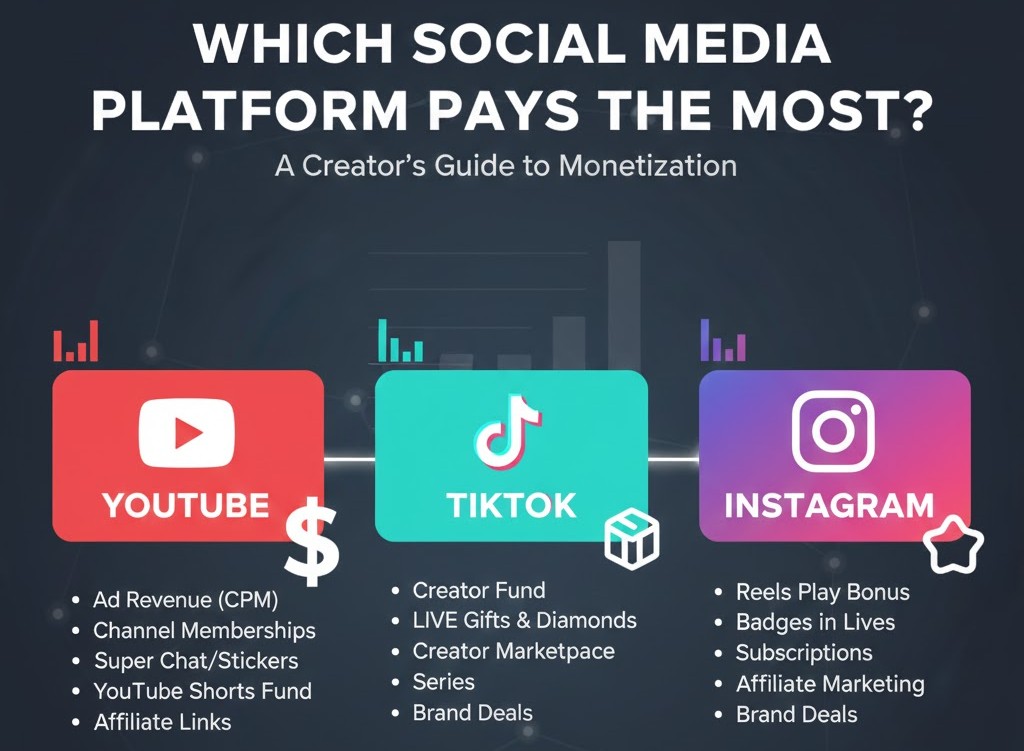
1. YouTube: Still the Highest-Paying Platform for Most Creators
Why YouTube Pays the Most
YouTube remains the #1 paying social media platform in 2025 because of its generous ad revenue share, global reach, and evergreen content model. Unlike short-form platforms where videos disappear into the feed, YouTube videos can earn money for years after posting.
How Much You Can Earn
Creators are paid through:
-
AdSense Revenue Share (45–55%)
-
YouTube Shorts Revenue Pool
-
Channel Memberships
-
SuperChats & Super Thanks
-
YouTube BrandConnect (sponsorship marketplace)
In the U.S., creators on average earn:
-
$1–$4 per 1,000 views for standard videos
-
$0.02–$0.07 per 1,000 views for Shorts (varies heavily)
Long-form content still earns the most due to higher watch time and ads.
Why Students Love It
-
Low startup cost
-
Long-term earning potential
-
Ideal for educational, lifestyle, gaming, and vlogging content
Example:
A student with 10,000 subscribers who posts weekly tutorials can realistically earn $150–$500/month, depending on niche and retention rates.
2. TikTok: High Engagement, Moderate Pay (But Huge Sponsorship Potential)
TikTok’s Payment Structure
TikTok’s payout system has changed significantly since the early Creator Fund era. In 2025, TikTok uses:
-
TikTok Creativity Program (higher than the old creator fund)
-
Branded content deals
-
TikTok Pulse ad revenue sharing
While TikTok pays creators directly, the payouts per view are still lower than YouTube’s long-form earnings.
How Much Creators Earn
-
Creativity Program: $0.25–$1 per 1,000 eligible views
-
Pulse Revenue Share: up to 50% for top creators
Brand deals, however, are where TikTok shines.
According to Influencer Marketing Hub (2024):
-
Micro-influencers (10k–50k followers) charge $100–$500 per sponsored video
-
Mid-tier creators (50k–250k) charge $500–$2,000
Why Students Choose TikTok
-
Fastest growth potential of any platform
-
Short-form content is easier to produce
-
Strong virality factor
But TikTok alone rarely pays the most unless you combine views with sponsorships.
3. Instagram: High Sponsorship Rates but Lower Direct Earnings
Instagram pays less directly compared to YouTube or TikTok. In fact, most creators earn primarily through:
-
Sponsorships
-
Affiliate links
-
Instagram Shops (product sales)
-
Subscriptions
In 2025, Instagram’s Reels Bonus Program is still available to select creators, but payouts are inconsistent.
How Much You Can Earn
Sponsored Post Rates (U.S. averages):
-
10k–50k followers: $150–$400 per post
-
50k–100k followers: $400–$1,000 per post
Instagram’s main strength is its luxury and lifestyle brand ecosystem, which often pays more than other platforms.
Who Should Use Instagram?
Great for:
-
Fashion and beauty students
-
Fitness creators
-
Travel content
-
Aesthetically-driven niches
But for direct per-view monetization, Instagram is not the winner.
4. Facebook Reels: Surprisingly High Payouts for Certain Creators
Many students overlook Facebook, but its Reels Play Bonus and ad revenue share have become competitive. Meta has invested heavily in short-form video to compete with TikTok.
What Facebook Pays
-
Reels bonuses up to $4,000 per month for select creators
-
In-stream ads pay $1–$10 per 1,000 monetizable plays (higher than TikTok for many creators)
Facebook tends to boost creators who:
-
Post consistently
-
Share relatable lifestyle or entertainment content
-
Engage communities through groups and pages
Why It Pays Well
Facebook has an older, high-spending audience. Advertisers pay more, which means creators earn more per view.
5. Snapchat Spotlight: High Bonuses but Not Consistent
Snapchat Spotlight shook the industry by offering million-dollar payouts when it launched. While payouts have stabilized, creators still earn well—especially students who already use the app daily.
How Spotlight Pays
-
Spotlight rewards are performance-based
-
Payments vary based on view velocity, uniqueness, and engagement
-
Some creators report $100–$500 for viral Snaps
Snapchat does not offer stable, predictable income. Great for experimentation, not long-term careers.
6. X (Twitter): Good for Thought Leaders, Not High Direct Pay
X introduced its ad revenue share program in 2023 and expanded it in 2024–2025.
Requirements
-
High engagement
-
Paid Premium membership
-
5M impressions in the last 3 months
Payouts range from:
-
$0.20–$5 per 1,000 impressions
But X primarily rewards:
-
Writers
-
Tech enthusiasts
-
Political commentators
-
Entrepreneurs
For students who write threads, it’s a great platform but not the highest paying for most.
7. Twitch: Best for Gamers, But Requires Commitment
Twitch creators earn through:
-
Subscriptions
-
Bits
-
Ads
-
Donations
-
Sponsorships
Top streamers make thousands, but new creators earn slowly unless they stream often.
Average Payout for Small Streamers
-
$50–$200/month for ~20–30 consistent viewers
-
High earning potential once you build a community
Great for students who love gaming or long-form live content.
8. LinkedIn: Highest-Paying Platform for Professionals
While people don’t think of “monetization” when they hear LinkedIn, it’s actually the highest-paying platform per follower just not through traditional ad revenue.
Creators earn through:
-
Consulting
-
Course sales
-
Personal branding
-
Speaking gigs
-
Recruitment partnerships
LinkedIn is perfect for students in:
-
Business
-
Technology
-
Marketing
-
Design
-
Engineering
Even with 5,000 followers, you can land high-ticket freelance projects worth $500–$3,000 per client.
2025 Ranking: Which Social Media Platform REALLY Pays the Most?
Based on earning potential, stability, and payout systems:
| Rank | Platform | Best For | Why It Pays |
|---|---|---|---|
| 1 | YouTube | All students | Highest ad revenue, long-term earnings |
| 2 | Creators in lifestyle niches | High sponsorship rates | |
| 3 | TikTok | Short-form creators | High brand deals + strong growth |
| 4 | Facebook Reels | General creators | High ad revenue per 1,000 views |
| 5 | Professional students | Highest per-client income | |
| 6 | Twitch | Gamers | Strong community monetization |
| 7 | Snapchat | Casual creators | Occasional high bonuses |
| 8 | X (Twitter) | Writers | Decent revenue share, but less stable |
How Students Can Maximize Earnings (Even with a Small Following)
1. Choose a niche early
Platforms reward creators who stick to one topic:
-
Study tips
-
Fitness for students
-
Budget fashion
-
Dorm room meals
-
Gaming clips
-
Tech/productivity tools
A niche increases engagement, which leads to higher earnings.
2. Repurpose content across platforms
Post the same video to:
-
TikTok
-
Instagram Reels
-
Facebook Reels
-
YouTube Shorts
Students who cross-post see 3–7x more growth.
3. Mix short-form and long-form
Short-form = fast growth
Long-form = real income
4. Start with YouTube or TikTok
These platforms offer the best entry-level paths.
5. Use affiliate links
Students can earn from:
-
Amazon Associates
-
LTK
-
ShareASale
Even with small audiences, affiliate income adds up.
6. Focus on watch time, not follower count
Ad revenue depends on:
-
Retention
-
Engagement
-
Topic quality
A student with 2,000 loyal viewers can earn more than someone with 20,000 disengaged followers.
Conclusion
Choosing the right social media platform can make the difference between earning a few dollars and building a long-term income stream. In 2025, YouTube remains the top-paying platform, especially for students who can commit to consistent content creation. Instagram, TikTok, and Facebook follow closely, each offering strong monetization opportunities through a mix of ad revenue, brand deals, and community support.
But the best platform for you depends on your niche, your creative strengths, and how much time you can invest. Whether you love filming videos, writing posts, creating tutorials, or sharing your campus life, there’s a platform where your voice and income can grow.
Start small, stay consistent, and remember: every big creator today began with a single post. Your journey can start right now.
FAQs (People Also Ask)
1. Which social media platform pays the most per view?
YouTube pays the most per view, especially for long-form videos with strong watch time.
2. Can students really make money from social media?
Yes. Many students earn through sponsorships, affiliate links, and ad revenue even with small followings.
3. How many followers do you need to start earning?
-
TikTok: 10,000 followers
-
Instagram: 1,000+ followers for sponsorships
-
YouTube: 1,000 subscribers + 4,000 watch hours
4. What is the easiest platform for beginners?
TikTok and YouTube Shorts offer the fastest growth for new creators.
5. Which niche is best for earning money as a student?
Popular high-earning niches include study motivation, productivity, fitness, tech, and lifestyle content.
Tags :
No Tags

0 Comments