



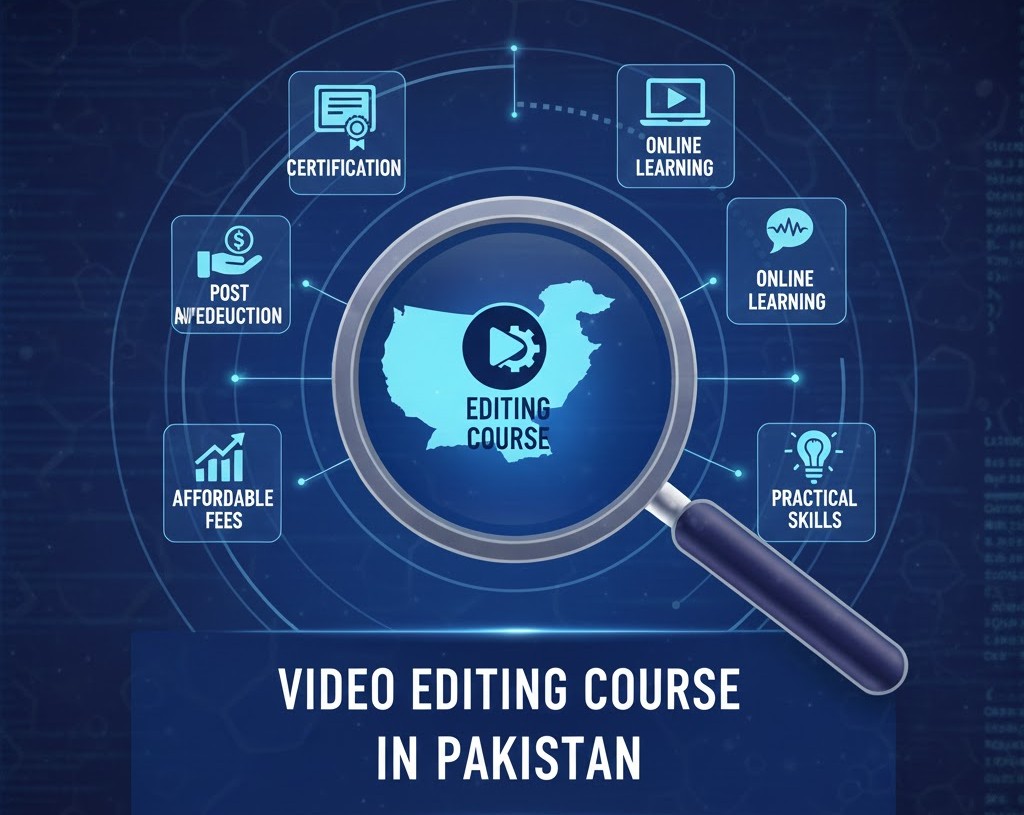
Video Editing Course in Pakistan
Introduction
Imagine this: a 19-year-old student in Lahore edits a short film on her laptop using free software, uploads it to YouTube, and within two weeks, it racks up over 100,000 views. That video not only lands her freelance gigs but also a scholarship to a digital arts program abroad. This isn’t fiction it’s the real story of Ayesha Malik, now a rising video editor in the Pakistani creative economy.
For students in Pakistan, video editing isn’t just a hobby it’s a gateway to global opportunities, side income, and future-proof careers. With digital content exploding across TikTok, YouTube, Instagram Reels, and corporate media, demand for skilled editors has never been higher. Yet, finding a truly effective video editing course in Pakistan can feel overwhelming. Many platforms promise mastery in 30 days but deliver surface-level tutorials with outdated tools.
This guide cuts through the noise. Drawing on insights from industry professionals, recent graduate surveys, and deep analysis of Pakistan’s e-learning landscape, we’ll walk you through what makes a video editing course worth your time and money, where to find the best options in 2025, and how to turn your skills into real-world results even while still in school.
Why Students in Pakistan Should Learn Video Editing Now
Video editing is no longer just for filmmakers. It’s a digital literacy skill as essential as word processing or spreadsheet use. According to a 2024 report by the Pakistan Software Export Board (PSEB), the country’s digital content economy is growing at 22% annually, with video production and post-production services among the fastest-growing freelance categories on platforms like Upwork and Fiverr.
For students, this presents a rare opportunity:
- Earn while you learn: Entry-level editors in Pakistan charge PKR 1,500–5,000 per minute of edited video.
- Build a portfolio early: Universities and employers increasingly value demonstrable digital skills.
- Work remotely: Once skilled, you can serve clients in the U.S., UK, or UAE without leaving your dorm room.
But here’s the catch: not all courses are created equal. A certificate alone won’t land you jobsit’s your actual editing ability that matters.
What to Look for in a High-Quality Video Editing Course
Real-World Curriculum, Not Just Software Tutorials
Many “video editing courses” in Pakistan focus solely on teaching Adobe Premiere Pro or DaVinci Resolve button-by-button. While software fluency is important, editing is about storytelling, pacing, color theory, audio sync, and visual rhythm not just clicking “export.”
A high-impact course should cover:
- Narrative structure (even for social media clips)
- Color grading fundamentals
- Audio cleanup and mixing
- Export settings for different platforms (TikTok vs. YouTube vs. corporate presentations)
- Client communication and file management
Look for courses that include real briefs like “edit a 60-second product promo for a Lahore-based startup” or “turn raw interview footage into a compelling NGO story.”
Certified Instructors with Industry Experience
Avoid courses taught by generic “content creators” with no professional editing background. Instead, seek instructors who:
- Have worked on commercial projects (ads, documentaries, YouTube series)
- Are active on platforms like LinkedIn or Behance with verifiable portfolios
- Offer mentorship or feedback not just pre-recorded videos
For example, Digital Vidya Pakistan partners with editors who’ve worked with brands like Jazz and Engro, while Pixelmator Academy (based in Islamabad) includes weekly live critique sessions.
Access to Updated Software and Hardware Guidance
Adobe Creative Cloud subscriptions can be costly for students. The best courses either:
- Provide free or discounted student licenses
- Teach using free alternatives like DaVinci Resolve (professional-grade and free) or Shotcut
- Include guidance on optimizing performance on low-end laptops a real concern for many Pakistani students
Top 5 Video Editing Courses in Pakistan for Students (2025)
1. National College of Arts (NCA) – Certificate in Digital Video Production
- Location: Lahore (with online modules)
- Duration: 3 months (weekend batches available)
- Why it stands out: Government-affiliated, rigorous curriculum, includes cinematography basics. Ideal for students serious about film or media careers.
- Cost: PKR 25,000 (scholarships available for underprivileged students)
2. Coursera – “Video Editing with Adobe Premiere Pro” (Offered by CalArts)
- Format: Fully online, self-paced
- Language: English (subtitles available)
- Why it works for Pakistani students: Financial aid available; globally recognized certificate; teaches Hollywood-standard workflows. You’ll edit a full short film by the end.
- Cost: Free to audit; ~$49 for certificate (financial aid covers 90%+ for students)
3. Tech Valley Institute (Karachi) – Professional Video Editing Bootcamp
- Duration: 6 weeks (intensive)
- Includes: DaVinci Resolve, After Effects basics, motion graphics
- Perk: Free 1-year Adobe CC license and guaranteed internship placement with local production houses
- Cost: PKR 35,000
4. YouTube + FreeCodeCamp – “Complete Video Editing Course”
- Format: Free, 8-hour tutorial on YouTube
- Taught by: Industry editor with 10+ years in broadcast
- Best for: Budget-conscious students wanting hands-on practice with real project files
- Limitation: No certificate or personalized feedback but excellent foundational knowledge
5. SkillShare – “Video Editing for Beginners: From Raw Footage to Final Cut”
- Taught by: Pakistani editor Fatima Raza (300k+ followers)
- Content: Focuses on mobile-first editing for Reels and Shorts, color psychology, and client pitching
- Cost: Free 1-month trial (cancel anytime); ~PKR 800/month after
💡 Pro Tip: Combine a free course (like FreeCodeCamp) with a paid mentorship (via Fiverr or local Facebook groups) for maximum ROI.
How to Practice Video Editing Without Expensive Gear
You don’t need a $2,000 rig to start. Many top editors began on budget laptops. Here’s how:
- Use free assets: Sites like Pexels, Pixabay, and Mixkit offer free 4K footage.
- Edit on your phone: CapCut and Kinemaster (Android/iOS) are surprisingly powerful.
- Join editing challenges: Platforms like EditChallenge.pk post weekly prompts great for building speed and creativity.
- Collaborate: Offer to edit for student filmmakers or campus events in exchange for raw footage to practice on.
Remember: your first 50 edits will be rough. Progress comes from repetition, not perfection.
Turning Skills into Income: Real Paths for Pakistani Students
Once you’ve built basic competence (usually after 3–4 real projects), you can start monetizing:
- Freelance on Upwork/Fiverr: Start with simple tasks like “trim and add subtitles to interview clips.”
- Campus gigs: Edit event videos for societies, departments, or student-run startups.
- Content agencies: Lahore and Karachi-based digital agencies often hire junior editors at PKR 25,000–40,000/month.
- YouTube: Create editing tutorials in Urdu/English many Pakistani creators now earn through AdSense and sponsorships.
“I made my first $100 editing wedding highlights for a cousin’s friend,” says Bilal Ahmed, 21, a computer science student in Faisalabad. “Now I work remotely for a Dubai-based travel vlogger.”
Common Pitfalls to Avoid
- Skipping audio editing: Bad audio ruins even the best visuals. Learn noise reduction and leveling.
- Overusing effects: Fancy transitions distract from storytelling. Less is more.
- Ignoring feedback: Share your work in groups like “Pakistani Video Editors” on Facebook. Constructive criticism accelerates growth.
- Chasing certifications over skill: A Coursera cert looks nice, but your edit reel matters more.
Final Thoughts: Your Future Starts with One Cut
Learning video editing in Pakistan today isn’t just about mastering software it’s about joining a digital renaissance. With internet penetration at 45% and mobile video consumption doubling since 2022, the timing has never been better.
You don’t need permission, expensive gear, or elite connections. All you need is curiosity, consistent practice, and the courage to share your first edit.
So open that free version of DaVinci Resolve. Download some stock footage. Make something even if it’s just 15 seconds long. Because the next viral video, ad campaign, or documentary might just come from your laptop in Islamabad, Peshawar, or Quetta.
Your story and your career begins with a single cut.
FAQs: Video Editing Courses in Pakistan
Q: Can I learn video editing without any prior experience?
A: Absolutely. Most beginner courses assume zero knowledge. Start with free tutorials, then move to structured programs as you build confidence.
Q: Which software should I learn first Premiere Pro or DaVinci Resolve?
A: DaVinci Resolve is free and industry-standard for color grading, while Premiere Pro dominates in general editing. Learn both eventually, but start with whichever your chosen course uses.
Q: How long does it take to become job-ready?
A: With consistent practice (5–7 hours/week), most students can handle paid gigs in 2–3 months. Focus on building a 3–5 project portfolio.
Q: Are online courses as good as in-person ones in Pakistan?
A: Yes if they include hands-on projects and feedback. In fact, online courses often offer more flexibility and global perspectives.
Q: Do I need a powerful laptop to edit videos?
A: Not necessarily. You can edit 1080p projects on 8GB RAM laptops by using proxy files and optimized settings. Many courses teach these workarounds.
Tags :
No Tags
0 Comments