



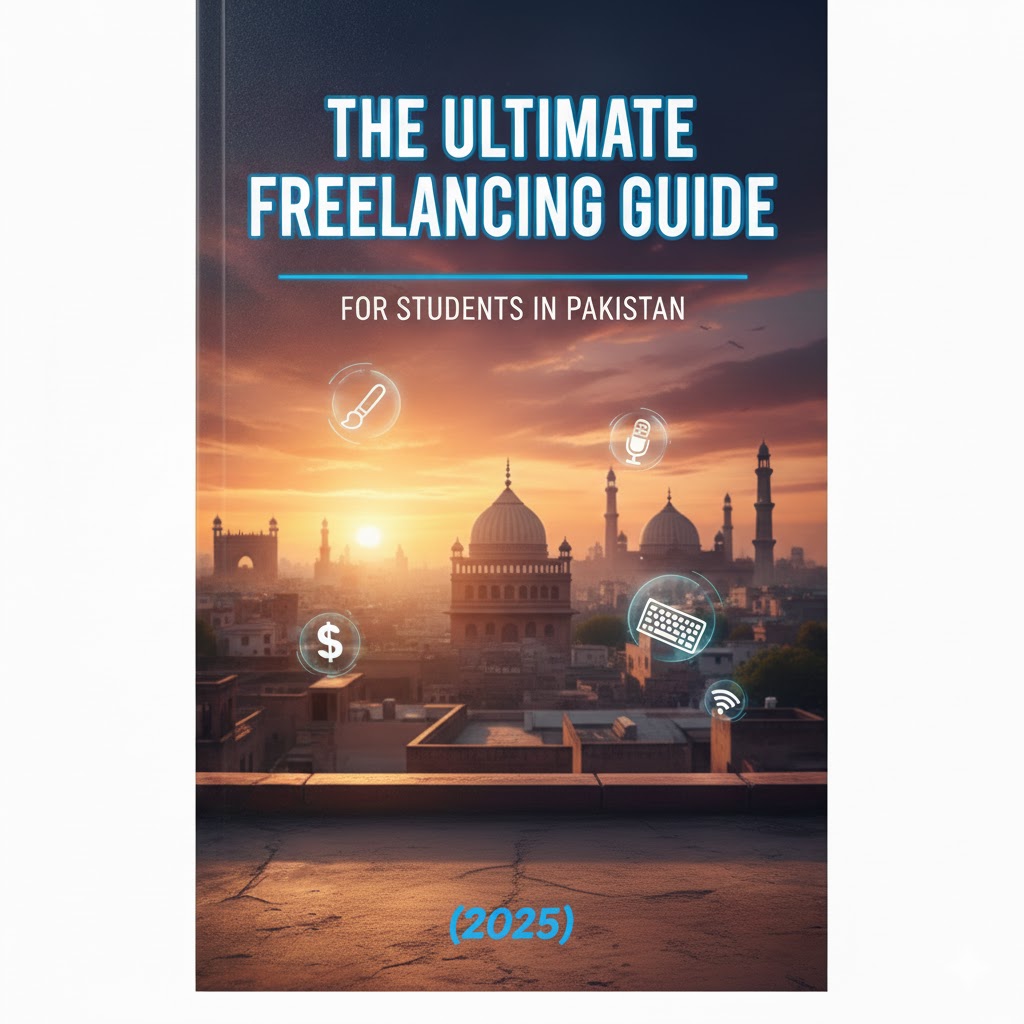
The Ultimate Freelancing Guide for Students in Pakistan (2025)
Introduction
Imagine earning real money while still in college without punching a clock or commuting across town. For students in Pakistan, freelancing isn’t just a side hustle it’s a lifeline. With over 5 million registered freelancers on platforms like Upwork and Fiverr and $1.1 billion in annual earnings reported by the Pakistan Software Export Board (PSEB), the country has quietly become a global hub for remote talent. Yet despite this explosive growth, many students remain stuck on where to start, which skills to learn, or how to stand out in a crowded digital marketplace.
If you're a student in Pakistan with a laptop, internet access, and ambition, this guide is your roadmap. We’ll cut through the noise and show you exactly how to launch, grow, and scale a sustainable freelancing career even while juggling exams and assignments. Drawing on insights from top Pakistani freelancers, industry reports from PSEB and the World Bank, and proven strategies that work in 2025’s competitive landscape, this article is built for beginners but packed with advanced tactics. You’ll learn about in-demand skills, how to avoid scams, pricing your work fairly, and building long-term client relationships all tailored to Pakistan’s unique digital economy.
Let’s turn your student hustle into serious income.
Why Freelancing Is a Game-Changer for Pakistani Students
Freelancing offers unmatched flexibility perfect for students balancing coursework, exams, and personal life. Unlike part-time retail or tutoring gigs, freelancing lets you choose your hours, clients, and projects. More importantly, it builds real-world, globally relevant skills that boost your resume and future employability.
According to a 2024 PSEB survey, 62% of Pakistani freelancers are under 30, with students making up a significant portion. Why? Because entry barriers are low. You don’t need a degree just demonstrable skills and reliability. And with Pakistan’s rupee-to-dollar exchange rate, even modest freelance earnings can translate into substantial local purchasing power.
“Freelancing taught me more in six months than my entire third year of university,” says Ayesha Malik, a final-year computer science student from Lahore who now earns $1,200/month designing Shopify stores. “It’s not just about money it’s confidence, communication, and problem-solving.”
Step 1: Choose the Right Freelance Niche (That Actually Pays)
Not all freelance skills are created equal. While content writing or data entry may seem easy to start, they’re saturated and low-paying. Instead, focus on high-demand, scalable services where Pakistani talent consistently wins global contracts.
Top 5 Freelancing Niches for Students in 2025:
- Web & App Development (React, Flutter, Node.js)
- Digital Marketing (SEO, Google Ads, Meta Ads)
- Graphic & UI/UX Design (Figma, Adobe XD, Canva Pro)
- Video Editing & Motion Graphics (Premiere Pro, After Effects)
- AI Prompt Engineering & Automation (ChatGPT workflows, Zapier, Make.com)
These fields command $15–$50/hour for mid-level freelancers far above minimum wage jobs. Importantly, you don’t need to be an expert on day one. Platforms like Coursera, Udemy, and even YouTube offer free or affordable courses. Many Pakistani universities now partner with tech giants (like Google and Microsoft) to offer certified digital skills programs check if yours does.
Pro Tip: Combine two skills. Example: SEO + WordPress development or Graphic design + social media strategy. This “T-shaped” skillset makes you harder to replace.
Step 2: Build a Portfolio Even With Zero Experience
Clients care about results, not resumes. But how do you show results when you’ve never been hired?
Create “spec work” (speculative projects):
- Redesign a local business’s logo or website (offer it for free in exchange for a testimonial).
- Write sample blog posts on trending topics in your niche.
- Record a mock explainer video for a fictional SaaS product.
Use free platforms like Behance (for design), GitHub (for coding), or Notion (for writing samples) to host your work. Your portfolio doesn’t need to be fancy—just clear, relevant, and problem-focused.
“My first client hired me because I redesigned their competitor’s homepage as a demo,” recalls Bilal Raza, a freelance web developer from Karachi. “I showed I understood their industry—not just code.”
Step 3: Choose the Right Platform (and Avoid Scams)
While Upwork and Fiverr dominate headlines, not all platforms suit beginners. Here’s a quick comparison:
|
Platform
|
Best For
|
Fees
|
Student-Friendly?
|
|---|---|---|---|
|
Upwork
|
Long-term contracts
|
20% → 10%
|
✅ (with strategy)
|
|
Fiverr
|
Quick gigs, digital products
|
20%
|
✅
|
|
PeoplePerHour
|
Creative & dev work
|
20% → 7.5%
|
⚠️ Competitive
|
|
Toptal
|
Elite developers/designers
|
Vetting only
|
❌ (too advanced)
|
|
Facebook Groups / LinkedIn
|
Local & regional clients
|
$0
|
✅✅✅
|
Critical Warning: Avoid “freelance coaching” scams. Never pay to “unlock jobs” or “get certified” by unknown agencies. Legitimate platforms never charge you to apply for work.
Instead, start small on Fiverr with a $5–$10 gig to gather reviews. Simultaneously, network on LinkedIn: follow Pakistani tech founders, comment on posts, and send polite DMs offering help. Many students land first clients through personal outreach not algorithms.
Step 4: Price Your Work Fairly (Without Underselling)
One of the biggest mistakes Pakistani students make? Charging too little. Yes, you’re new—but race-to-the-bottom pricing hurts you and the entire local ecosystem.
Use this framework:
- Beginner: $5–$10/hour (for simple, repeatable tasks)
- Intermediate: $15–$25/hour (with portfolio & 3–5 reviews)
- Advanced: $30+/hour (specialized skills, results-driven)
Better yet switch to project-based pricing. Instead of “$10/hour for logo design,” say “$75 for a complete brand identity (logo + color palette + font guide).” This positions you as a problem-solver, not a commodity.
Pro Negotiation Tip: If a client says “Your rate is too high,” respond with:
“I understand budget is a concern. Would you like a scaled-down version of this project for $X, or should we prioritize the highest-impact deliverables first?”
This shows empathy while holding your value.
Step 5: Get Paid Safely (and Legally)
Freelance income in Pakistan is tax-exempt up to PKR 1.2 million/year under the Freelancers’ Tax Amnesty Scheme. But you still need to receive payments smoothly.
✅ Recommended Payment Methods:
- Payoneer: Most popular; integrates with Upwork/Fiverr; allows PKR withdrawal via local banks.
- Wise (formerly TransferWise): Low fees, transparent exchange rates.
- Direct Bank Transfer: For long-term clients (use SWIFT/BIC codes).
❌ Avoid: PayPal (not fully operational in Pakistan), cryptocurrency (high volatility), or unverified local payment apps.
Always use contracts even for small gigs. Free templates from HelloSign or PandaDoc protect both you and your client. Specify deliverables, deadlines, revision limits, and payment terms.
Building Long-Term Success: Beyond the First Gig
Freelancing isn’t just about one-off jobs it’s about building a reputation. Top Pakistani freelancers focus on:
- Client retention: 80% of income often comes from repeat clients.
- Skill stacking: Learn complementary tools (e.g., a writer learning basic SEO analytics).
- Time blocking: Use apps like Toggl or Clockify to balance freelancing with studies.
Join communities like PakWired, Digital Rights Foundation’s freelancers’ forum, or university tech clubs. These networks share job leads, legal advice, and moral support.
“Freelancing gave me financial independence during my final year,” says Zara Ahmed, a freelance content strategist from Islamabad. “But more than that, it taught me how to think like an entrepreneur.”
Conclusion
Freelancing in Pakistan is no longer a “Plan B” it’s a viable, scalable career path that rewards initiative, skill, and consistency. As a student, you have a unique advantage: time to experiment, learn, and build without the pressure of full-time employment. By choosing the right niche, crafting a compelling portfolio, pricing with confidence, and prioritizing trust over quick cash, you can transform your laptop into a launchpad.
The digital economy doesn’t care about your degree it cares about what you can do. And in 2025, Pakistani students are proving they can compete with anyone, anywhere. Your journey won’t be perfect. You’ll face rejections, scope creep, and late payments. But every top freelancer started exactly where you are now with a dream, a device, and the courage to hit “send” on that first proposal.
So open that blank portfolio page. Draft that first gig description. Your future clients are waiting.
FAQs: Freelancing for Students in Pakistan
Q: Do I need a CNIC or NTN to freelance in Pakistan?
A: You need a CNIC to verify accounts on Payoneer or Upwork. An NTN (National Tax Number) is optional if your annual income is under PKR 1.2 million, thanks to the Freelancers’ Tax Amnesty Scheme.
Q: Can I freelance while on a student visa abroad?
A: It depends on the country. Many nations (like the US or UK) restrict paid remote work for international students. Check your visa terms but freelancing for Pakistani clients while abroad may still be allowed.
Q: How long does it take to earn my first $100?
A: With consistent effort (5–10 hours/week), most students land their first paying gig within 2–6 weeks. Speed depends on your niche, portfolio quality, and proposal strategy.
Q: Are freelancing earnings taxable in Pakistan?
A: Yes but income up to PKR 1.2 million/year is exempt under the 2023 Freelancers’ Tax Amnesty. Keep records of all transactions for compliance.
Q: What’s the biggest mistake new freelancers make?
A: Underpricing and overpromising. Focus on delivering excellent work on small projects first. Reputation compounds faster than cash.
Tags :
No Tags
0 Comments