



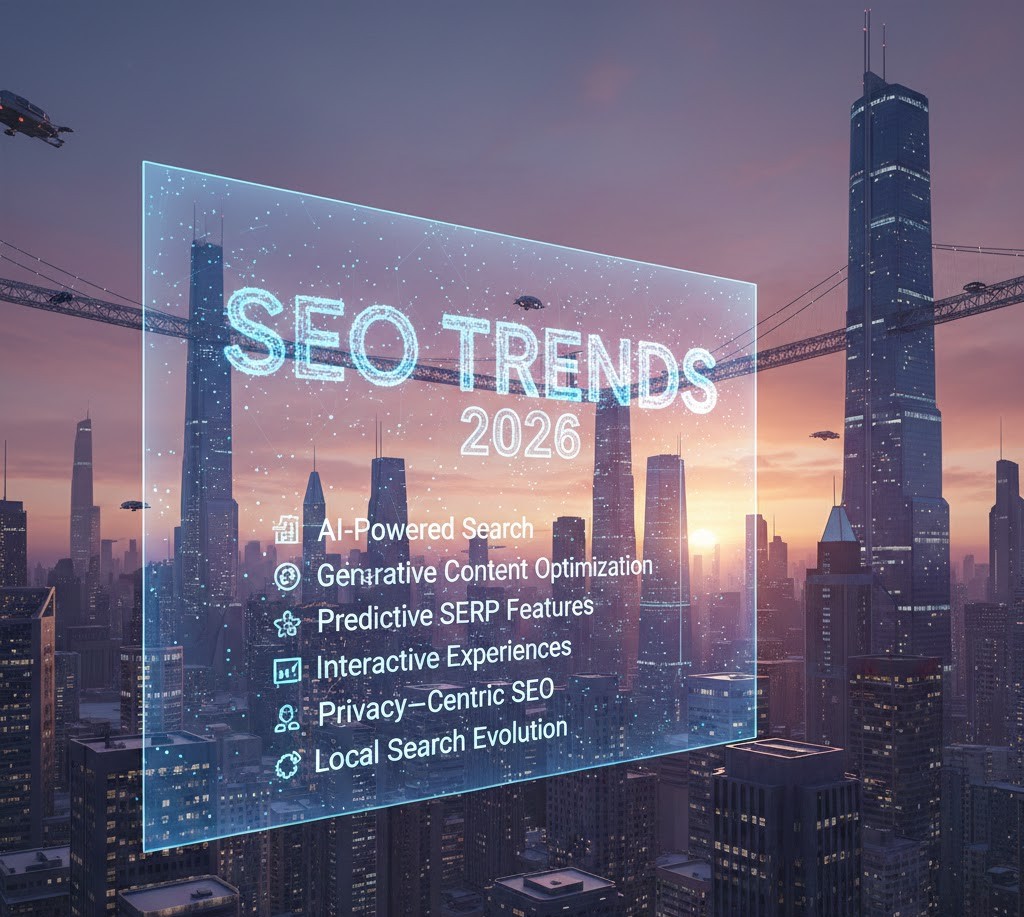
SEO Trends 2026
Introduction
Imagine spending months building a website, writing blog posts, or launching an online store only to realize no one can find it. It’s like opening a shop in the middle of a desert without a signboard. That’s where SEO comes in.
Search Engine Optimization isn’t just a technical trick or a marketing buzzword anymore. In 2026, it’s one of the most valuable digital skills a student can learn. Whether you want to start freelancing, build a personal brand, grow an e-commerce store, or land a job in digital marketing, understanding SEO gives you a serious advantage.
But SEO is also evolving rapidly. Search engines are smarter. User behavior is changing. Artificial intelligence is reshaping how results appear. So what does SEO really look like in 2026 and how should beginners prepare?
In this guide, I’ll break down the most important SEO trends for 2026 in simple, practical terms. You’ll understand how search engines work, what skills matter most, what myths to ignore, and how you can start building real-world SEO expertise as a student.
Let’s begin with the foundation.
What SEO Really Means in Digital Marketing
Most beginners define SEO as “ranking on Google.” That’s not wrong but it’s incomplete.
SEO is about earning visibility in search engines by providing the best answer to a user’s query.
In 2026, SEO is no longer about tricking algorithms with keywords or backlinks. It’s about:
-
Understanding user intent
-
Creating helpful, original content
-
Optimizing technical performance
-
Building trust and authority
Search engines like Google are focused on one primary goal: delivering the most useful and relevant result as quickly as possible. If your website genuinely helps users, SEO becomes a long-term growth engine rather than a short-term tactic.
For students, this is important. SEO teaches you how to think strategically about audience behavior, data analysis, psychology, and content creation all at once.
How Search Engines Work (In Simple Terms)
Before we talk about trends, let’s understand the basics.
Search engines operate in three main stages:
1. Crawling
Search engines use bots (often called spiders) to discover web pages. They follow links from one page to another.
2. Indexing
Once discovered, pages are stored in a massive database called an index. Think of it like a digital library.
3. Ranking
When someone searches for something, the search engine scans its index and ranks pages based on hundreds of factors—relevance, quality, speed, authority, and user experience.
In 2026, search engines are far more advanced in understanding:
-
Context instead of just keywords
-
Search intent (informational, transactional, navigational)
-
User behavior signals (click-through rates, engagement)
-
Content quality and credibility
This means shallow, keyword-stuffed content simply doesn’t work anymore.
Major SEO Trends in 2026
1. Search Intent Is More Important Than Keywords
A few years ago, SEO revolved around inserting exact keywords into titles and paragraphs. Today, search engines understand variations and meaning.
In 2026, successful SEO starts with answering:
-
What problem is the user trying to solve?
-
Are they researching, comparing, or ready to buy?
-
What format do they expect—guide, list, video, product page?
For example:
If someone searches “best laptops for students 2026,” they want comparisons, pros and cons, pricing—not a history of laptops.
Beginner Takeaway:
Instead of asking “How many times should I use this keyword?” ask “What does the user truly need here?”
2. AI-Powered Search and Generative Results
Search engines are increasingly integrating AI-generated summaries at the top of results pages. These pull information from multiple sources.
This changes two things:
-
Only high-quality, authoritative content gets cited.
-
Generic content has less visibility.
In 2026, content that performs well usually has:
-
Original insights
-
Real examples
-
Clear structure
-
Strong credibility signals
Beginner Takeaway:
Focus on depth, clarity, and real value. Don’t just rewrite what already exists.
3. Topical Authority Over Single Keywords
Publishing one blog post about a topic is no longer enough.
Search engines now evaluate whether your website has topical authority—meaning you cover a subject comprehensively.
For example, a website about SEO might include:
-
On-page SEO guides
-
Technical SEO tutorials
-
Keyword research strategies
-
Case studies
-
SEO tools comparisons
When search engines see consistent coverage, trust increases.
Beginner Takeaway:
Think in “content clusters,” not isolated posts.
4. User Experience Is a Ranking Factor
In 2026, SEO and user experience (UX) are deeply connected.
Important factors include:
-
Fast loading speed
-
Mobile responsiveness
-
Easy navigation
-
Clear structure
-
Readable formatting
If users click your site and leave immediately, rankings will suffer.
Beginner Takeaway:
SEO is not just about traffic—it’s about satisfying visitors.
Core Components of SEO (Still Essential in 2026)
On-Page SEO
On-page SEO refers to optimizations within your content and website pages.
Key elements include:
-
Title tags and meta descriptions
-
Header structure (H1, H2, H3)
-
Internal linking
-
Content depth and relevance
-
Image optimization
-
Proper keyword usage (natural, not forced)
In 2026, on-page SEO is about clarity and structure, not keyword density.
Practical Skill to Learn:
Practice writing blog posts with clean heading structures and logical flow.
Technical SEO
Technical SEO ensures search engines can properly access and understand your website.
Important areas include:
-
Site speed
-
XML sitemaps
-
Structured data (schema markup)
-
Mobile optimization
-
Secure HTTPS connection
-
Crawlability
Many beginners ignore technical SEO, but in competitive industries, it’s a major advantage.
Practical Skill to Learn:
Understand Google Search Console and basic site audits.
Off-Page SEO
Off-page SEO focuses on building authority outside your website.
This includes:
-
Backlinks from trusted websites
-
Brand mentions
-
Digital PR
-
Social signals
In 2026, quality matters far more than quantity. One strong link from a reputable site can outperform dozens of weak ones.
Practical Skill to Learn:
Understand outreach, relationship building, and content marketing.
How SEO Fits Into the Broader Digital Marketing Ecosystem
SEO does not exist in isolation.
It works alongside:
-
Content marketing
-
Social media marketing
-
Email marketing
-
Paid ads (PPC)
-
Conversion rate optimization
For example:
A blog post ranks on Google → visitor joins email list → receives marketing emails → makes a purchase.
SEO brings the traffic. Other channels convert and retain it.
For students, this means SEO can be the entry point into the larger digital marketing world.
Real-World Example
Let’s say a student starts a blog about fitness for beginners.
Instead of writing random posts, they:
-
Research beginner workout questions.
-
Create detailed guides answering those queries.
-
Optimize site speed and mobile experience.
-
Interlink related posts.
-
Build backlinks through guest posts.
Within 12 months, traffic grows steadily.
That student can now:
-
Monetize through affiliate links
-
Offer coaching services
-
Freelance as an SEO writer
-
Apply for digital marketing jobs
SEO becomes both a skill and a career pathway.
Common SEO Myths Beginners Still Believe
Myth 1: SEO Is Dead
SEO evolves but it’s not disappearing. As long as search engines exist, optimization matters.
Myth 2: More Keywords = Better Rankings
Overusing keywords can harm your content quality and readability.
Myth 3: You Need Expensive Tools to Start
Many free tools (Google Search Console, Google Trends) are enough for beginners.
Myth 4: SEO Brings Instant Results
SEO is long-term. It can take months to see significant growth.
Practical SEO Skills Students Should Start Learning Today
If you’re serious about SEO in 2026, focus on:
-
Keyword research fundamentals
-
Understanding search intent
-
Writing high-quality, structured content
-
Basic technical audits
-
Internal linking strategy
-
Reading analytics data
-
Content optimization
Start your own blog. Nothing teaches SEO better than real experimentation.
SEO Careers and Opportunities in 2026
The demand for SEO professionals continues to grow.
Popular roles include:
-
SEO Specialist
-
Technical SEO Analyst
-
Content Strategist
-
SEO Copywriter
-
Digital Marketing Manager
-
E-commerce SEO Consultant
With remote work becoming normal, students can work with clients globally.
Freelancing platforms, agencies, startups, and established companies all need SEO expertise.
The key difference in 2026? Employers value strategic thinking and adaptability more than tool knowledge.
FAQs About SEO Trends 2026
Is SEO still worth learning in 2026?
Yes. SEO remains one of the most cost-effective digital marketing channels and a high-demand skill in the job market.
How long does it take to learn SEO?
You can understand the basics in 2–3 months. Mastery takes ongoing practice and real-world experience.
Is coding required for SEO?
Not necessarily. Basic HTML knowledge helps, but many SEO roles focus more on strategy and content.
Can students earn money from SEO?
Absolutely. Freelancing, blogging, affiliate marketing, and agency jobs are common income paths.
Is AI replacing SEO professionals?
AI assists with research and analysis, but human strategy, creativity, and judgment remain essential.
Conclusion
SEO in 2026 is smarter, more user-focused, and deeply connected to content quality and experience. It’s no longer about shortcuts or gaming the system. It’s about understanding people what they search for, why they search, and how best to serve them.
For students and beginners, this is powerful news. SEO rewards curiosity, patience, and strategic thinking more than large budgets. You don’t need a marketing degree or expensive tools to begin. You need clarity, consistency, and the willingness to learn.
As digital competition increases, those who understand search will control visibility. And in the digital world, visibility is opportunity.
Start now. Build skills gradually. Experiment. Analyze. Improve.
SEO is not just a marketing tactic it’s a long-term career asset.
Tags :
No Tags

0 Comments