



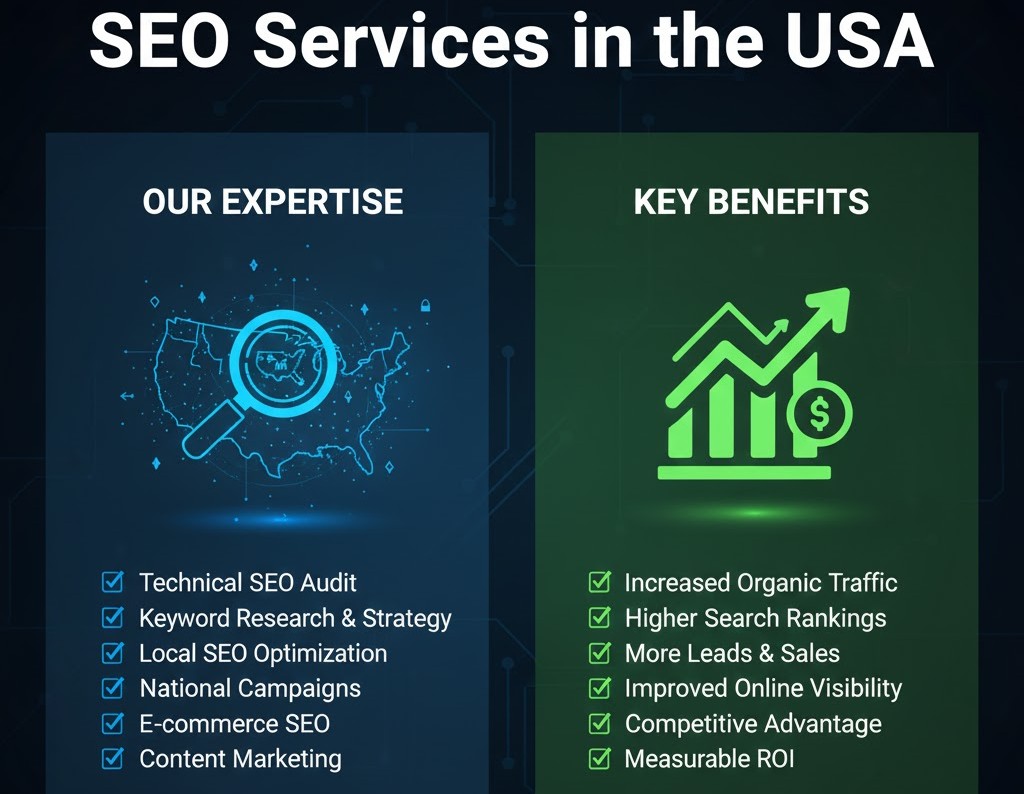
SEO Services in the USA
Introduction
In 2025, more than 68% of online experiences still begin with a search engine, according to aggregated industry studies from Google Search Central and independent research firms. For students in the United States, this single statistic quietly shapes everything from how you research assignments to how you discover internships, side hustles, online courses, and future employers. Yet behind every high-ranking website sits a structured discipline known as Search Engine Optimization (SEO).
SEO services in the USA are no longer relevant only to large corporations or digital agencies. Today, students actively use SEO to build personal brands, earn freelance income, launch niche blogs, grow YouTube channels, and improve employability in a competitive job market. Universities now offer digital marketing degrees, while startups increasingly hire SEO-savvy graduates who understand both content and data.
This article explains SEO services in the USA from a student’s perspective what they are, how they work, why they matter, and how learners can practically benefit from them. Drawing on real-world examples, expert insights, and current Google algorithm guidance (2024–2025), this guide is designed to help students move from curiosity to confident understanding.
What Are SEO Services? (Explained Simply for Students)
SEO services refer to professional strategies and actions designed to improve a website’s visibility in organic (non-paid) search results. In the U.S. market, these services are typically provided by digital agencies, consultants, SaaS platforms, or in-house SEO teams.
From a student-friendly lens, SEO services focus on three core goals:
-
Helping search engines understand content
-
Helping users find relevant answers
-
Helping websites earn trust and authority over time
Core Components of SEO Services
Most SEO services in the USA include:
-
Keyword research (understanding what people search for)
-
On-page SEO (optimizing content, headings, URLs)
-
Technical SEO (site speed, mobile usability, indexing)
-
Content strategy (helpful, original, experience-based content)
-
Link building & digital PR (earning authority signals)
-
SEO analytics & reporting (measuring real impact)
For students, these components are not abstract concepts. They are transferable skills used across marketing, journalism, data analysis, UX design, and entrepreneurship.
Why SEO Services in the USA Matter More Than Ever (2024–2025)
Google’s recent updates including the Helpful Content System, Core Updates, and Spam Policies—have reshaped SEO into a discipline focused on human value over manipulation.
Key Algorithm Shifts Students Should Understand
According to Google Search Central and statements from Google’s Search Liaison:
-
Content must demonstrate real experience, not surface-level summaries
-
Websites with clear authorship, credibility, and transparency rank more consistently
-
AI-generated content is acceptable only when it adds value and originality
This matters to students because SEO is no longer about shortcuts. It rewards:
-
Research skills
-
Critical thinking
-
Ethical content creation
-
Analytical reasoning
In short, SEO aligns with academic and professional skill-building, making it highly relevant for students preparing for modern careers.
Types of SEO Services in the USA (Student-Relevant Breakdown)
1. Educational & Training-Based SEO Services
Many U.S.-based SEO providers now focus on education-first services, including:
-
SEO courses and certifications
-
University partnerships
-
Bootcamps and workshops
Platforms like Google Digital Garage and industry-recognized SEO academies emphasize hands-on learning, which students can apply immediately.
Student benefit: Skill acquisition without needing a full-time job.
2. Freelance-Friendly SEO Services
SEO services often support freelancers by offering:
-
Content optimization frameworks
-
Local SEO strategies
-
Client reporting systems
Students working as writers, designers, or developers can bundle SEO knowledge into their services, increasing earning potential.
Real-world example: A U.S.-based marketing student optimized niche blog posts using semantic SEO principles and grew traffic to 30,000 monthly visitors within a year—later monetizing through affiliate partnerships.
3. Startup and Small Business SEO Services
Many American startups actively collaborate with student interns trained in SEO to:
-
Conduct keyword research
-
Write optimized blog content
-
Analyze Google Search Console data
This creates entry-level opportunities that don’t require years of experience.
How SEO Services Align with Google’s EEAT Guidelines
EEAT Experience, Expertise, Authoritativeness, and Trustworthiness is central to modern SEO in the USA.
Experience (Why First-Hand Knowledge Matters)
Google prioritizes content written by people with real-world involvement. For students, this means:
-
Writing case studies from internships
-
Documenting learning journeys
-
Sharing practical experiments
Example: A student documenting how they optimized a campus club website demonstrates experience far better than generic advice.
Expertise (Learning Before Ranking)
SEO services now emphasize topic depth, not surface-level keywords. Students benefit by:
-
Studying subject clusters
-
Learning semantic relationships
-
Understanding user intent
This mirrors academic research methods, reinforcing credibility.
Authoritativeness (Signals Beyond Content)
Authority comes from:
-
Mentions from reputable sites
-
Consistent topical focus
-
Clear author profiles
SEO services in the USA increasingly help individuals not just brands build authority through personal websites and portfolios.
Trustworthiness (Technical & Ethical SEO)
Trust signals include:
-
HTTPS security
-
Accurate information
-
Transparent authorship
For students, learning ethical SEO builds long-term career trust, not short-term rankings.
Semantic SEO: The Skill Students Should Master Early
Semantic SEO focuses on meaning, context, and relationships, not just keywords.
Instead of targeting only “SEO services in USA,” semantic optimization includes:
-
Search engine optimization agencies
-
Digital marketing services
-
Organic traffic growth
-
Google ranking factors
Students trained in semantic SEO can adapt to algorithm changes faster, making them valuable hires.
Actionable tip: Use topic mapping tools and entity research rather than relying solely on keyword volume.
Common SEO Services Students Can Practice Without a Budget
You don’t need expensive tools to start learning SEO in the U.S. market.
Free or low-cost practices include:
-
Optimizing Medium or WordPress blogs
-
Running site audits with Google Search Console
-
Learning from Google Search Central documentation
-
Analyzing SERPs manually
These activities build demonstrable experience, which Google and employers value.
Career Opportunities Linked to SEO Services in the USA
SEO skills open doors to roles such as:
-
SEO analyst
-
Content strategist
-
Digital marketing coordinator
-
Growth marketer
-
Freelance consultant
According to aggregated U.S. hiring data, SEO-related roles consistently rank among top remote-friendly marketing jobs.
For students, SEO offers:
-
Flexible income streams
-
Portfolio-based hiring advantages
-
Location-independent work
Ethical SEO vs Spam: What Students Must Avoid
Google’s Spam Policies (2024–2025) strictly penalize:
-
Keyword stuffing
-
AI content without human value
-
Fake backlinks
-
Deceptive redirects
SEO services in the USA now focus on long-term sustainability, not loopholes.
Student takeaway: Learning ethical SEO protects your reputation and future career.
FAQs: SEO Services in the USA (Student-Focused)
1. Are SEO services only for businesses?
No. Students use SEO for blogs, portfolios, freelancing, research projects, and career growth.
2. Can students learn SEO without technical background?
Yes. Modern SEO emphasizes content quality, user intent, and strategy more than coding.
3. How long does it take to see SEO results?
Typically 3–6 months, depending on consistency and competition.
4. Is SEO still a good career choice in the USA?
Yes. Demand continues to grow as organic search remains a primary traffic source.
5. Does Google allow AI content in SEO?
Yes if it is helpful, original, and experience-driven.
Tags :
No Tags

0 Comments