



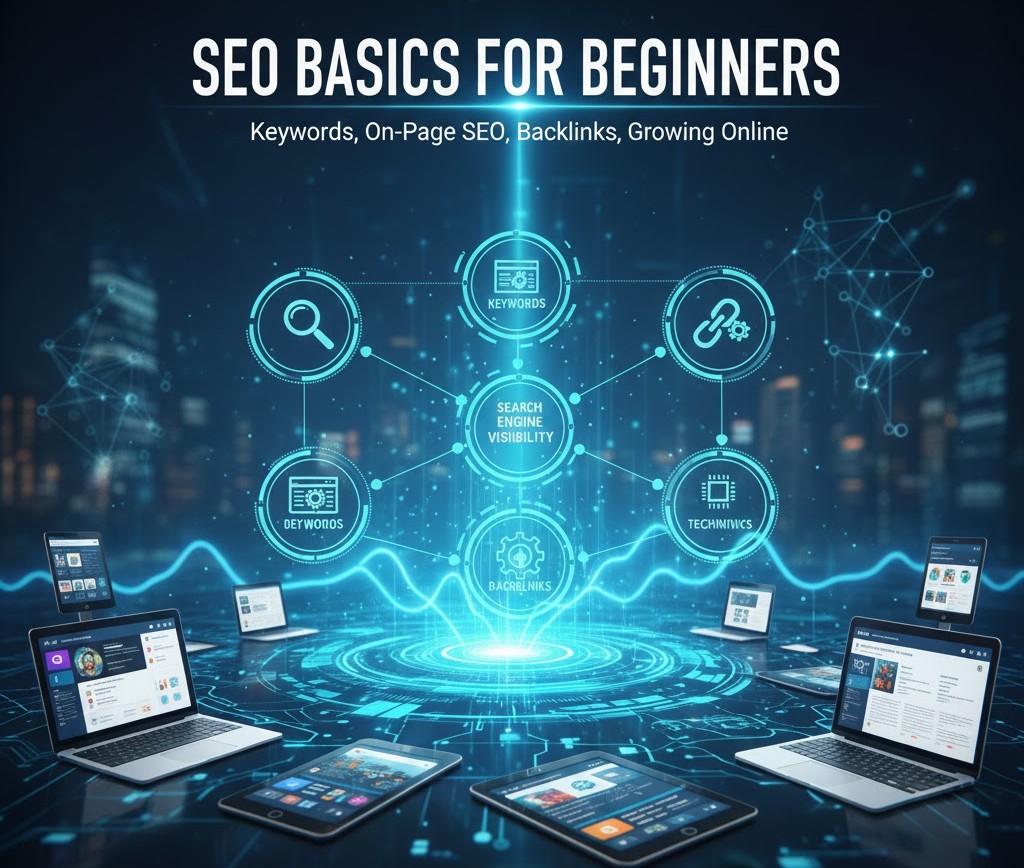
SEO Basics for Beginners
Introduction
Have you ever searched for something on Google and wondered why certain websites always seem to appear at the top while others are buried pages deep, never to be seen? That’s not an accident. Behind almost every high-ranking page is a thoughtful strategy known as Search Engine Optimization, or SEO.
For students and beginners stepping into digital marketing, SEO can feel intimidating at first. It sounds technical, filled with jargon, algorithms, and rules that seem to change overnight. But at its core, SEO is surprisingly human. It’s about understanding what people are searching for, why they’re searching, and how to give them the best possible answer.
In today’s digital-first world, SEO is no longer just a skill for marketers or web developers. It’s a foundational skill for students, freelancers, entrepreneurs, writers, and anyone who wants visibility online. This article will walk you through SEO basics in clear, simple language no fluff, no hype. By the end, you’ll understand how SEO works, why it matters, and how you can start learning practical SEO skills today.
What SEO Really Means in Digital Marketing
Most beginner definitions say something like: SEO is the process of optimizing websites to rank higher in search engines. While that’s technically true, it barely scratches the surface.
SEO is really about earning attention.
Search engines exist to help users find the most useful, relevant, and trustworthy information as quickly as possible. SEO aligns your content, website, and online presence with that goal. When done well, it helps search engines trust you and helps users choose you.
From a digital marketing perspective, SEO sits at the intersection of:
-
User experience
-
Content quality
-
Technical performance
-
Brand credibility
Unlike paid ads, SEO focuses on long-term visibility. You’re not paying for clicks; you’re building assets that continue to attract visitors over time. For students, this makes SEO especially valuable. You’re investing time and learning, not money.
Beginner takeaway: SEO isn’t about tricking Google. It’s about helping search engines understand why your content deserves to be seen.
How Search Engines Work (In Simple Terms)
To understand SEO, you need a basic idea of how search engines operate. Don’t worry—no engineering degree required.
Search engines like Google work in three main stages:
Crawling
Search engines use automated programs called crawlers (or bots) to discover pages on the internet. They follow links from one page to another, constantly finding new or updated content.
If your page isn’t accessible or linked properly, it may never be discovered.
Indexing
Once a page is found, the search engine tries to understand what it’s about. It analyzes the content, structure, headings, images, and context, then stores that information in a massive database called an index.
If your content is unclear or low-quality, it may be indexed poorly or not at all.
Ranking
When someone types a query, the search engine scans its index and ranks pages based on relevance, usefulness, and trust signals. The goal is to show the best possible answer, not just the most optimized one.
Beginner takeaway: SEO helps search engines crawl, understand, and trust your content so it can be ranked for the right searches.
The Key Components of SEO
SEO isn’t one single activity. It’s a combination of related practices that work together. As a beginner, understanding these components will help you see the bigger picture.
On-Page SEO: Optimizing What Users See
On-page SEO focuses on elements within your website especially your content.
Key aspects include:
-
Content quality: Clear, accurate, helpful information written for real people
-
Keyword usage: Using search terms naturally, not excessively
-
Headings and structure: Organizing content so it’s easy to read and understand
-
Internal links: Connecting related pages within your site
-
User intent: Matching what the searcher is actually looking for
For example, if a student searches “SEO basics for beginners,” they want explanations not sales pages or advanced technical guides. On-page SEO means delivering exactly that.
Beginner takeaway: Write content for humans first. SEO supports clarity it doesn’t replace it.
Technical SEO: Making Your Site Easy to Use
Technical SEO sounds scary, but at the beginner level, it’s mostly about removing friction.
It focuses on how well your website functions behind the scenes, including:
-
Page speed and performance
-
Mobile-friendliness
-
Secure connections (HTTPS)
-
Clean URLs
-
Proper indexing
If your site is slow, broken, or confusing, users leave and search engines notice.
You don’t need to be a developer to understand technical SEO. You just need to care about usability.
Beginner takeaway: A technically healthy site makes it easier for both users and search engines to trust you.
Off-Page SEO: Building Trust Beyond Your Website
Off-page SEO refers to signals outside your website that influence how trustworthy you appear.
The most well-known factor is backlinks links from other reputable websites pointing to yours. Think of them as digital recommendations.
Other off-page signals include:
-
Brand mentions
-
Social sharing (indirectly)
-
Online reviews
-
Authority within a niche
If respected websites reference your content, it signals credibility.
Beginner takeaway: SEO isn’t just about what you say it’s about who vouches for you.
How SEO Fits Into the Digital Marketing Ecosystem
SEO doesn’t exist in isolation. It supports and is supported by other digital marketing channels.
For example:
-
Content marketing: SEO helps great content get discovered
-
Social media: Social platforms amplify reach and visibility
-
Paid ads: SEO insights improve ad targeting and landing pages
-
Email marketing: SEO brings new users into long-term audiences
For students, this interconnectedness is important. Learning SEO builds transferable skills that apply across marketing, media, and communication roles.
Beginner takeaway: SEO is a foundation skill that strengthens every other digital strategy.
Real-World Example: SEO in Action
Imagine a student starts a simple blog explaining coding concepts in plain language. At first, only friends read it. Over time, the student:
-
Writes clear articles answering specific questions
-
Organizes content logically
-
Improves page speed and mobile layout
-
Earns a few backlinks from online communities
Months later, some posts begin ranking on Google. Traffic grows. Opportunities appear freelance writing, internships, even job offers.
This is how SEO works in real life. Slowly, steadily, and sustainably.
Beginner takeaway: You don’t need a big budget or brand name just consistency and value.
Common SEO Myths Beginners Believe
SEO confusion often starts with myths. Let’s clear a few up.
Myth 1: SEO is all about keywords
Keywords matter, but understanding intent matters more.
Myth 2: SEO delivers instant results
SEO is a long-term investment, not a quick win.
Myth 3: You can “game” search engines
Shortcuts may work briefly, but they rarely last.
Myth 4: SEO is only for tech experts
Many successful SEO professionals started as writers or students.
Beginner takeaway: Sustainable SEO is about patience, learning, and user value.
Practical SEO Skills Students Should Start Learning Today
If you’re new to SEO, focus on skills that build a strong foundation.
Start with:
-
Writing clear, helpful content
-
Understanding search intent
-
Basic keyword research logic
-
Content structuring and headings
-
Website usability awareness
As you grow, you can explore analytics, audits, and strategy. But early progress comes from mastering the basics.
Beginner takeaway: You don’t need to know everything just start with what helps users most.
How SEO Careers and Opportunities Are Evolving
SEO is no longer just about ranking pages. It now overlaps with:
-
Content strategy
-
UX and product design
-
Brand authority
-
Data analysis
Roles include SEO specialist, content strategist, growth marketer, and digital consultant. Freelancing, remote work, and global clients are common making SEO especially attractive for students planning flexible careers.
Search behavior is evolving, but the core principle remains: people need reliable information. SEO helps deliver it.
Beginner takeaway: SEO skills open doors across industries and career paths.
Frequently Asked Questions About SEO
What is SEO in simple words?
SEO is the practice of improving content and websites so search engines can show them to the right people at the right time.
How long does SEO take to work?
SEO usually takes months, not days. Results build gradually as trust and relevance grow.
Can students learn SEO without a website?
Yes. You can start by analyzing search results, writing sample content, or contributing to existing platforms.
Is SEO still relevant in 2025?
Absolutely. As long as people search for information, SEO will matter.
Do I need coding skills for SEO?
Basic knowledge helps, but many SEO roles focus more on content, strategy, and analysis.
Conclusion
SEO can seem complex when you first encounter it, but at its heart, it’s a skill rooted in understanding people. It teaches you how audiences search, how information is evaluated, and how trust is built online. For students and beginners, that combination is incredibly powerful.
By learning SEO basics, you’re not just learning how to rank pages you’re learning how the internet works. You’re developing skills in communication, research, and problem-solving that apply far beyond search engines.
SEO rewards curiosity, consistency, and quality. You don’t need to master everything at once. Start small, stay patient, and focus on helping real people. Over time, the results follow.
Tags :
No Tags

0 Comments