



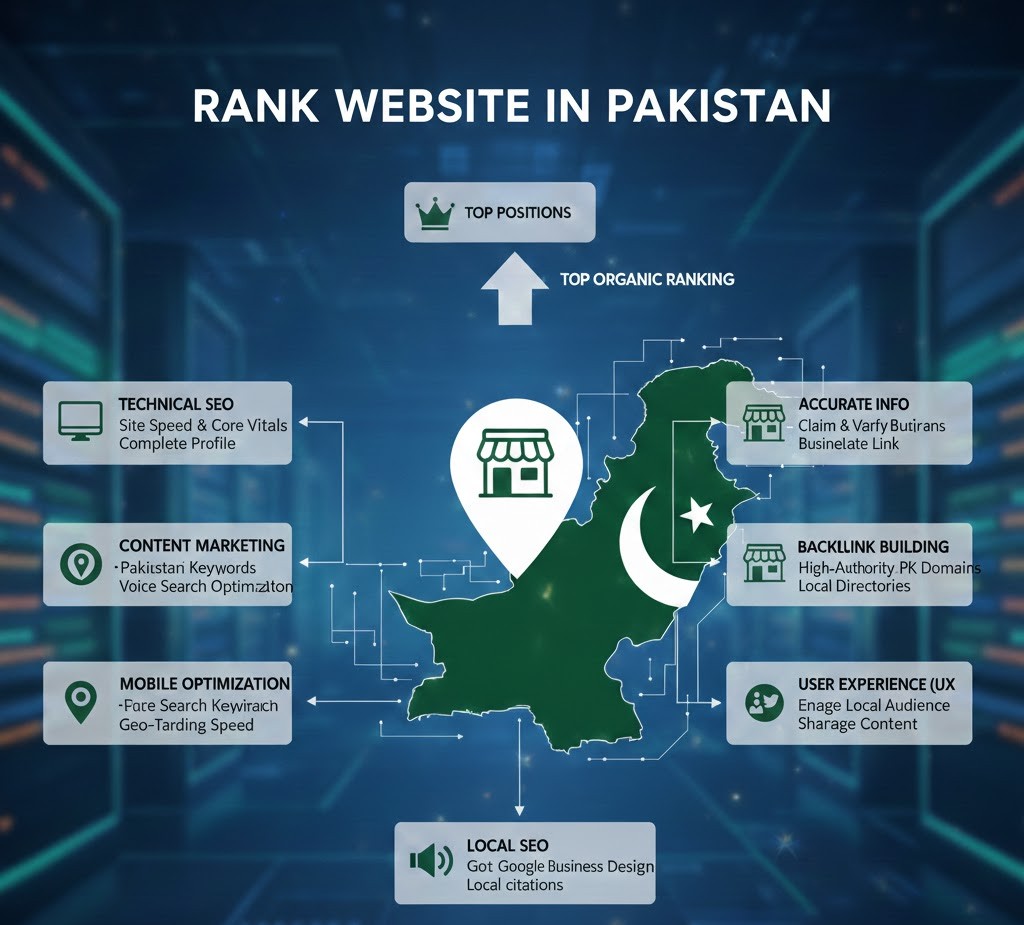
Rank Website in Pakistan
Introduction
Imagine launching a website you worked hard on great design, helpful content, maybe even a powerful idea behind it but no one ever finds it. Weeks pass, months go by, and your traffic counter barely moves. This is the reality for most beginners who don’t understand how search engines work. In Pakistan, where competition is growing fast across freelancing, e-commerce, blogging, and online education, knowing how to rank a website is no longer optional. It’s a career skill.
SEO (Search Engine Optimization) is not just a technical trick to “please Google.” It’s a practical, long-term skill that helps you attract real people to your website without paying for ads. For students and beginners, it opens doors to freelancing, remote jobs, blogging income, and digital entrepreneurship.
In this guide, you’ll learn what SEO really means, how search engines actually work, the key components of ranking a website in Pakistan, common myths to avoid, and the practical skills you should start building today. No jargon overload. No robotic explanations. Just clear, honest guidance.
What SEO Really Means in Digital Marketing
Most beginners think SEO is about stuffing keywords into articles and magically ranking on Google. That outdated idea causes more harm than good.
In reality, SEO is about understanding human behavior and matching it with search intent.
When someone searches “best mobile under 50,000 PKR” or “how to start freelancing in Pakistan,” they are not looking for random pages. They want useful, clear, trustworthy answers. Google’s entire business model depends on showing the best possible results. SEO is simply the process of aligning your content with what users genuinely need.
So instead of asking, “How do I trick Google?”, a smarter question is:
“How do I become the best result for this search?”
This mindset shift changes everything. SEO becomes less about shortcuts and more about:
-
Understanding your audience
-
Creating valuable content
-
Building trust and authority
-
Improving user experience
That’s why SEO is not just a marketing tactic. It’s a communication skill.
How Search Engines Work (In Simple Terms)
You don’t need to be a software engineer to understand how search engines function. Think of Google like a massive digital librarian.
Crawling
Google uses bots (often called spiders) to discover pages across the internet. They follow links from one page to another, just like a human browsing.
Indexing
Once a page is discovered, Google stores and organizes its content in a giant database. If your page isn’t indexed, it won’t appear in search results at all.
Ranking
When someone types a query, Google’s algorithm quickly decides which pages are most helpful. It considers hundreds of signals, including:
-
Content quality
-
Relevance to the search
-
Page speed
-
Mobile-friendliness
-
Backlinks from other websites
-
User behavior (do people stay or leave quickly?)
For beginners in Pakistan, this is important: ranking is not about having the “best English” or the most expensive website. It’s about usefulness, clarity, and consistency.
Key Components of SEO
SEO is usually divided into three main areas. If you understand these well, you already know more than most beginners.
On-Page SEO: Optimizing What You Control
On-page SEO refers to everything you do inside your website to help it rank better.
Content Quality and Relevance
This is the heart of SEO. Google rewards content that:
-
Answers real questions clearly
-
Is written for humans, not robots
-
Provides depth instead of surface-level fluff
For example, an article titled “How to Rank Website in Pakistan” should not just repeat basic tips. It should cover local challenges, Pakistani audience behavior, examples, and practical steps.
Smart Keyword Usage
Keywords matter, but not the way beginners think. You don’t need to repeat “rank website in Pakistan” 50 times. Instead, use related phrases naturally:
-
SEO for Pakistani websites
-
How to get traffic from Google in Pakistan
-
Improve website ranking locally
-
SEO tips for beginners in Pakistan
This helps search engines understand your topic without making your content sound unnatural.
Titles, Headings, and Structure
Clear structure helps both readers and search engines. Good on-page SEO includes:
-
A compelling main title
-
Logical H2 and H3 headings
-
Short paragraphs
-
Easy-to-scan layout
Think of your article like a well-organized lecture, not a messy notebook.
Internal Linking
When you link one article on your website to another, you guide both users and search engines. This helps build topical authority over time.
Technical SEO: The Foundation of Performance
Technical SEO sounds scary, but for beginners, the basics are manageable.
Website Speed
Slow websites lose rankings and users. Many Pakistani websites struggle because of heavy images, cheap hosting, or poorly optimized themes. A fast site improves user experience and builds trust.
Mobile Friendliness
Most traffic in Pakistan comes from mobile devices. If your site looks broken on phones, your rankings will suffer. A responsive design is no longer optional.
Secure Website (HTTPS)
A secure site shows users that their data is safe. Google considers this a trust signal.
Clean URL Structure
Simple URLs like:
yourwebsite.com/seo-for-beginners
are far better than:
yourwebsite.com/page?id=123xyz
Technical SEO isn’t about perfection. It’s about removing barriers that stop your good content from performing.
Off-Page SEO: Building Trust Beyond Your Website
Off-page SEO focuses on how the rest of the internet perceives your site.
Backlinks: The Digital Word of Mouth
When other reputable websites link to your content, it signals credibility. Think of backlinks like recommendations. A link from a respected blog or news site in Pakistan can significantly improve your rankings.
But here’s the mistake beginners make: they chase quantity instead of quality. Ten strong links from relevant sites are more powerful than 1,000 spammy links.
Brand Presence
Google pays attention to whether people search for your brand name, mention your site, or share your content. Building a recognizable identity online matters.
Social Signals (Indirect Impact)
While social media links may not directly boost rankings, they help your content reach more people, which can lead to more backlinks and engagement.
How SEO Fits Into the Broader Digital Marketing Ecosystem
SEO does not exist in isolation. It connects deeply with other digital skills.
Content marketing relies on SEO to get visibility.
Social media marketing amplifies SEO content.
Email marketing benefits from SEO traffic.
Paid ads become more profitable when SEO pages convert better.
For students, this is powerful. Learning SEO doesn’t lock you into one career path. It connects to blogging, YouTube, freelancing, affiliate marketing, e-commerce, and even traditional businesses moving online.
If digital marketing is a system, SEO is the engine that keeps everything running sustainably.
Real-World Examples: How SEO Changes Outcomes
Consider two students in Lahore who start blogs about freelancing.
Student A writes articles randomly, with no understanding of search intent. Titles are vague. Topics are based on personal mood rather than audience needs. After six months, traffic remains close to zero.
Student B researches what Pakistani students are actually searching for:
-
“How to earn from Fiverr in Pakistan”
-
“Best freelancing skills for students”
-
“Payoneer account setup Pakistan”
They write detailed, helpful articles around these topics. Over time, their pages start ranking. Traffic grows slowly, then steadily. Eventually, opportunities appear: freelance clients, collaborations, even job offers.
The difference isn’t luck. It’s strategic SEO thinking.
Common SEO Myths Beginners Still Believe
Myth 1: SEO is a one-time task
SEO is ongoing. Search trends change, competitors improve, and content needs updates.
Myth 2: More keywords = higher rankings
Keyword stuffing hurts readability and trust. Google’s systems are smart enough to detect unnatural writing.
Myth 3: You need expensive tools to succeed
Tools help, but understanding matters more. Many successful SEO professionals started with free resources and strong fundamentals.
Myth 4: SEO results happen overnight
SEO is slow but powerful. It’s more like building a reputation than running an ad.
Understanding these myths early saves beginners from frustration.
Practical SEO Skills Students Should Start Learning Today
If you’re a student in Pakistan wanting real-world skills, focus on these areas first.
Search Intent Analysis
Learn to ask: Why is someone searching this? What problem are they trying to solve?
Content Writing With Structure
Practice writing clear blog posts with strong introductions, logical flow, and helpful depth.
Basic Keyword Research
Learn how to find topics people actually search for, not just topics you personally like.
On-Page Optimization
Understand how to write titles, meta descriptions, headings, and internal links properly.
Analytics and Performance Tracking
Learn how to read basic traffic data and understand what’s working.
These are not just SEO skills. They are communication, strategy, and critical thinking skills — valuable in almost any career.
How SEO Careers and Opportunities Are Evolving
SEO is no longer just “optimize websites for Google.” It has expanded into multiple career paths.
Content SEO specialists focus on strategy and writing.
Technical SEO experts handle performance and structure.
SEO strategists work with brands and large companies.
Freelance SEO consultants help businesses grow traffic.
Affiliate marketers use SEO to generate passive income.
Bloggers use SEO to build long-term platforms.
In Pakistan, demand for SEO skills is increasing as businesses shift online. Agencies, startups, e-commerce brands, and even traditional companies now look for people who understand organic growth.
For students, this is an opportunity. SEO does not require a formal degree. It rewards those who learn, test, fail, improve, and stay consistent.
Frequently Asked Questions
How long does it take to rank a website in Pakistan?
For a new website, it typically takes 3 to 6 months to start seeing meaningful results, depending on competition, content quality, and consistency.
Can I learn SEO without technical background?
Yes. Many successful SEO professionals started with no technical skills. You can begin with content and on-page SEO, then gradually learn the technical side.
Is SEO still worth learning in 2026 and beyond?
Absolutely. As long as people use search engines to find information, SEO will remain valuable. The methods evolve, but the skill stays relevant.
Do I need to pay for tools to succeed in SEO?
No. While tools can help, beginners can achieve strong results using free platforms and a solid understanding of fundamentals.
Can students earn through SEO while studying?
Yes. Many students earn through blogging, freelancing, affiliate marketing, or managing websites once they build basic SEO skills.
Conclusion
Learning how to rank a website in Pakistan is not about chasing algorithms. It’s about understanding people, creating value, and building trust over time. SEO teaches you how to think strategically, write purposefully, and analyze behavior skills that go far beyond digital marketing.
For students and beginners, SEO is one of the few skills where effort compounds. The articles you write today can bring traffic next year. The knowledge you build now can create opportunities later. Unlike shortcuts, SEO rewards patience and consistency.
If you treat SEO as a long-term craft rather than a quick hack, you won’t just rank websites. You’ll build digital assets, professional credibility, and a future-proof skill set. And in a fast-growing digital market like Pakistan, that advantage is more powerful than ever.
Tags :
No Tags

0 Comments