



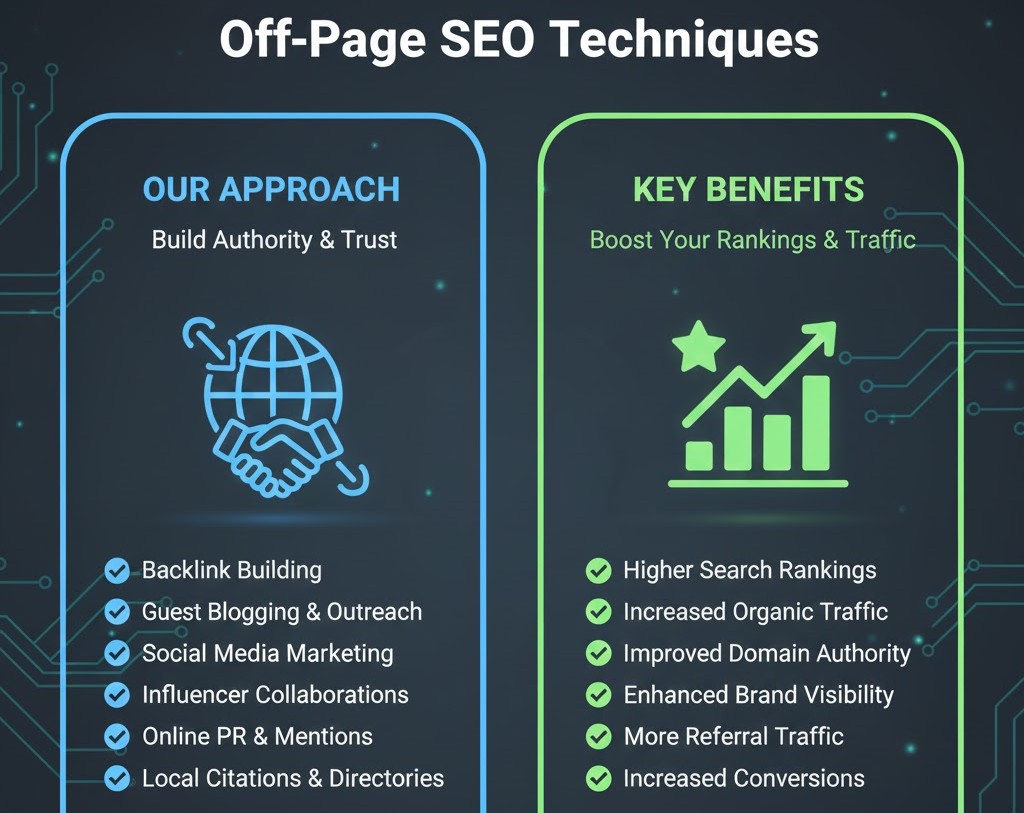
Off-Page SEO Techniques
Introduction
Imagine spending hours optimizing your website polishing meta tags, fine-tuning keywords, and crafting perfect contentonly to see minimal traffic growth. Frustrating, right? This is where off-page SEO steps in. While on-page SEO focuses on elements you control directly on your site, off-page SEO revolves around the signals you earn externally, influencing your website’s authority, relevance, and ranking on Google.
For students entering the digital marketing world, understanding off-page SEO is crucial. Not only does it teach the importance of online reputation and networking, but it also gives you actionable skills that can immediately improve website visibility. In this guide, we’ll explore top off-page SEO techniques, backed by expert insights, actionable tips, and real-world examples. By the end, you’ll have a roadmap to boost your site’s authority and ranking organically.
What is Off-Page SEO and Why It Matters
Off-page SEO refers to all the actions taken outside your website to impact its ranking on search engines. Unlike on-page SEO, which deals with internal elements like content structure, headings, and meta descriptions, off-page strategies emphasize credibility and trustworthiness through external signals.
Why Students Should Care
-
Build Online Authority Early: Developing skills in link-building and reputation management can be a powerful resume booster.
-
Increase Organic Traffic: Google’s algorithm favors websites that others trust and reference.
-
Improve Brand Perception: Strong off-page SEO signals your expertise and reliability to both users and search engines.
According to Backlinko’s 2024 study, websites with strong backlink profiles are 3.8 times more likely to rank in the top 10 search results. This underscores why mastering off-page SEO is not optional—it's essential.
1. Link Building: The Backbone of Off-Page SEO
Link building is the most recognized off-page SEO technique. Essentially, it’s about acquiring hyperlinks from other websites to your own. Each link acts as a vote of confidence for search engines, signaling that your content is valuable and trustworthy.
Types of Backlinks
-
Natural Links: Earned organically when other websites reference your content.
-
Manual Outreach Links: Acquired through guest posts, influencer collaborations, or partnerships.
-
Self-Created Links: Added in directories, forums, or blog comments (must be used cautiously to avoid penalties).
Best Practices for Students
-
Focus on high-authority domains rather than quantity.
-
Use relevant anchor text that naturally fits the content.
-
Avoid link farms or spammy techniques, as Google’s 2025 updates increasingly penalize manipulative strategies.
Example: A student blog on digital marketing can guest post on HubSpot Academy’s blog or contribute to Moz community articles, acquiring authoritative backlinks.
2. Social Media Engagement
While social signals (likes, shares, and comments) are not direct ranking factors, social media plays a critical role in off-page SEO:
-
Amplifies Content Reach: Sharing quality content on LinkedIn, Twitter, or Instagram increases chances of backlinks.
-
Enhances Brand Authority: Consistent engagement establishes your presence as a credible voice in your niche.
-
Drives Referral Traffic: Social platforms can be a primary source of visitors who may link to your site.
Tip: Share educational content, infographics, or video tutorials. For instance, a student creating a tutorial on SEO basics can post it on YouTube or LinkedIn to attract both traffic and potential backlinks.
3. Guest Posting
Guest posting remains a gold standard for off-page SEO. It involves writing content for another website in your niche, linking back to your site naturally.
Why It Works
-
Builds authority and credibility.
-
Generates high-quality backlinks.
-
Introduces your content to a new audience.
Actionable Tips
-
Target blogs with Domain Authority (DA) above 40.
-
Ensure your guest post provides real value rather than being promotional.
-
Include links naturally, ideally pointing to resource pages or guides on your site.
Example: Writing a guest article on “Emerging SEO Trends for 2025” on a popular marketing blog can position you as a knowledgeable contributor and attract organic backlinks.
4. Forum Participation and Community Engagement
Engaging in forums like Reddit, Quora, or Stack Exchange can indirectly boost your SEO by:
-
Building niche authority.
-
Driving targeted traffic to your site.
-
Increasing brand mentions, which Google increasingly considers in ranking signals.
Tip: Answer questions comprehensively and link to your content only when it genuinely adds value. Over-promotional links can hurt your credibility.
5. Influencer Outreach
Influencer marketing and off-page SEO intersect when influencers share, reference, or link to your content.
Steps to Leverage Influencers
-
Identify micro-influencers in your niche.
-
Offer valuable content, insights, or collaboration opportunities.
-
Encourage them to mention or link to your website naturally.
Stat Insight: According to Influencer Marketing Hub (2025), brands using micro-influencers see 5x higher engagement rates than traditional advertising, indirectly supporting SEO through increased visibility and backlinks.
6. Brand Mentions and Online Reputation Management
Google increasingly values brand mentions, even without a hyperlink, as a trust signal. Mentions can appear in:
-
News articles
-
Podcasts
-
Reviews
-
Social media discussions
How Students Can Leverage This
-
Monitor brand mentions using tools like Google Alerts or Mention.
-
Engage with communities that discuss your niche.
-
Encourage positive reviews on Google My Business or relevant directories.
Case Study: A student-run tech blog gained 50+ organic backlinks after being featured in niche podcasts discussing AI tools, highlighting the power of mentions without direct links.
7. Content Marketing Beyond Your Website
Content marketing isn’t just about publishing blogs. For off-page SEO, it involves creating assets that others want to share:
-
Infographics
-
Video tutorials
-
Interactive quizzes
-
Research studies or surveys
Why This Matters
High-quality content naturally attracts backlinks, shares, and citations, improving your site’s authority. Google rewards content that other credible sites reference, reinforcing your EEAT signals.
8. Local SEO Signals
For students or small businesses targeting local visibility, off-page SEO includes local citations and listings:
-
Claim your Google Business Profile
-
List your website in relevant directories like Yelp or Yellow Pages
-
Encourage reviews and respond to feedback
Tip: Ensure NAP consistency (Name, Address, Phone) across all platforms. Inconsistent details can dilute trust and impact rankings.
9. Broken Link Building
Broken link building involves finding dead links on other websites and suggesting your content as a replacement. It’s effective because:
-
It helps webmasters maintain their site quality.
-
You earn relevant backlinks naturally.
-
Enhances your authority by being a resource provider.
Actionable Step: Use tools like Ahrefs or Screaming Frog to find broken links in your niche and reach out to webmasters with your content as a solution.
10. Monitoring and Analytics
Finally, off-page SEO requires continuous monitoring. Tools like Google Search Console, Ahrefs, SEMrush, and Moz can help track:
-
Backlink quality and quantity
-
Referral traffic sources
-
Competitor strategies
-
Brand mentions
Pro Tip: Regularly audit your backlink profile to disavow toxic links, ensuring your site maintains trustworthiness and authority.
Conclusion
Mastering off-page SEO is essential for anyone serious about digital marketing. From link building to influencer outreach, social engagement, and content promotion, every strategy contributes to your website’s authority, visibility, and credibility.
For students, these techniques offer a hands-on way to learn real-world SEO while building a personal brand or boosting a project’s online presence. The key is quality over quantity, authenticity, and consistent effort. Remember, search engines reward sites that are trusted, referenced, and valued by real people.
Start small: focus on a few strategies, track your results, and iterate. With patience and strategic effort, your off-page SEO can become a powerful driver of organic growth and an invaluable skill for your future career.
FAQs
1. What is the most effective off-page SEO technique?
While there’s no single “best” method, high-quality backlink acquisition remains the cornerstone of effective off-page SEO.
2. Can social media activity improve Google rankings?
Indirectly, yes. Social engagement increases visibility and content sharing, which can lead to backlinks and brand mentions, boosting SEO authority.
3. How often should I monitor my backlinks?
It’s recommended to audit your backlink profile at least quarterly to remove toxic links and track new opportunities.
4. Do brand mentions without links help SEO?
Yes. Google increasingly considers unlinked brand mentions as a trust signal, enhancing authority and relevance.
5. Are directory submissions still useful?
Only if they are reputable, niche-specific directories. Generic or spammy directories may harm your SEO.
Tags :
No Tags

0 Comments