



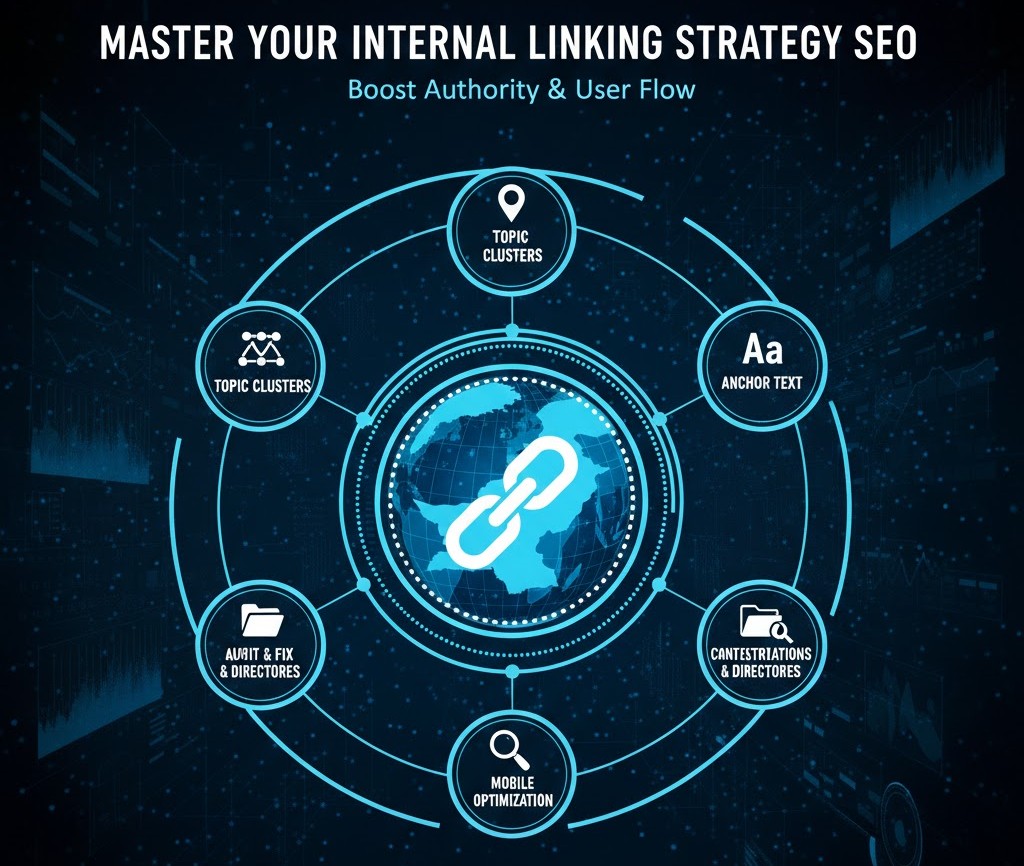
Master Your Internal Linking Strategy SEO
Introduction
Have you ever clicked a link in a blog post that led you to another helpful article and then another and suddenly you’d spent 20 minutes learning without realizing it? That smooth journey isn’t an accident. It’s the result of a thoughtful internal linking strategy, one of the most underrated yet powerful aspects of SEO.
For students and beginners, SEO can feel overwhelming. There are algorithms, updates, tools, and endless advice online. But the truth is, some of the most effective SEO improvements don’t require advanced technical skills. Internal linking is one of them. When done well, it improves user experience, strengthens your site’s authority, and helps search engines understand your content more clearly.
In this guide, you’ll learn what SEO really means beyond textbook definitions, how search engines work in simple terms, and how internal linking fits into the bigger SEO picture. By the end, you’ll not only understand internal linking you’ll know how to use it strategically like a professional.
What SEO Really Means in Digital Marketing
Most beginners learn that SEO stands for “Search Engine Optimization,” but that definition barely scratches the surface.
In real-world digital marketing, SEO is about understanding human behavior as much as algorithms. It’s about knowing what people are searching for, what problems they’re trying to solve, and how your content can genuinely help them. Search engines reward websites that serve users well, not those that simply follow technical tricks.
Think of SEO as building a library, not gaming a system. Every article you publish is a book. Your job is to:
-
Make each book valuable and clear
-
Organize the library so people can easily find related books
-
Help librarians (search engines) understand what each book is about
Internal linking is the shelving system of your library. Without it, even great content can feel scattered and hard to navigate.
How Search Engines Work (In Simple Terms)
You don’t need to be an engineer to understand how search engines operate. At a basic level, they follow three steps:
Crawling
Search engines use bots (often called crawlers or spiders) to explore the web. These bots move from page to page by following links. That means links are literally how search engines discover your content.
If a page on your website has no internal links pointing to it, crawlers may never find it or they may consider it less important.
Indexing
Once a page is discovered, the search engine tries to understand what it’s about. It looks at your headings, text, images, and links to decide how your page should be categorized.
Internal links provide context. When multiple pages link to one article using relevant anchor text, it sends a strong signal about that page’s topic.
Ranking
Finally, when someone searches for a topic, the search engine chooses which pages to show and in what order. Hundreds of factors influence this decision, but clarity, relevance, and site structure play a major role.
This is where internal linking quietly becomes a competitive advantage.
The Key Components of SEO
Before diving deeper into internal linking, it’s important to see where it fits within the broader SEO framework.
On-Page SEO
On-page SEO refers to everything you control on individual pages, such as:
-
Quality and depth of content
-
Headings and structure
-
Keyword usage (natural, not forced)
-
Image optimization
-
Internal links
Internal linking is one of the most impactful on-page techniques because it improves both usability and search visibility.
Technical SEO
Technical SEO focuses on how well your website functions behind the scenes, including:
-
Site speed
-
Mobile responsiveness
-
Clean URL structure
-
Proper indexing
-
Secure browsing (HTTPS)
A good internal linking structure supports technical SEO by making your site easier to crawl and understand.
Off-Page SEO
Off-page SEO is about your site’s reputation across the web. This includes:
-
Backlinks from other websites
-
Brand mentions
-
Social visibility
While backlinks get a lot of attention, internal links are the foundation that helps you make the most of any authority your site earns.
What Is an Internal Linking Strategy?
Internal linking simply means linking from one page on your website to another page on the same website. But a strategy goes beyond randomly inserting links.
A strong internal linking strategy answers three questions:
-
Which pages are most important on my site?
-
How can I guide users naturally toward deeper content?
-
How can I help search engines understand relationships between topics?
Instead of treating each article as an isolated piece, you begin to build a connected content ecosystem.
Why Internal Linking Matters More Than Most Beginners Realize
Many students focus entirely on keywords and backlinks. Internal linking often gets ignored because it seems “too simple.” In practice, it can be the difference between a site that struggles and a site that grows steadily.
Here’s why it matters:
It Improves User Experience
Good internal links feel helpful, not pushy. They:
-
Help readers find related answers
-
Encourage longer time on site
-
Reduce bounce rates
When users stay longer and explore more, that positive behavior sends strong quality signals.
It Distributes Authority Across Your Site
Some pages naturally earn more attention, shares, or backlinks. Internal links allow you to pass some of that strength to other important pages, helping them perform better too.
It Clarifies Topic Relationships
If you write multiple articles about SEO, internal links help search engines understand that your site has depth on that topic. Over time, this supports topical authority.
How to Build a Smart Internal Linking Structure
A thoughtful approach always beats a random one. Let’s explore how professionals think about internal linking.
Start With Topic Clusters
One of the most effective modern approaches is building topic clusters.
Instead of writing disconnected articles, you organize content like this:
-
A central, comprehensive guide (often called a pillar page)
-
Several supporting articles that explore subtopics in depth
-
Links connecting the pillar to the subpages and vice versa
For example, a pillar article on “SEO for Beginners” might link to separate articles about keyword research, on-page optimization, technical SEO, and internal linking. Each of those sub-articles would link back to the main guide.
This structure helps users navigate logically and helps search engines recognize your site as an authority on the subject.
Use Natural, Descriptive Anchor Text
Anchor text is the clickable text of a link. Instead of writing vague phrases like “click here,” strong internal links use descriptive language.
Compare the difference:
-
Weak: Click here to learn more.
-
Strong: Learn how to build an effective internal linking strategy.
The second option gives both readers and search engines meaningful context.
Link Where It Adds Real Value
Professional SEO isn’t about stuffing links everywhere. It’s about relevance.
Ask yourself:
-
Does this link genuinely help the reader understand the topic better?
-
Does it feel like a natural next step in their learning journey?
If the answer is yes, the link belongs there.
Prioritize Your Most Important Pages
Not all pages are equal. Some articles support your main goals more than others, such as:
-
Core service pages
-
High-converting blog posts
-
Comprehensive guides
These pages should receive more internal links from related content, signaling their importance.
Real-World Example: How Internal Linking Transforms a Blog
Imagine a student who starts a blog about digital marketing. At first, they publish articles randomly:
-
One about SEO
-
One about social media
-
One about email marketing
-
One about freelancing
Each post exists on its own. Traffic is slow, and visitors leave quickly.
Now imagine they revisit the site with an internal linking strategy. They group their SEO-related articles and link them together:
-
The SEO basics article links to keyword research
-
The keyword research article links to on-page optimization
-
On-page optimization links to internal linking
-
Each article links back to a main “SEO for Beginners” guide
Suddenly, visitors start reading multiple articles per session. Search engines see clear topical depth. Over time, rankings improve not because of tricks, but because the content ecosystem now makes sense.
Common SEO Myths Beginners Believe
Understanding internal linking also means unlearning some widespread myths.
Myth 1: More Links Always Mean Better SEO
Quality always beats quantity. Ten meaningful, well-placed internal links are far more effective than fifty random ones.
Myth 2: Internal Links Don’t Matter Compared to Backlinks
Backlinks are important, but internal links are what allow you to fully benefit from any authority your site gains. They’re part of the foundation, not an afterthought.
Myth 3: SEO Is Just About Keywords
Keywords matter, but structure, clarity, usability, and helpful content matter just as much. Internal linking sits right at the intersection of all of these.
Practical Internal Linking Tips Students Can Apply Today
You don’t need advanced tools or years of experience to start improving your site.
Here are beginner-friendly practices that actually work.
Review Your Old Content
Go back to your existing articles and ask:
-
Are there opportunities to link to newer, related posts?
-
Are some pages isolated with no links pointing to them?
Even small updates can create big improvements over time.
Think Like a Reader, Not Just a Marketer
The best internal links feel like thoughtful recommendations, not SEO tactics. When you write, imagine you’re guiding a friend through a topic step by step.
Build Habits Early
If you’re just starting out, make internal linking part of your workflow:
-
After publishing a new article, find 2–4 older posts where it makes sense to add a link
-
In your new article, include links to relevant foundational content
This habit compounds as your site grows.
How Internal Linking Fits Into the Bigger Digital Marketing Ecosystem
SEO doesn’t exist in isolation. It supports and strengthens other digital marketing efforts.
When your internal linking structure is strong:
-
Content marketing becomes more effective because readers explore more deeply
-
Email marketing performs better when links lead to well-connected content hubs
-
Social media traffic stays longer on your site because users find more relevant resources
In other words, internal linking helps you get more value from every channel, not just organic search.
How SEO Careers Are Evolving (And Why Internal Linking Skills Matter)
SEO used to be seen as a purely technical field. Today, the most successful professionals combine strategy, psychology, writing, and data analysis.
Employers and clients increasingly value people who understand:
-
How content connects across a website
-
How to structure information for both users and search engines
-
How to build long-term organic growth instead of chasing short-term tricks
Mastering internal linking is part of developing that strategic mindset. It shows you understand SEO as a system, not just a set of tactics.
For students, this skill can become a portfolio advantage. You can point to your own site and explain how you built topical authority through thoughtful structure. That’s far more impressive than simply listing certifications.
FAQs About SEO and Internal Linking
Is internal linking important for small websites?
Yes, sometimes even more so. Small sites need every advantage they can get. A clear structure helps search engines understand your content faster and helps visitors find more value in fewer pages.
How many internal links should I use per article?
There’s no perfect number. Focus on relevance instead. Most well-written long-form articles naturally include several helpful internal links, often between 3 and 10 depending on length and topic.
Can internal linking improve rankings on its own?
Internal linking isn’t magic, but it amplifies the impact of good content. Combined with strong writing and helpful topics, it can absolutely contribute to better visibility.
Should I link only to blog posts, or to other pages too?
You should link to any relevant page: blog posts, guides, service pages, category pages wherever it genuinely helps the reader.
How long does it take to see results from internal linking?
Some improvements, like better engagement, can happen quickly. SEO visibility often improves gradually over weeks or months, especially as search engines re-crawl your site.
Conclusion
Internal linking may seem simple, but its impact is profound. It shapes how users experience your website, how search engines interpret your content, and how authority flows across your pages. For students and beginners, it’s one of the most accessible yet powerful SEO skills to master.
When you stop thinking of your articles as isolated pieces and start viewing your site as a connected knowledge ecosystem, everything changes. Your content becomes easier to navigate, more valuable to readers, and clearer to search engines. That’s the foundation of sustainable SEO growth.
If you’re serious about building a future in digital marketing, start with the fundamentals. Learn how content connects. Practice thoughtful internal linking. Over time, this strategic mindset will set you apart not just as someone who understands SEO, but as someone who truly understands how the web works.
Tags :
No Tags

0 Comments