



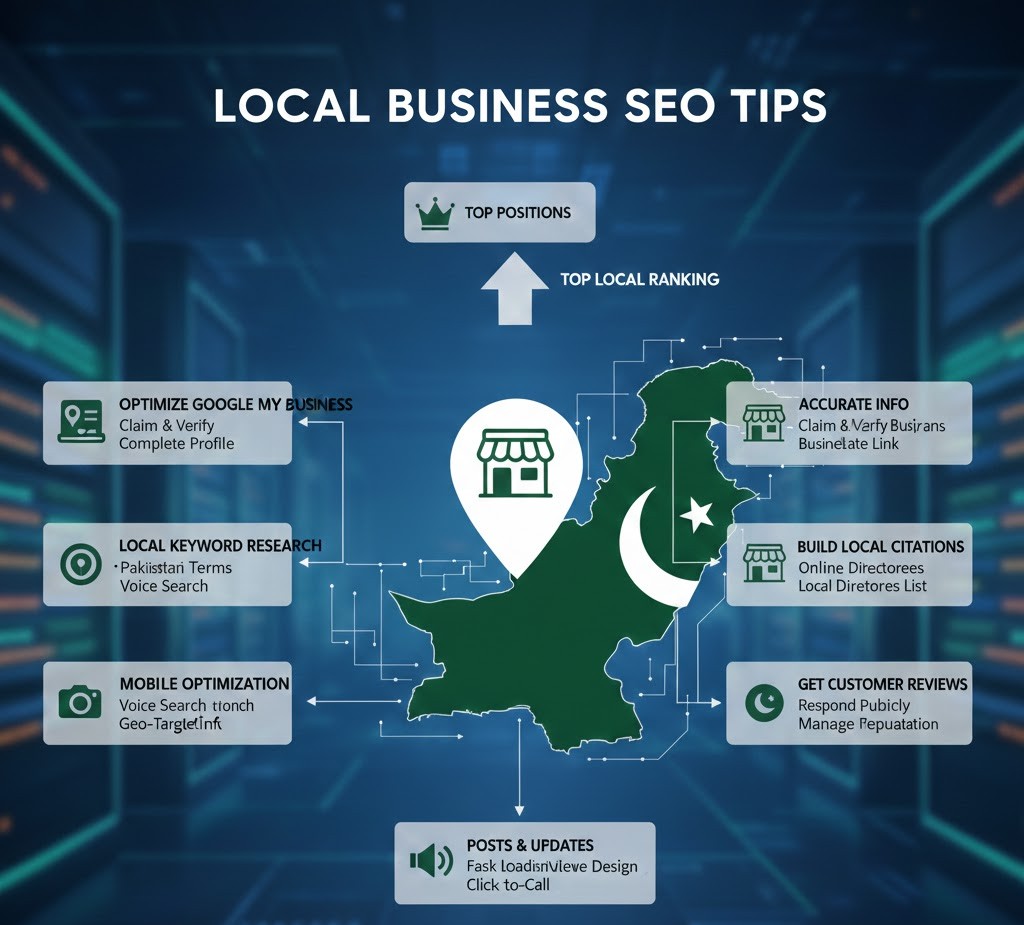
Local Business SEO Tips
Introduction
Imagine this: you’re craving pizza in a new neighborhood, so you pull out your phone and search “best pizza near me.” Within seconds, Google shows you a list of local restaurants, complete with reviews, directions, and photos. You click one of the top results, place your order, and never even scroll further.
Now ask yourself an important question: if you owned that pizza shop, would your business appear in those top results?
That’s the power of local SEO.
For students and beginners exploring digital marketing, local business SEO is one of the most practical and in-demand skills you can learn today. It’s not just about rankings or algorithms. It’s about helping real businesses connect with real customers in their communities. In a world where people rely on search engines to make everyday decisions, understanding how local SEO works can open doors to freelance work, agency roles, and even your own business opportunities.
In this guide, you’ll learn what SEO really means, how search engines work, and how to apply smart, beginner-friendly local SEO strategies that actually make a difference.
What SEO Really Means in Digital Marketing
Most beginners hear “SEO” and think it simply means “getting a website to rank on Google.” While that’s partly true, it’s also an oversimplification.
SEO (Search Engine Optimization) is really about understanding user intent and aligning your content, website, and online presence with what people are genuinely looking for. For local businesses, that intent is often immediate and practical: finding a plumber, booking a haircut, locating a nearby dentist, or choosing a café.
In digital marketing, SEO plays a strategic role because:
-
It attracts people who are already interested in a service
-
It builds long-term visibility instead of short-term ads
-
It supports trust and credibility for brands
-
It compounds over time, making results stronger month after month
Unlike paid ads, where traffic stops the moment you stop spending, SEO is an investment. Once you understand it, you’re not just learning a tactic—you’re learning a foundational digital skill.
How Search Engines Work (In Simple Terms)
You don’t need to be a software engineer to understand SEO, but it helps to understand what’s happening behind the scenes.
Search engines like Google do three basic things:
Crawling
Google uses automated bots (called crawlers) to scan the internet and discover new pages, updates, and content.
Indexing
Once content is discovered, Google tries to understand what the page is about and stores it in a massive database called the index.
Ranking
When someone searches for something, Google looks through its index and ranks the most relevant and useful pages based on hundreds of signals, such as:
-
Relevance to the search query
-
Quality of content
-
User experience
-
Trust and authority
-
Location (for local searches)
For local SEO, location becomes a critical factor. Google wants to show users the most relevant businesses near them, not just the most famous websites on the internet.
Why Local SEO Is Different from General SEO
Local SEO focuses specifically on helping businesses appear in location-based searches like:
-
“Coffee shop near me”
-
“Best dentist in Chicago”
-
“Hair salon open now”
-
“Plumber in Brooklyn”
These searches trigger something called the local pack, which is the map-based section at the top of many search results showing three businesses, reviews, and directions.
For students, this is exciting because local SEO is often easier to learn, faster to implement, and highly valuable for small businesses that don’t have massive marketing budgets.
The Key Components of SEO (With a Local Focus)
To understand local business SEO, you need to understand the three core pillars of SEO: on-page, technical, and off-page.
On-Page SEO for Local Businesses
On-page SEO is everything you control directly on the website.
Location-Focused Content
A local business website should clearly communicate:
-
What the business does
-
Where it’s located
-
Who it serves
For example, instead of a generic page titled “Our Services,” a stronger local page might be “Lawn Care Services in Austin, TX.”
Title Tags and Meta Descriptions
These are the headlines and descriptions that appear in search results. For local businesses, they should naturally include:
-
The service
-
The city or region
-
A compelling reason to click
Example:
“Emergency Plumbing in Denver | Fast, Affordable Service”
Contact Information Consistency
Every local business website should clearly display:
-
Business name
-
Address
-
Phone number
This information should be consistent across the site, especially on the homepage and contact page.
Helpful, Human Content
Google increasingly rewards content that genuinely helps users. For local SEO, this could include:
-
FAQs about services
-
Local guides or tips
-
Blog posts answering common customer questions
-
Service pages that explain processes clearly
The goal is not to “trick” Google, but to be the most useful result for real people.
Technical SEO (Without the Overwhelm)
Technical SEO sounds intimidating, but for beginners, you only need to understand a few essentials.
Mobile-Friendliness
Most local searches happen on phones. If a site is hard to use on mobile, visitors leave quickly, and rankings suffer.
Page Speed
People looking for local services are often in a hurry. Slow websites lose customers and visibility.
Secure Website (HTTPS)
A secure website builds trust and is now considered a basic standard.
Clear Site Structure
A well-organized site with logical pages (Home, Services, About, Contact, Blog) helps both users and search engines navigate content easily.
You don’t need to code everything yourself, but understanding these concepts makes you far more valuable as a marketer.
Off-Page SEO: Building Trust Beyond the Website
Off-page SEO is about how the rest of the internet talks about a business.
For local SEO, this is where things get especially powerful.
Google Business Profile Optimization
A well-optimized Google Business Profile can be the difference between being invisible and being fully booked.
Strong profiles include:
-
Accurate business information
-
High-quality photos
-
Real customer reviews
-
Regular updates and posts
-
Clear business categories
Many small businesses neglect this, which creates huge opportunities for beginners who know what they’re doing.
Online Reviews
Reviews are one of the strongest trust signals in local SEO.
Businesses with:
-
More reviews
-
Better ratings
-
Thoughtful responses
tend to perform better in local search and convert more customers.
Local Citations
These are mentions of a business across directories like Yelp, Apple Maps, local chambers of commerce, and industry-specific platforms. Consistency matters here. The same business name, address, and phone number should appear everywhere.
Backlinks from Local Sources
If a local newspaper, blogger, or community website links to a business, it sends a powerful signal of credibility. Local links often matter more than generic ones.
How SEO Fits into the Broader Digital Marketing Ecosystem
SEO doesn’t exist in isolation. It connects with nearly every other digital marketing channel.
Content marketing supports SEO by providing valuable pages that rank over time.
Social media supports SEO by increasing visibility and brand awareness.
Email marketing supports SEO by building loyal audiences who return to the site.
Paid ads support SEO by testing which keywords and messages convert best.
For students, this is important because SEO teaches you strategic thinking. You start seeing how channels connect instead of treating each marketing tactic as separate.
Real-World Example: A Simple Local SEO Transformation
Consider a small yoga studio in a mid-sized city. They had a basic website and relied mostly on Instagram for new clients. Their problem? They weren’t showing up when people searched “yoga studio near me.”
A simple local SEO strategy changed everything:
-
Their Google Business Profile was fully optimized
-
Service pages were updated with clear location-based language
-
They encouraged happy students to leave reviews
-
They added a blog answering common beginner yoga questions
-
Their site speed and mobile experience were improved
Within a few months, they started appearing in the local pack for multiple searches. Class bookings increased, not because of ads, but because they were finally visible when people needed them.
This is what makes local SEO so powerful: small changes can lead to real, measurable results.
Common SEO Myths Beginners Often Believe
“SEO is just about keywords”
Keywords matter, but modern SEO is more about intent, usefulness, and experience.
“You need to be a technical genius to do SEO”
You need understanding, not engineering-level skills. Many successful SEO professionals come from non-technical backgrounds.
“SEO results should be instant”
SEO is a long-term strategy. Results build over weeks and months, not overnight.
“Only big businesses can win at SEO”
Local SEO often favors smaller, more relevant businesses over massive brands.
Understanding these myths early helps students avoid frustration and focus on the right skills.
Practical SEO Skills Students Should Start Learning Today
If you’re serious about learning SEO for local businesses, focus on building real-world skills, not just theory.
Learn how to:
-
Research what people are actually searching for
-
Write clear, helpful content for real users
-
Optimize a Google Business Profile
-
Understand basic website structure
-
Analyze performance using data
-
Communicate results to non-technical clients
You can practice by:
-
Creating a mock website for a fictional business
-
Optimizing a friend’s small business site
-
Auditing local business listings
-
Writing blog posts targeting local topics
These practical projects build confidence and portfolio-ready experience.
How SEO Careers and Opportunities Are Evolving
SEO is no longer just a niche technical job. It’s becoming a core digital skill across industries.
Today, people with SEO knowledge work as:
-
Digital marketing specialists
-
Content strategists
-
Freelance consultants
-
Agency account managers
-
In-house marketing managers
-
Entrepreneurs growing their own brands
Local SEO, in particular, is in high demand because millions of small businesses still don’t understand it. That gap creates opportunity.
Students who learn to explain SEO clearly, deliver real results, and communicate professionally often find work faster than those who only understand theory.
FAQs About Local Business SEO
How long does local SEO take to show results?
It depends on competition and effort, but many businesses begin seeing improvements within a few weeks, with stronger results over several months.
Do I need to learn coding to do SEO?
No. Basic technical understanding helps, but most SEO work focuses on strategy, content, and optimization rather than coding.
Is local SEO still worth learning in 2026 and beyond?
Absolutely. As long as people search for local services online, local SEO will remain valuable.
Can students offer local SEO services as freelancers?
Yes. Many beginners start by helping small businesses optimize their Google Business Profiles and websites, then grow from there.
What’s the best first step for learning SEO?
Start by understanding how search works, then practice on real or test projects instead of only watching theory videos.
Conclusion
Local business SEO isn’t just a marketing tactic; it’s a practical skill that connects technology, psychology, communication, and strategy. For students and beginners, it offers a powerful entry point into the digital marketing world because the impact is visible, meaningful, and measurable.
When you understand how people search, how businesses appear in results, and how trust is built online, you’re no longer guessing. You’re making informed decisions that help businesses grow and help users find what they need faster.
The best part? You don’t need a massive budget, advanced degree, or years of experience to get started. You need curiosity, consistency, and a willingness to learn by doing.
If you begin practicing these local SEO principles today, you’re not just learning how to rank websites. You’re building a long-term skill set that can shape your career, your income, and your opportunities for years to come.
Tags :
No Tags

0 Comments