



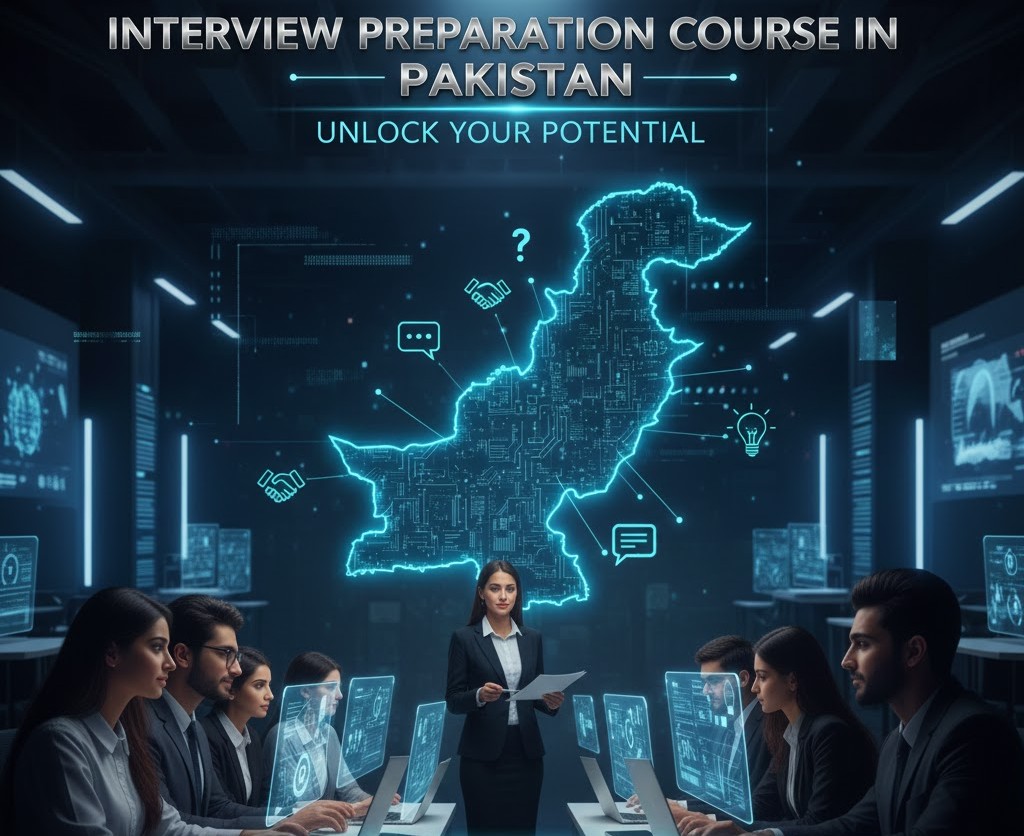
Interview Preparation Course in Pakistan
Introduction
Interviews are often described as the “make-or-break” moment in any academic or professional journey and they truly are. A single conversation can transform a student’s future, opening doors to top universities, internships, or competitive job roles across Pakistan. But here’s the surprising part: more than 70% of students in Pakistan admit they’ve never received any formal training for interviews, even though employers consistently cite communication gaps and weak presentation skills as top hiring concerns.
In an increasingly competitive landscape whether applying to multinational companies, universities abroad, or local organizations mastering interview skills is no longer optional. It’s a necessity. Students who undergo structured interview preparation training are not only more confident but also significantly more likely to land opportunities on their first attempt.
In this guide, you’ll learn everything about interview preparation courses in Pakistan, what they offer, who they’re for, and how they can transform your confidence and career trajectory. Drawing from training methodologies used by HR experts, psychometric analysts, and career coaches, this article gives you a complete, experience-backed roadmap to choose (or create) the perfect interview preparation journey.
What Is an Interview Preparation Course?
An interview preparation course is a structured training program designed to help students develop the skills necessary to excel in interviews — from academic admissions and internships to job hiring panels. These courses typically combine communication training, mock interviews, personality development, and resume-building guidance.
Common components include:
-
One-on-one mock interviews with professional HR trainers
-
Body language coaching based on behavioral science
-
Resume and cover letter optimization
-
Interview psychology training (how interviewers think and evaluate you)
-
Confidence-building techniques
-
Industry-specific interview practice
-
Soft skills development (communication, critical thinking, and emotional intelligence)
A well-designed course doesn't just train you to “answer questions.” It trains you to communicate your value — something that modern recruiters prioritize more than memorized answers.
Why Students in Pakistan Need Interview Preparation in 2025
1. Increasing Competition for Entry-Level Jobs
With Pakistan’s youth making up a large portion of the population, entry-level roles receive thousands of applicants. Interviews are the fastest way for employers to differentiate high-potential candidates.
2. Globalized Hiring Expectations
Companies now follow international hiring standards, including behavioral interviews, situational judgment questions, and skills-based assessments — all of which require preparation.
3. Shift Toward Soft Skills
Organizations such as the World Economic Forum consistently report that communication, teamwork, and emotional intelligence are the skills that define future employability. Interview prep courses teach exactly these.
4. University Admissions Interviews
For students seeking scholarships, study-abroad opportunities, or admissions to competitive programs, interviews remain one of the biggest filtering stages.
5. Lack of Formal Training in Schools
Schools and colleges in Pakistan generally do not offer structured interview training — leaving students to learn through trial and error, which can cost them opportunities.
Key Elements of a High-Quality Interview Preparation Course in Pakistan
1. Mock Interviews With Real-World Scenarios
Mock interviews are the backbone of any effective training program. They help students simulate real interview pressure, allowing trainers to analyze:
-
Tone of voice
-
Body language
-
The structure of answers
-
Critical thinking
-
Problem-solving under pressure
Professional courses usually record these sessions so students can review their weaknesses — a strategy used by HR experts globally.
2. Behavioral Interview Training (STAR Method)
Behavioral questioning has become the industry standard across MNCs, banks, IT companies, and government organizations. Students learn how to answer questions such as:
-
“Tell me about a time you handled conflict.”
-
“Describe a situation where you took initiative.”
Courses that teach the STAR method (Situation Task Action Result) help students communicate real experiences clearly and effectively.
3. Communication and Confidence Training
A study by the Harvard Business Review suggests that tone and clarity often outweigh content in interviews. Good interview preparation courses help students develop:
-
Clear articulation
-
Professional vocabulary
-
Fluent English speaking
-
Active listening skills
-
Positive communication habits
Many training centers include public speaking drills and group activities to strengthen communication muscles.
4. Resume and Cover Letter Development
A recruiter usually spends 7–10 seconds reviewing a resume. Strong interview courses in Pakistan teach:
-
ATS-friendly resume formatting
-
Impact-driven bullet points
-
Keyword optimization
-
Portfolio creation
-
Professional profile branding
Students also learn how to tailor resumes for specific roles — a crucial skill often ignored in schools.
5. Body Language and First-Impression Psychology
Over 60% of communication is non-verbal. Courses focusing on body language help students:
-
Maintain confident posture
-
Use hand gestures effectively
-
Make appropriate eye contact
-
Avoid nervous habits
-
Walk in and greet professionally
These micro-skills significantly influence an interviewer’s impression.
6. Industry-Specific Interview Tracks
A specialized track is essential because every field has unique expectations. Courses often offer modules for:
-
Engineering interviews
-
Medical profession interviews
-
IT & software development roles
-
Business and finance interviews
-
Creative and media roles
-
Admissions interviews
Students receive tailored question banks, sample responses, and real industry insight.
Benefits of Enrolling in an Interview Preparation Course (Student Perspective)
1. You Gain Confidence The #1 Interview Factor
Confidence affects your voice, body language, and analytical thinking. Structured training helps students overcome:
-
Fear of speaking
-
Nervousness
-
Imposter syndrome
-
Blank moments during questioning
Students report feeling more empowered and mentally prepared after even a few mock sessions.
2. You Learn the Hidden Psychology Behind Interviews
Interviewers use proven frameworks like:
-
Competency mapping
-
Behavioral scoring
-
Communication benchmarks
-
Red-flag detection
Good courses demystify these evaluation criteria so students understand exactly what interviewers are looking for.
3. You Build Professionalism Early
Many Pakistani students struggle with:
-
Speaking formally
-
Writing emails
-
Dressing professionally
-
Managing punctuality
-
Understanding corporate etiquette
Interview preparation fills this gap and instills professionalism at an early age.
4. You Improve Overall Career Readiness
Students who undergo interview training often perform better in:
-
Group discussions
-
Scholarship interviews
-
Internship assessments
-
Classroom presentations
-
Workplace communication
These skills remain valuable for life.
5. Higher Chances of Placement and Admissions
Training boosts success rates significantly. Institutes that offer high-quality coaching report improved admissions and job placements because trained students stand out naturally.
How to Choose the Best Interview Preparation Course in Pakistan
Not all training programs offer real value. Here’s what students should look for:
✔ Experienced Trainers
Look for instructors with HR backgrounds, not just “English teachers.” Real hiring expertise matters.
✔ Industry-Relevant Curriculum
Ensure the course covers behavioral interviews, mock sessions, and resume workshops.
✔ One-on-one Coaching
Group sessions help, but personalized training creates real progress.
✔ Practical, Not Theoretical
Avoid courses that only teach written notes. Interviews are a practical skill.
✔ Feedback-Based Improvement
Recorded sessions, scorecards, and coach-led feedback loops are essential.
Sample Syllabus: What a Strong Interview Preparation Course Includes
-
Introduction to Modern Interviews
-
Self-Branding & Personal Introduction Training
-
Top 50 HR Interview Questions Practice
-
Behavioral Question Techniques (STAR Framework)
-
Resume Writing Mastery
-
Cover Letter and Email Etiquette
-
Mock Interviews (3–5 rounds)
-
Body Language & Confidence Coaching
-
Industry-Based Question Banks
-
Final Evaluation + Certificate
Top Challenges Students Face — and How Courses Solve Them
1. “I forget my answers under pressure.”
Mock interviews teach mental stability and structured speaking.
2. “My English speaking is weak.”
Courses include spoken English drills and vocabulary enhancement.
3. “I don’t know what to wear.”
Dress code modules solve this instantly.
4. “I don’t have experience to talk about.”
Trainers help students reshape academic work, group projects, and volunteer work into compelling stories.
5. “I get confused when they ask unexpected questions.”
Situational questions and reasoning drills build confidence.
Actionable Tips for Students to Improve Interview Skills (Even Without a Course)
-
Record yourself answering interview questions.
-
Practice speaking with a friend in English for 10 minutes daily.
-
Study job descriptions and align your answers with required skills.
-
Practice 10 behavioral questions using the STAR method.
-
Research companies thoroughly before every interview.
-
Replace memorized answers with real experiences.
These self-training habits, combined with a professional course, create massive improvement.
Conclusion
In a country where thousands of students compete for every opportunity, the ability to communicate your strengths confidently gives you a remarkable advantage. An interview preparation course in Pakistan does far more than help you answer questions it shapes your identity as a young professional, builds your confidence, and strengthens essential life skills.
Whether you’re applying for a scholarship, your first job, or a professional internship, investing time in interview preparation is one of the smartest decisions you can make. Real growth happens when you step into practice-oriented training supported by experts who understand the psychology of interviews. The right course doesn’t just prepare you for today’s opportunities it prepares you for a lifetime of success.
FAQs (People Also Ask)
1. How long are interview preparation courses in Pakistan?
Most courses range from 2 to 6 weeks, depending on depth and specialization.
2. Do interview courses help with English speaking?
Yes. Many include spoken English modules, vocabulary building, and communication practice.
3. Are there online interview preparation courses in Pakistan?
Absolutely many institutes now offer full online training including mock interviews.
4. Do these courses help with university admissions interviews?
Yes. Specialized tracks for medical, engineering, and scholarship interviews are common.
5. What should a student bring to their first training session?
A copy of their resume, a notebook, and an open mind most trainers help refine everything else.
Tags :
No Tags
0 Comments