



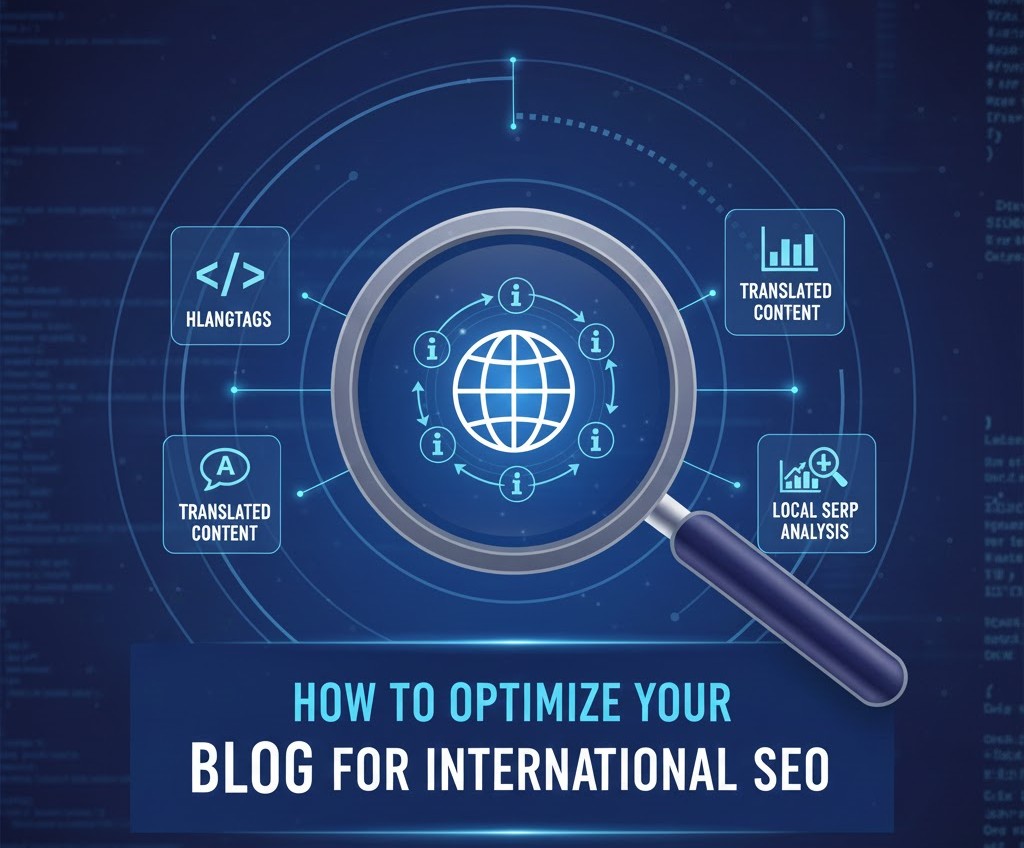
How to Optimize Your Blog for International SEO
Introduction:
Why International SEO Matters Today
Launching a blog is exciting especially when you realize the potential audience is not just your campus, your city, or your country, but the entire world. The internet has erased borders, and even small personal blogs are now discovered by readers in Europe, Asia, Africa, South America, and beyond. However, reaching those readers isn’t automatic. Search engines must be able to understand who your content is meant for, what languages it supports, and which regions it serves.
That’s where international SEO comes in. Optimizing your blog for international search visibility ensures your content appears to readers in different countries and languages. And for students whether you’re planning to become a marketer, writer, business owner, freelancer, or digital nomad understanding international SEO gives you a real career advantage in a global digital economy.
In this article, you’ll learn how to audit your blog for global visibility, adapt content for new countries and languages, implement international SEO best practices, avoid common mistakes, and measure results. You’ll also see real examples, technical guidance, and student-friendly tips to help you apply what you learn instantly.
By the end, you’ll not only understand the strategy you’ll be ready to go global.
What Is International SEO? (And Why Students Should Care)
International SEO is the process of optimizing your website or blog so search engines can rank it for audiences in specific countries, regions, or languages.
Google, Bing, Yandex, and Baidu all use signals such as:
-
Language (English, Spanish, German, Korean, etc.)
-
Location (US, UK, India, Brazil, etc.)
-
User preferences (browser language, IP address, cultural context)
Without these signals, your blog might appear in the wrong country, wrong language, or not at all.
Why it matters to students:
-
You can build a professional portfolio that proves your SEO skills.
-
You can grow traffic faster by reaching untapped markets.
-
You’ll understand how global digital marketing works a highly employable skill.
Gartner predicts global search traffic will grow 8% annually through 2030, driven by multilingual and mobile audiences.
International SEO isn’t optional anymore it’s a competitive edge.
Step 1: Define Who You Want to Reach Globally
Before translating a single sentence or changing technical settings, pause and ask:
Which countries do I want to target?
Your answer should be driven by:
-
Blog topic interest
-
Keyword data
-
Language compatibility
-
Market size
For example:
If you blog about student budgeting tips, the United States may be your core focus but there’s strong search volume in Canada, Australia, and the UK as well.
Use search data tools (many are free for students):
-
Google Trends
-
SEMrush (student discount programs available)
-
Ahrefs
-
Ubersuggest
-
Moz
Look for keywords related to your topics in target regions.
Many student bloggers are surprised to learn that international markets often have less SEO competition, meaning global ranking is sometimes easier than U.S. ranking.
Step 2: Decide Your International SEO Structure
Search engines need clarity. If you want them to rank content for specific countries, you must use a clean site structure:
Country targeting options:
-
ccTLDs (example.uk, example.fr, example.de)
-
Strongest signal to Google
-
Best for large sites
-
Not ideal for students expensive and technical
-
-
Subdirectories
-
example.com/uk/
-
Best for growing blogs
-
Affordable and flexible
-
-
Subdomains
-
uk.example.com
-
Good, but weaker than subdirectories
-
Recommendation for student bloggers:
Use subdirectories they require no extra domains and keep authority centralized.
Step 3: Optimize Language Targeting With Hreflang Tags
If you plan to offer content in multiple languages even if it’s just English and Spanish you’ll need hreflang tags.
These tell Google which version should appear to which audience.
Example:
-
English (US):
-
English (UK):
-
Spanish (Spain):
Common mistake:
Using Google Translate alone.
Search engines can detect awkward or incorrect translations. For high-ranking pages, human editing is essential.
Step 4: Create Culturally Adapted Content (Not Just Translated Content)
One of the biggest misunderstandings among beginners is thinking international SEO is only about translation.
It’s not.
It’s about localization.
Localization includes:
-
Currency conversion
-
Measurement units
-
Slang and phrasing
-
Cultural references
-
Academic expectations
Example:
A blog post about “college dorms” makes sense in the U.S., but in the UK they’re called “student halls.”
A U.S.-focused budgeting guide might reference dollars, while a version for Europe should reference euros, pounds, or francs.
Search engines track user behavior and cultural accuracy increases engagement.
Step 5: Understand Search Intent Across Borders
Search intent can change dramatically by country.
Example:
Keyword: “Best laptop for students”
-
U.S. searches may prioritize price
-
German searches may prioritize durability
-
Indian searches may prioritize battery life
International SEO requires listening not just publishing.
To succeed globally, adjust:
-
Headlines
-
Subtopics
-
Product suggestions
-
Case studies
-
Calls to action
This is why companies like HubSpot and Canva rewrite their content for each market instead of just translating it.
Step 6: Improve Site Speed and Mobile Performance
Globally, more than 62% of organic search traffic now comes from mobile devices. In some countries, mobile usage exceeds 80%.
Google’s Core Web Vitals reward pages that:
-
Load quickly
-
Respond instantly
-
Keep layouts stable
For student bloggers, this means:
-
Compressing images
-
Using lazy loading
-
Eliminating heavy plugins
-
Choosing a clean WordPress theme
Slow international load times often happen because servers are physically distant from users.
Easy fix:
Use a CDN (Content Delivery Network).
Affordable options:
-
Cloudflare (free plan works great)
-
BunnyCDN
Step 7: Build International Backlinks the Right Way
Search engines rank pages based on authority and authority is earned through backlinks.
For international SEO, you’ll want links not just from U.S. websites, but from blogs and media in target countries.
Student-friendly backlink sources include:
-
Guest posts
-
University blogs
-
Local directories
-
Study abroad forums
-
Student news websites
One powerful strategy:
Write posts about your international projects study abroad, internships, or cultural experiences and share them with relevant institutions.
These backlinks send clear geographic signals to Google.
Step 8: Optimize On-Page SEO for Global Context
International SEO still depends on strong foundational SEO practices, including:
Keywords
Use country-specific keywords, not just global English.
Metadata
Write location-relevant titles and descriptions.
Formatting
Use clear headings, internal links, featured snippets, and lists.
Images
Add alt text in each language.
Schema markup
Include country-specific structured data when relevant.
Step 9: Avoid Common International SEO Mistakes
Students often run into issues when scaling their blogs internationally. Avoid:
-
Auto-translated content with errors
-
Duplicate content across languages
-
Wrong hreflang formatting
-
URLs that change constantly
-
Inconsistent keyword use
-
Publishing content for countries you know nothing about
Search engines are smarter than ever especially after Google’s 2024–2025 Helpful Content and Core Update releases. Low-value or spammy content is now filtered out faster.
Focus on user experience first. Algorithms follow.
Step 10: Measure International Results
Once live, measure traffic and ranking impact:
Tools:
-
Google Search Console
-
Google Analytics 4
-
Bing Webmaster Tools
-
Ahrefs or SEMrush
Track:
-
Search impressions
-
Regional click-through rate
-
Device usage
-
Bounce rate by language
-
Time on page
-
Conversions
Data reveals what works and what needs improvement.
Conclusion: Your Blog’s Global Future Starts Now
International SEO may sound intimidating, but step by step, it becomes incredibly rewarding. By researching audiences, structuring your blog properly, speaking to cultural nuance, improving technical performance, and building global authority, you can increase visibility far beyond national borders.
For students especially, mastering international SEO doesn’t just expand your blog it expands your future. It gives you proof of digital expertise that employers, clients, and universities value. It teaches you how people think differently across cultures. And most importantly, it shows the world what you have to say.
Every blog post you publish today has the potential to reach someone new tomorrow maybe in another city, maybe in another hemisphere. With international SEO, you’re no longer writing for a local audience. You’re writing for the world.
FAQs: International SEO for Student Bloggers
1. Do I need to translate every blog post into multiple languages?
No. Start with your most popular content and expand based on demand and analytics. Quality matters more than volume.
2. What language should I target first?
Choose the language most aligned with your audience’s needs. English + Spanish is a popular combination in the U.S.
3. Can I use AI to translate my blog?
AI is helpful but always edit translations manually. Search engines penalize incorrect or awkward language.
4. How long does international SEO take?
Most blogs see measurable improvement within 3–6 months. Rankings grow faster in low-competition regions.
5. Does international SEO cost money?
Not necessarily. Many foundational strategies like hreflang, structure, and content are free to implement.
Tags :
No Tags

0 Comments