



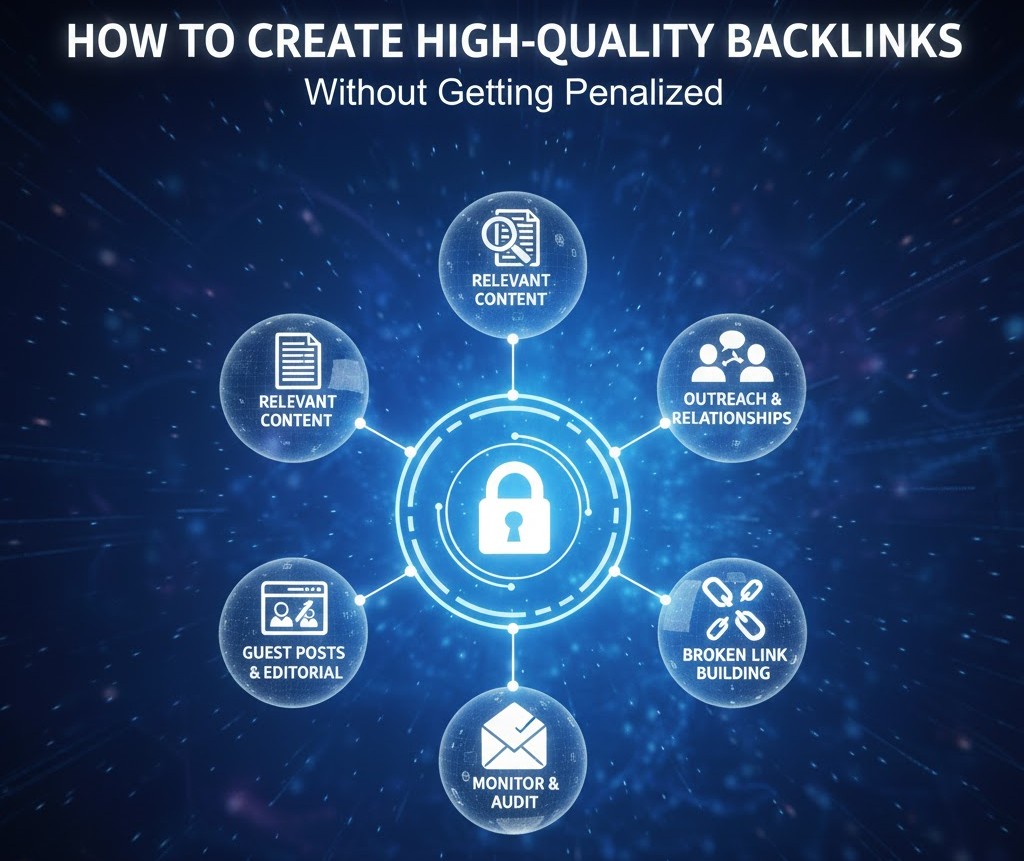
How to Create High-Quality Backlinks Without Getting Penalized
Introduction
Imagine spending weeks writing the perfect blog post. It’s helpful, well-researched, and beautifully written. You hit publish, excited to see traffic roll in… but days pass, then weeks, and almost no one finds it. This is the frustrating reality for many students and beginners who don’t yet understand how search visibility really works.
One of the biggest reasons great content stays invisible is the lack of strong backlinks. Backlinks links from other websites pointing to yours are still one of the most powerful signals search engines use to judge credibility and authority. But there’s a catch. Build them the wrong way, and your site can be penalized, losing rankings instead of gaining them.
That’s why understanding how to create high-quality backlinks safely is such an essential SEO skill today. In this article, you’ll learn not only what backlinks are, but how they fit into the bigger SEO picture, how search engines evaluate them, common mistakes beginners make, and practical, ethical strategies you can start using right away. By the end, you’ll have a clear roadmap for building authority without risking your site’s future.
What SEO Really Means in Digital Marketing (Beyond Definitions)
SEO is often described as “optimizing your site for search engines,” but that definition barely scratches the surface. In reality, SEO is about earning trust and visibility in a competitive digital environment.
Search engines are trying to answer one simple question for their users:
“Which content deserves to be seen first?”
Backlinks play a major role in answering that question. When reputable websites link to your content, it’s like a public vote of confidence. It signals that your work is useful, credible, and worth recommending.
But SEO isn’t just about links. It’s a combination of:
-
Creating genuinely valuable content
-
Making your website easy to use and understand
-
Building a reputation across the web
Backlinks sit at the intersection of quality and reputation. That’s why learning to build them properly is one of the most valuable skills a beginner can develop.
How Search Engines Work (In Simple Terms)
To understand why some backlinks help and others hurt, it helps to know how search engines think.
Search engines generally follow three steps:
-
Crawling: Bots discover pages by following links.
-
Indexing: They store and organize content in a massive database.
-
Ranking: They decide which pages deserve top positions for each search.
Backlinks influence all three steps.
-
They help bots discover your content faster.
-
They signal which pages are important.
-
They influence how trustworthy your site appears compared to others.
But modern search engines are smart. They don’t just count links anymore. They evaluate:
-
The relevance of the linking site
-
The quality of its content
-
The naturalness of the link placement
-
The overall link profile of your site
This is why manipulative link-building tactics that once worked can now trigger penalties.
The Key Components of SEO and Where Backlinks Fit
To build backlinks safely, you need to understand how they connect to the bigger SEO ecosystem.
On-Page SEO
On-page SEO focuses on what’s happening on your website.
This includes:
-
High-quality, original content
-
Clear headings and structure
-
Helpful internal linking
-
Good user experience
-
Keyword usage that feels natural
Why this matters for backlinks:
No matter how good your outreach is, people won’t link to content that feels thin, confusing, or unhelpful. Strong on-page SEO makes your content link-worthy.
Technical SEO
Technical SEO ensures your site works smoothly for both users and search engines.
Important elements include:
-
Fast loading speed
-
Mobile-friendly design
-
Secure HTTPS connection
-
Clean site architecture
-
No broken pages or links
If your site is slow or broken, even good backlinks won’t deliver full value. Worse, reputable sites are less likely to link to a poorly maintained website.
Off-Page SEO (Where Backlinks Live)
Off-page SEO is all about how the rest of the web perceives your site. Backlinks are the heart of this.
But not all backlinks are equal. A single link from a respected, relevant website can be more powerful than dozens of links from low-quality directories or spammy blogs.
Safe off-page SEO focuses on:
-
Relevance
-
Authentic relationships
-
Value-driven mentions
-
Editorially earned links
What Makes a Backlink High-Quality?
Before learning how to build backlinks, you need to understand what separates good links from risky ones.
A high-quality backlink usually has these characteristics:
-
Comes from a website in a similar niche
-
Is placed naturally within useful content
-
Uses relevant, non-spammy anchor text
-
Comes from a site with real traffic and credibility
-
Is editorial (the site owner chose to link, not because you paid or forced it)
A low-quality backlink often looks like:
-
Placed on random, unrelated websites
-
Stuffed into footer or sidebar link lists
-
Built through link farms or private blog networks
-
Over-optimized anchor text repeated again and again
-
Clearly paid or manipulative
The difference is subtle but crucial. Search engines are designed to reward genuine recommendations and punish artificial manipulation.
Safe, Beginner-Friendly Ways to Build Backlinks
Let’s talk about strategies that actually work long-term and won’t put your site at risk.
Create Content That Deserves Links
This sounds simple, but it’s the foundation of everything.
Content that attracts natural backlinks often includes:
-
In-depth guides
-
Original research
-
Case studies
-
Useful tools or templates
-
Thoughtful opinion pieces
-
Visual resources like infographics
If your content genuinely helps people solve a problem, links become a natural byproduct instead of something you have to chase aggressively.
Guest Posting (Done the Right Way)
Guest posting still works when approached with integrity.
The safe approach looks like this:
-
You contribute valuable content to relevant blogs
-
You write for real audiences, not just for links
-
The link to your site feels natural and useful
-
You avoid mass guest-posting on low-quality sites
The risky approach is mass-producing low-quality articles just to drop links. Search engines can detect this pattern, and it can hurt your credibility.
Building Relationships in Your Niche
Some of the best backlinks come from genuine professional connections.
You can build relationships by:
-
Commenting thoughtfully on industry blogs
-
Sharing others’ content and tagging them
-
Participating in online communities
-
Collaborating on projects
-
Interviewing experts for your blog
Over time, these connections lead to organic mentions and links the safest and most powerful kind.
Leveraging Resource Pages
Many websites maintain “useful resources” pages. If you have high-quality educational content, you can reach out and suggest your page as an addition.
The key is relevance and value. Your content should genuinely improve their resource list, not just serve your SEO goals.
Digital PR and Storytelling
Instead of chasing links directly, think in terms of stories.
For example:
-
A student shares how they used your guide to land a freelance job
-
You publish original data about trends in your niche
-
You share a unique perspective on a common topic
These stories can attract attention from bloggers, journalists, and creators who naturally reference and link to your work.
Real-World Example: From Zero Traffic to Authority
Consider a student who starts a blog about learning digital marketing.
At first, they publish basic articles with little visibility. Then they decide to create one detailed guide:
“How I Learned SEO in 90 Days With Free Resources.”
They include:
-
Honest experience
-
Screenshots
-
Step-by-step learning path
-
Mistakes they made
-
Free tools and websites they used
They share this article in student communities and forums (without spamming). A few bloggers discover it and link to it in their own posts about learning SEO. One educator includes it in a resource list.
That single piece of content starts earning natural backlinks, boosting the entire site’s credibility. No shortcuts, no manipulation just real value earning real recognition.
This is how sustainable backlink building actually looks in practice.
Common Backlink Myths Beginners Still Believe
Many students fall into traps because of outdated or misleading advice.
“More backlinks always mean better rankings”
Quality beats quantity. Ten strong, relevant links can outperform hundreds of spammy ones.
“You need to pay for backlinks to compete”
Paid links can work short-term, but they carry significant risk. Long-term success comes from earning links, not buying them.
“Directory submissions are a great strategy”
Most generic directories today offer little value and can even damage your link profile if overused.
“Exact-match anchor text is the secret”
Over-optimized anchor text is a red flag. Natural language is safer and more effective.
“Once you build backlinks, you’re done”
SEO is ongoing. Competitors keep publishing, earning links, and improving. Sustainable growth requires consistency.
Practical Backlink Skills Students Should Start Learning Today
If you’re serious about SEO, focus on skills that build real value.
Learn how to:
-
Research what type of content earns links in your niche
-
Write in-depth, authoritative content
-
Analyze competitor backlink profiles for inspiration
-
Craft thoughtful outreach emails
-
Build genuine online relationships
-
Evaluate link quality critically
These are career-level skills, not just tactics for a single website.
Even if you never become an SEO specialist, these abilities help with content marketing, personal branding, freelancing, and entrepreneurship.
How SEO Careers and Opportunities Are Evolving
As search engines become smarter, the demand for ethical, strategic SEO professionals continues to grow.
Companies are no longer looking for people who can “game the algorithm.” They want people who can:
-
Understand audience intent
-
Build long-term content strategies
-
Earn authority through reputation
-
Combine SEO with content, UX, and branding
Backlink strategy is now less about manipulation and more about digital trust-building. That shift benefits students who focus on learning fundamentals instead of shortcuts.
If you master ethical link-building, you’re developing a skill that translates into roles like:
-
SEO strategist
-
Content marketer
-
Digital PR specialist
-
Growth marketer
-
Freelance consultant
FAQs: Common Questions Students Ask About Backlinks and SEO
How many backlinks do I need to rank?
There is no universal number. It depends on competition, content quality, and relevance. Some pages rank with very few strong links, while others need many more.
Are nofollow links useless?
No. While they may not pass traditional ranking signals directly, they can still drive traffic, visibility, and credibility. A natural link profile includes both.
Can social media links help SEO?
They don’t work the same way as traditional backlinks, but social visibility can lead to more exposure, which can indirectly result in real backlinks.
How long does it take to see results from backlink building?
Often weeks or months, not days. SEO rewards patience and consistency, not quick hacks.
Is it possible to recover from a backlink-related penalty?
Yes, but it can take time. The best strategy is to avoid risky tactics from the beginning by focusing on quality and ethics.
Conclusion
High-quality backlink building isn’t about tricks, loopholes, or shortcuts. It’s about earning trust in a digital ecosystem where credibility matters more than ever. When you focus on creating valuable content, building genuine relationships, and contributing meaningfully to your niche, backlinks become a natural result rather than a stressful chase.
For students and beginners, this approach does more than improve rankings. It builds real-world skills: communication, research, critical thinking, and strategic planning. These skills stay valuable no matter how algorithms evolve.
If you treat SEO as a long-term craft rather than a quick win, you’ll not only avoid penalties but also position yourself for sustainable growth whether you’re building a blog, a business, or a career in digital marketing.
Tags :
No Tags

0 Comments