



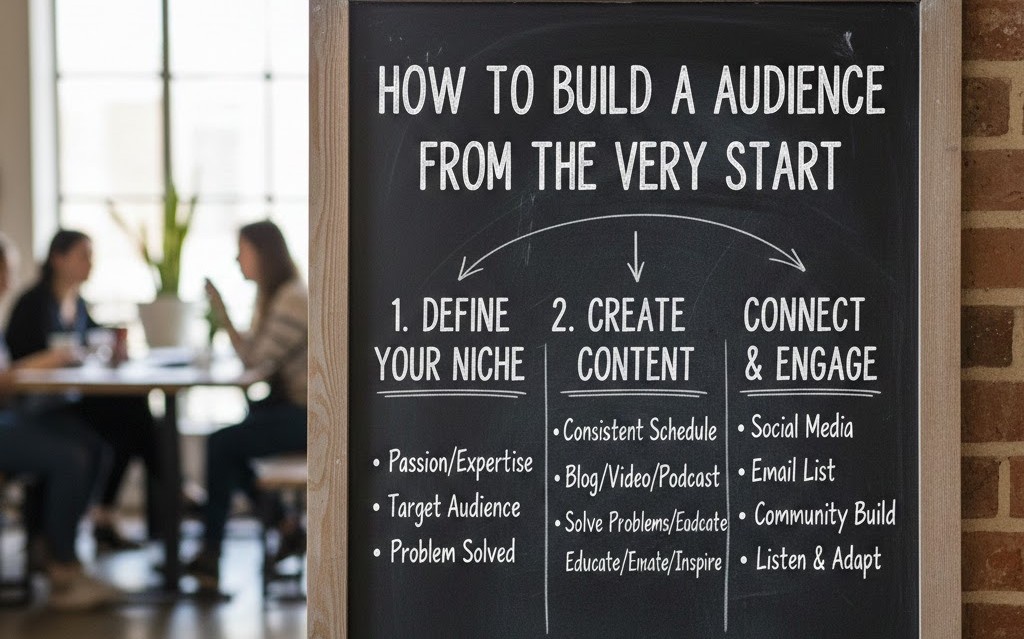
How to Build an Audience From The Very Start
Introduction
You’ve got something to say maybe it’s your photography, your coding projects, your poetry, or your insights on climate policy. But no matter how brilliant your ideas are, they won’t make an impact if no one’s listening. Here’s a surprising truth: most students wait until they feel “ready” to start building an audience. They think they need more followers, more credentials, or a bigger platform first. But that’s backwards.
In today’s digital landscape shaped by Google’s 2024–2025 emphasis on genuine expertise and human-first content the best time to start building an audience is before you feel qualified. Why? Because audience-building isn’t about broadcasting perfection. It’s about showing up consistently, offering real value, and connecting authentically. And as a student, you’re in a uniquely powerful position: you’re learning in real time, asking fresh questions, and engaging with communities that crave honesty over polish.
This guide cuts through the noise. Drawing on strategies used by top creators, digital educators, and community builders and grounded in Google’s EEAT (Experience, Expertise, Authoritativeness, Trustworthiness) principles we’ll walk you through exactly how to start from zero and grow a loyal, engaged audience. You’ll learn how to choose the right platform, create content that resonates, and turn passive scrollers into active supporters all while staying true to your student journey.
Why Audience-Building Matters More Than Ever for Students
Forget the outdated idea that “just graduate and the opportunities will come.” In 2025, your digital presence is your professional portfolio. According to LinkedIn’s 2024 Campus Insights Report, 72% of hiring managers consider a candidate’s online content blogs, GitHub repos, TikTok explainers, or even thoughtful Twitter threads when evaluating entry-level applicants.
But this isn’t just about jobs. Building an audience helps you:
- Clarify your thinking by teaching others what you’re learning
- Access mentorship from people who notice your work
- Test ideas in real time with real feedback
- Create opportunities that never appear on job boards
As author Austin Kleon puts it: “You don’t find an audience. You build one slowly, honestly, and with generosity.” And for students, that process starts not with followers, but with value.
Step 1: Start With Who You’re Serving Not What You’re Selling
Many students make the mistake of leading with “Look at me!” instead of “How can I help you?” Google’s Helpful Content Update (2023–2025) rewards content created for people, not algorithms. So flip the script.
Identify Your Niche Through Your Learning Journey
You don’t need to be an expert to provide value you just need to be one step ahead of someone else. Ask yourself:
- What topics am I currently studying that others might find confusing?
- What tools or resources have saved me time this semester?
- What mistakes have I made that others could avoid?
For example, a computer science student might share “How I Debugged My First Python Loop (Without Crying)” or “Free Tools That Made My Group Project Actually Work.” These aren’t grand revelations they’re real, relatable, and useful.
“The most effective student creators don’t wait to be authorities. They document their becoming.”
Dr. Jane Kim, Digital Learning Strategist, Stanford University
Define Your “One Person”
Instead of targeting “everyone,” imagine one specific peer. Maybe it’s “Sarah, a sophomore struggling with organic chemistry” or “Jamal, a community college transfer overwhelmed by internship apps.” Speak directly to them. This focus makes your content sharper, more empathetic, and far more engaging.
Step 2: Choose the Right Platform (Hint: It’s Not All of Them)
Trying to post everywhere Instagram, TikTok, YouTube, Twitter, LinkedIn burns you out fast. Instead, match your content style to a single platform where your audience already spends time.
|
Platform
|
Best For Students Who...
|
Content Format Examples
|
|---|---|---|
|
TikTok
|
Explain concepts quickly, use visuals
|
60-second study hacks, lab demos
|
|
Instagram
|
Share visual progress or aesthetics
|
Study setup tours, infographics
|
|
LinkedIn
|
Focus on career, internships, projects
|
Project reflections, skill breakdowns
|
|
YouTube
|
Teach in-depth or document processes
|
Coding walkthroughs, research vlogs
|
|
Twitter/X
|
Share insights, join academic chats
|
Threaded explanations, resource lists
|
Start with one platform for at least 90 days. Consistency beats presence across ten channels with spotty updates.
Step 3: Create Content That Builds Trust Not Just Views
Google’s 2024 Core Update prioritizes demonstrated expertise over viral fluff. That means your content should show your process, not just your results.
Use the “Learn → Apply → Share” Loop
- Learn: Study a new concept (e.g., Git version control).
- Apply: Use it in a class project or personal repo.
- Share: Post a short video titled “How Git Saved My Group Project From Chaos.”
This loop proves firsthand experience a core EEAT signal. You’re not regurgitating a tutorial; you’re showing how you used it in the messy real world.
Add Credibility Through Transparency
- Cite your sources (“According to the APA 7th edition…”)
- Link to tools you actually used (Notion templates, free datasets)
- Admit what you don’t know (“I’m still figuring out React hooks DM me if you’ve cracked it!”)
This builds trustworthiness, a pillar of EEAT that Google now weighs heavily in ranking.
Step 4: Engage Authentically—Not Just Post and Ghost
Audience-building isn’t a monologue. It’s a conversation. Google’s algorithms increasingly prioritize engagement depth comments, shares, meaningful replies over vanity metrics like likes.
Practice “Social Listening”
Spend 15 minutes a day:
- Replying to comments with thoughtful questions (“What part confused you most?”)
- Commenting on peers’ posts with genuine insights
- Joining academic or interest-based Discord/Reddit communities
A 2024 Pew Research study found that students who engage weekly in niche online communities are 3x more likely to grow a dedicated following within six months.
Turn Followers Into Community Members
Ask for input:
- “Which Python library should I learn next: Pandas or NumPy?”
- “What’s your biggest struggle with time management this finals week?”
When people feel seen and heard, they stick around.
Step 5: Be Patient—And Strategic
Growth isn’t linear. You might post 20 times with little response, then one post resonates and brings 500 new followers. That’s normal.
Track Meaningful Metrics (Not Just Follower Count)
Focus on:
- Save rate (indicates high utility)
- Comment depth (real dialogue vs. “cool!”)
- Profile visits (curiosity turning into interest)
Tools like Instagram Insights or LinkedIn Analytics (free for all users) show these. If your saves are high but comments low, try ending posts with a question.
Optimize Gradually Don’t Chase Trends Blindly
Use semantic SEO naturally. If you’re writing about “study techniques,” include related terms like:
- Active recall
- Spaced repetition
- Pomodoro method
- Zettelkasten notes
These aren’t keywords to stuff they’re concepts your audience actually searches for. Google’s NLP models understand topic clusters, so covering them shows topical authority.
Real Student Success Stories
- Maya R., 21, NYU: Started a TikTok documenting her neuroscience research lab work. Within 8 months, she had 45K followers and was invited to speak at a STEM outreach event.
- Diego L., 19, Community College of Denver: Shared his journey applying to transfer programs via LinkedIn. His posts caught the eye of a university recruiter now he’s transferring with a scholarship.
Both succeeded not by being perfect, but by being consistently helpful and human.
Conclusion: Your Voice Matters Start Before You’re “Ready”
Building an audience from zero isn’t about fame or follower counts. It’s about showing up as a learner who’s willing to share the journey. In a digital world crowded with polished personas, your authenticity as a student curious, sometimes confused, but always growing is your superpower.
Remember: You don’t need permission. You don’t need 10K followers. You just need one piece of value you can offer today. Share what you’re learning. Ask questions. Engage with kindness. Over time, those small actions compound into trust, visibility, and opportunity.
As you start, keep this in mind: The people who will benefit most from your voice are already looking for someone like you. Don’t make them wait.
FAQs
Q: Do I need to show my face to build an audience?
A: Not at all. Many successful student creators use screen recordings, voiceovers, illustrations, or text-based posts (like Twitter threads or LinkedIn carousels). Focus on clarity and value not your camera presence.
Q: How often should I post as a busy student?
A: Consistency matters more than frequency. One high-quality post per week is better than three rushed ones. Protect your academic priorities your content should enhance, not hinder, your studies.
Q: What if I run out of ideas?
A: Revisit your “one person.” What are they struggling with this week? Also, repurpose class assignments: turn a research paper into a thread, a presentation into a Reel, or a group project into a case study.
Q: Can I monetize my audience as a student?
A: Yes but only after you’ve built trust. Focus first on value, then explore options like affiliate links for tools you use (e.g., Notion, Grammarly), digital templates, or Patreon for exclusive study guides.
Q: Is LinkedIn really worth it for students?
A: Absolutely. LinkedIn has become the #1 platform for student creators in STEM, business, and policy. Its algorithm favors thoughtful, text-based insights perfect for reflective posts about your learning.
Tags :
No Tags

0 Comments