


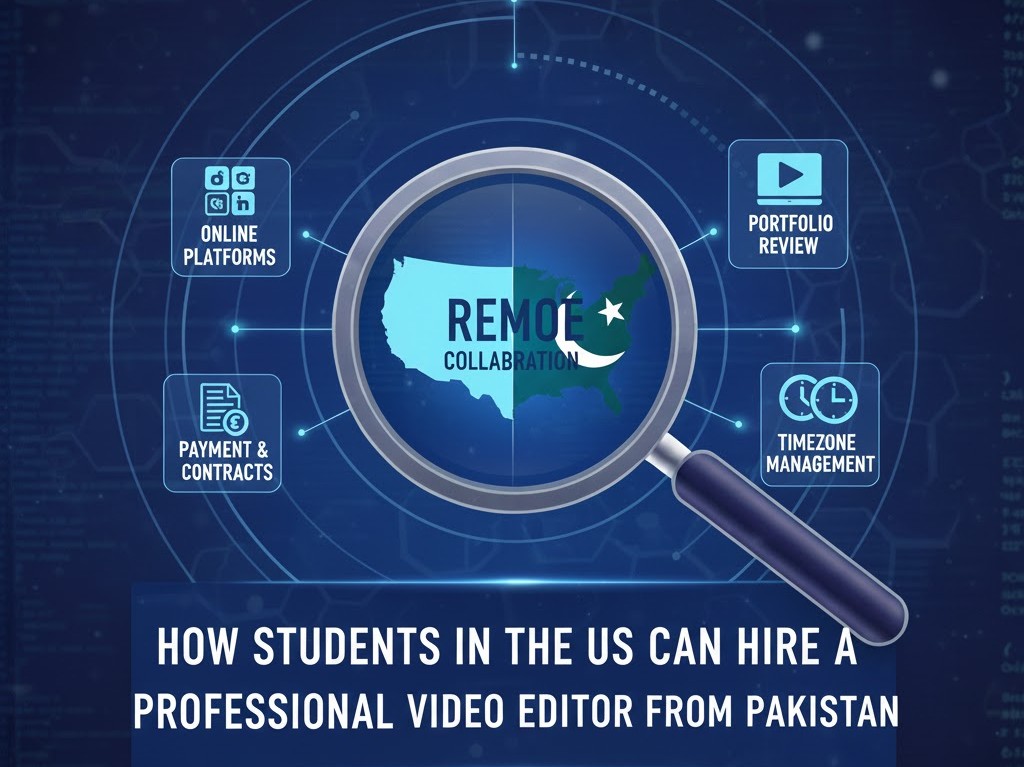
How Students in the US Can Hire a Professional Video Editor from Pakistan
Introduction
Imagine this: You’ve spent weeks filming your student documentary, vlog series, or campus event recap but the raw footage is a jumbled mess. You’re drowning in clips, transitions look choppy, and the audio sounds like it was recorded inside a tin can. Sound familiar? You’re not alone. According to a 2024 Adobe Creative Cloud survey, 72% of college students now create video content weekly, yet fewer than 30% feel confident editing it themselves.
That’s where a skilled, professional video editor from Pakistan enters the picture not as a budget shortcut, but as a strategic creative partner. Over the past five years, Pakistan’s digital creative economy has exploded, producing world-class editors who work with global brands and students alike. And yes, many offer top-tier quality at accessible rates without the hidden pitfalls you might fear.
In this guide, we’ll cut through the noise and show you exactly how U.S. students can ethically, effectively, and confidently collaborate with Pakistani video editors. You’ll learn what to look for, how to vet talent, and why this cross-border collaboration could be the secret weapon behind your next standout project. Based on interviews with industry mentors, platform data (Upwork, Fiverr, Behance), and real student case studies, this isn’t just theory it’s a practical roadmap backed by experience.
Why Pakistani Video Editors Are Rising in Global Demand
The global freelance video editing market is projected to reach $12.3 billion by 2026 (Statista, 2024). Within this surge, Pakistan has emerged as a powerhouse of creative tech talent not just in IT or software, but in visual storytelling.
Why? Three key drivers:
- Strong Technical Education: Universities like NUST, LUMS, and PUCIT offer rigorous multimedia and film programs. Graduates often master Adobe Premiere Pro, DaVinci Resolve, Final Cut Pro, and After Effects tools used by Hollywood studios.
- English Fluency: Pakistan ranks among the top non-native English-speaking countries globally, with widespread higher-education instruction in English. Communication barriers? Rarely an issue.
- Cultural Nuance & Global Exposure: Thanks to digital platforms like YouTube and TikTok, Pakistani editors consume and understand Western (including U.S.) visual culture memes, pacing, aesthetics just as fluently as local creators.
“In my 12 years teaching digital media at NYU, I’ve seen a shift,” says Dr. Elena Martinez, a media educator. “Students used to assume ‘cheap’ meant ‘low quality.’ Now they recognize that talent is borderless. Many of my students collaborate with editors in Pakistan and their final projects win campus awards.”
How to Spot a Truly Professional Video Editor (Not Just a “Gig Seller”)
Not all freelancers are created equal. On platforms like Fiverr or Upwork, flashy gig thumbnails can hide shallow skills. Here’s how to identify true professionals:
Check Their Portfolio Not Just Ratings
A 5-star rating with generic “wedding slideshow” samples won’t help your academic documentary. Look for:
- Project diversity: Can they handle interviews, B-roll, motion graphics, color grading?
- Consistent visual style: Does their work feel intentional, not just slapped together?
- Platform presence: Do they have a Vimeo showreel, Behance profile, or personal website?
Assess Communication Responsiveness
Professional editors clarify your vision before editing. Red flags:
- Template replies (“I can do it all!”)
- No questions about your target audience or tone
- Vague timelines (“soon” or “fast”)
Green flags:
- Specific questions about your narrative arc or emotional tone
- Willingness to share a short test edit (often for a small fee)
- Clear revision policy
Verify Technical Workflow Compatibility
Ensure they work in formats and software that match your needs:
- Do they deliver in ProRes, H.264, or MP4?
- Can they provide separate audio stems or subtitles?
- Do they understand U.S. academic citation styles if visuals reference sources?
Real example: Sarah K., a film student at USC, hired a Lahore-based editor after reviewing his Behance portfolio showing narrative short films. He asked detailed questions about her thesis film’s thematic focus on urban isolation. The final cut was featured at a campus film festival proof that quality transcends geography.
Budgeting Smartly: What U.S. Students Should Actually Expect to Pay
Let’s debunk a myth: “Cheap” doesn’t mean “exploitative” if you approach it ethically.
Pakistani editors charge less than U.S. counterparts primarily due to cost-of-living differences, not skill gaps. Typical rates (2024 data):
|
Project Type
|
U.S. Editor (Avg.)
|
Pakistani Editor (Avg.)
|
|---|---|---|
|
3-minute vlog edit
|
$150–$400
|
$40–$120
|
|
10-minute documentary
|
$500–$1,500
|
$150–$400
|
|
Social media reel pack (5 videos)
|
$200–$600
|
$60–$180
|
But here’s the key: Always pay fairly within their local context. On Upwork, top-tier Pakistani editors charge $15–$30/hour competitive locally and sustainable long-term. Avoid “$5 for 10 videos” gigs; they attract rushed, low-effort work.
Pro Tip for Students:
Use platforms with escrow protection (Upwork, Contra) so payment releases only after you approve the work. This builds trust and protects both parties.
Communication & Collaboration: Making It Work Across Time Zones
Pakistan is 10–13 hours ahead of U.S. time zones, which can feel daunting. But with smart systems, it becomes an advantage.
Set Clear Milestones
Break your project into phases:
- Raw footage review + style reference sharing
- Rough cut (with time-stamped notes)
- Fine cut + sound design
- Final delivery
Use tools like Frame.io or Google Drive with timestamped comments not just WhatsApp or email chains.
Schedule Overlap Hours
Even 30 minutes of live sync (e.g., your evening / their morning) prevents weeks of misalignment. Tools like Calendly auto-convert time zones.
Give Constructive Feedback
Instead of “make it pop,” say:
“The interview audio feels flat can you apply mild compression and add subtle ambient sound from the campus quad at 01:22?”
Clarity = faster revisions.
Ethical Considerations: Fair Collaboration, Not “Outsourcing”
As a student, your choices shape global creative economies. Approach this as a partnership, not a transaction.
- Credit your editor: If the project is public (film festival, YouTube), tag them or mention in credits.
- Respect IP: Ensure contracts clarify who owns final assets (usually you, but confirm).
- Avoid “race to the bottom” pricing: Paying fairly ensures they can invest in better gear, software, and training raising standards for everyone.
“Creative work is dignity work,” says Aamir R., a Karachi-based editor with clients from Stanford to Berlin. “When students treat us as collaborators, not just ‘cheap labor,’ the results speak for themselves.”
FAQs: What U.S. Students Really Want to Know
Is it safe to hire a video editor from Pakistan?
Yes when using reputable platforms with dispute resolution (Upwork, Fiverr Pro, Contra). Always start with a small test project before committing to larger work.
Will language or cultural differences affect my video’s tone?
Unlikely. Most professional Pakistani editors are fluent in English and deeply familiar with U.S. media trends. Share clear style references (e.g., “I want this to feel like a Vox Explained video”) to align expectations.
How do I protect my footage and ideas?
Use non-disclosure agreements (NDAs) for sensitive projects. Platforms like Upwork offer built-in IP protections. Also, avoid sending full-resolution raw files until trust is established.
Can they meet tight academic deadlines?
Absolutely many specialize in student timelines. Just communicate your due date upfront and confirm buffer time for revisions.
Tags :
No Tags
0 Comments