



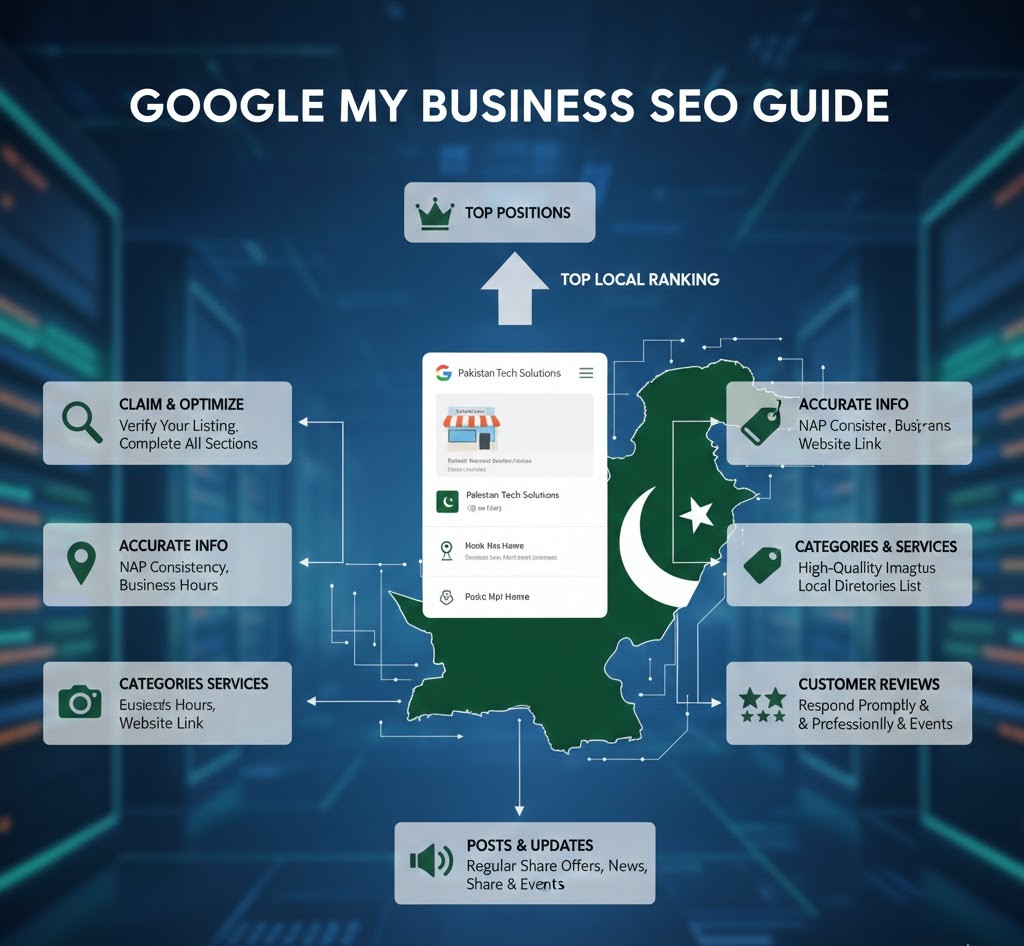
Google My Business SEO Guide
Introduction
Imagine this: you search for “best coffee shop near me,” and within seconds, Google shows a list of nearby businesses with reviews, photos, directions, and contact details. You click one, walk in, and buy a latte. That simple moment is powered by Google My Business (now officially called Google Business Profile) and smart local SEO.
For students and beginners, this is one of the most practical and high-impact areas of digital marketing to learn. Unlike complex SEO tactics that take months to show results, Google My Business (GMB) optimization can generate visibility, traffic, and even real customers surprisingly fast. It’s also a skill that local businesses actively need which makes it a valuable career opportunity.
In this guide, you’ll learn what Google My Business SEO really means, how it works behind the scenes, and how to optimize a profile step by step. We’ll go beyond surface-level tips and help you understand the logic behind each strategy, so you’re not just following instructions, but actually thinking like a professional local SEO.
What Google My Business SEO Really Means (Beyond the Definition)
Most beginners hear “GMB SEO” and assume it’s just about filling in business details. In reality, it’s about helping Google trust, understand, and recommend a business to the right people at the right time.
Google’s goal is simple:
When someone searches for a service or product locally, Google wants to show the most relevant, trustworthy, and high-quality businesses.
Google My Business SEO is the process of sending clear signals that your business deserves to be one of those top results.
These signals include:
-
Accurate and complete business information
-
Consistent activity on the profile
-
Positive customer engagement (reviews, clicks, calls)
-
Relevance to search terms
-
Trust signals across the web
When you understand this mindset, GMB optimization stops feeling like a checklist and starts feeling like communication with a system designed to serve users.
How Local Search Actually Works (In Simple Terms)
To optimize effectively, you need to understand how Google decides which businesses appear in the local results (often called the “Local Pack” or “Map Pack”).
Google primarily looks at three factors:
Relevance
How closely does the business match what the user searched for?
If someone searches “hair salon for curly hair,” Google looks for profiles that clearly mention those services.
Distance
How close is the business to the searcher’s location?
This is why local SEO is powerful: you don’t need to compete with the entire internet, only your geographic area.
Prominence
How well-known and trusted is the business?
This is influenced by:
-
Reviews and ratings
-
Website authority
-
Mentions across the web
-
Engagement on the profile
Google My Business SEO is essentially about improving relevance and prominence while staying geographically consistent.
Key Components of Google My Business SEO
Optimizing Your Business Profile Foundation
Your profile is your digital storefront. A poorly filled profile is like a shop with no signboard and messy shelves.
Start with the basics:
-
Business name (use your real name, not keyword-stuffed versions)
-
Primary and secondary categories (choose carefully, they influence ranking strongly)
-
Address and service areas
-
Phone number
-
Website link
-
Business hours
These details help Google understand exactly what you do and who you serve.
A common beginner mistake is treating this section casually. In reality, this is your foundation. If it’s weak, everything else becomes less effective.
Writing a Business Description That Builds Relevance
Your business description isn’t just for users; it’s also a relevance signal.
A strong description:
-
Clearly explains what the business offers
-
Naturally includes related services
-
Sounds human and trustworthy
-
Avoids keyword stuffing
Instead of writing:
“We are best plumber plumber services cheap plumber New York”
A better version would be:
“We provide reliable residential and commercial plumbing services in New York, including leak repairs, drain cleaning, water heater installation, and emergency plumbing support.”
Notice how it feels natural while still clearly communicating relevance.
The Power of Reviews in GMB SEO
Reviews are one of the strongest ranking and conversion factors.
But they’re not just about star ratings. Google looks at:
-
Quantity of reviews
-
Frequency of new reviews
-
Review content (keywords and context)
-
Owner responses
-
Overall rating consistency
A business with 150 authentic reviews and thoughtful responses sends a powerful trust signal.
Beginner-friendly takeaway:
-
Ask happy customers for reviews politely
-
Make it easy (share your review link)
-
Respond to every review, positive or negative
-
Never buy fake reviews (this often backfires)
Reviews are a long-term asset. Over time, they compound into a major competitive advantage.
Photos, Videos, and Visual Trust Signals
Most beginners underestimate how important visuals are in Google My Business.
Businesses with high-quality photos typically get:
-
More clicks
-
More direction requests
-
More calls
-
Higher engagement
Upload:
-
Exterior photos (so people recognize the location)
-
Interior photos (build comfort and trust)
-
Team photos (humanize the business)
-
Product or service photos
-
Short videos (walkthroughs, behind-the-scenes, tips)
From an SEO perspective, this activity signals to Google that the business is real, active, and engaging.
Google Posts: The Most Ignored Ranking Opportunity
Google Posts allow you to publish mini-updates directly on your profile. These can include:
-
Offers
-
Announcements
-
Blog-style updates
-
Events
-
Tips
Many businesses ignore this feature entirely. That’s your opportunity.
Regular posts:
-
Increase engagement
-
Send freshness signals to Google
-
Improve click-through rates
-
Build topical relevance
For students learning SEO, this is a practical habit to develop: create content consistently, even in small formats.
Categories: The Hidden SEO Lever
Your primary category is one of the strongest ranking factors in GMB SEO.
For example:
-
“Personal Injury Attorney” vs “Law Firm”
-
“Italian Restaurant” vs “Restaurant”
-
“Digital Marketing Agency” vs “Marketing Consultant”
The more specific and accurate the category, the better Google understands your relevance.
Secondary categories also matter, but your primary category carries the most weight.
This is where research skills become important: look at top-ranking competitors and analyze which categories they use.
How Google My Business SEO Fits into the Broader Digital Marketing Ecosystem
GMB doesn’t exist in isolation. It connects with everything else in digital marketing.
Your website supports your GMB profile
When your website is optimized for local keywords, loads fast, and provides useful content, it strengthens your profile’s credibility.
Social media builds brand signals
Active social profiles reinforce trust and legitimacy.
Local backlinks increase authority
Mentions from local directories, blogs, and news sites help boost prominence.
Content marketing supports relevance
Publishing helpful local content like “Best Wedding Venues in Austin” or “Home Maintenance Tips for Chicago Winters” supports both your website SEO and your local presence.
Understanding this ecosystem is what separates true digital marketers from people who only follow surface-level tactics.
Real-World Example: Small Business vs Optimized Business
Imagine two dental clinics in the same neighborhood.
Clinic A:
-
Barely filled GMB profile
-
8 reviews from three years ago
-
No photos
-
No posts
-
Generic category
Clinic B:
-
Fully optimized profile
-
120 recent reviews with responses
-
High-quality photos and videos
-
Weekly posts with dental tips
-
Specific categories like “Cosmetic Dentist”
-
Consistent business information everywhere online
Even if both clinics offer similar services, Google will almost always favor Clinic B. Not because of tricks, but because it appears more trustworthy, relevant, and active.
That’s the power of good GMB SEO.
Common Google My Business SEO Myths Beginners Believe
“If I add more keywords to my business name, I’ll rank faster”
This can lead to suspension. Google’s guidelines are clear: use your real business name.
“Once I optimize it once, I’m done”
GMB SEO is ongoing. Profiles that stay active tend to perform better over time.
“Reviews don’t matter if my website SEO is strong”
For local SEO, reviews are central, not optional.
“Photos are just decoration”
Photos influence engagement, trust, and rankings more than most beginners realize.
“Only big businesses can rank”
Local SEO is one of the most level playing fields in digital marketing. Small, well-optimized businesses often outrank larger competitors.
Practical GMB SEO Skills Students Should Start Learning Today
If you’re a student or beginner, don’t just learn theory. Build real skills.
Start practicing with:
-
Creating and optimizing a sample business profile
-
Writing professional business descriptions
-
Researching competitor categories
-
Designing review request strategies
-
Writing effective Google Posts
-
Learning basic local keyword research
-
Understanding NAP consistency (Name, Address, Phone)
-
Tracking performance using GMB insights
These are job-ready skills. You can offer them as services to local businesses, use them in internships, or apply them in your own projects.
Many freelancers build entire careers around local SEO and Google Business optimization alone.
How GMB SEO Careers and Opportunities Are Evolving
Local SEO is growing, not shrinking.
As more businesses move online, competition for local visibility increases. That means demand for people who understand GMB optimization is rising.
Career paths include:
-
Local SEO specialist
-
Digital marketing executive
-
Freelance GMB optimizer
-
Marketing consultant for small businesses
-
Agency team member
-
In-house marketer for local brands
What makes this especially attractive for students is accessibility. You don’t need a massive budget or advanced coding skills. You need understanding, consistency, and practice.
Those who start learning this now are positioning themselves ahead of the curve.
FAQs About Google My Business SEO
How long does it take for GMB optimization to show results?
You can often see improvements in visibility within a few weeks, but stronger results typically build over 2–3 months of consistent activity.
Is Google My Business SEO free?
Yes, the platform itself is free. The main investment is time, effort, and strategy.
Do I need a website to rank in Google My Business?
A website helps significantly, but some businesses can still rank locally with a well-optimized profile and strong reviews.
How many reviews do I need to rank?
There’s no fixed number. It depends on your competition. Focus on being better than nearby competitors, not hitting an arbitrary number.
Can online-only businesses use Google My Business?
Yes, service-area businesses can hide their address and still use GMB to reach local customers.
Conclusion
Google My Business SEO is one of the most practical, impactful, and beginner-friendly areas of digital marketing. It connects real-world behavior with digital visibility: people search, they find, they visit, they buy.
By understanding how local search works, optimizing profiles thoughtfully, building trust through reviews and content, and staying consistent, students can develop a skill that delivers both immediate results and long-term career value.
This isn’t just about ranking businesses on a map. It’s about understanding how people discover services in the modern world and helping businesses show up when it matters most.
If you start learning and practicing these skills today, you’re not just studying SEO. You’re building a future-proof foundation in digital marketing that can open doors to freelancing, agency roles, and entrepreneurship.
Tags :
No Tags

0 Comments