



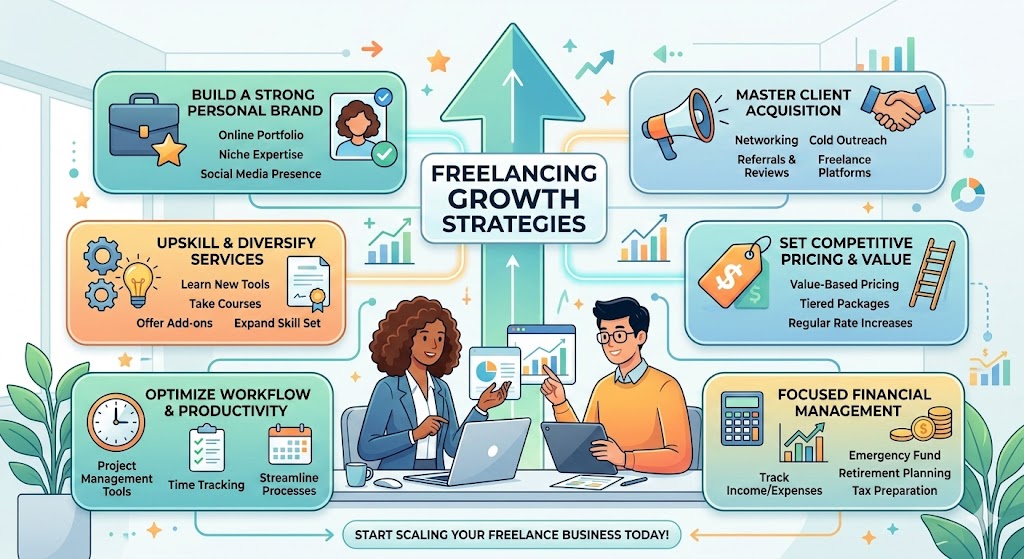
Freelancing Growth Strategies
Introduction
Many students start freelancing with excitement. They create a profile on platforms like Upwork or Fiverr, apply for a few jobs, and wait for clients to respond. At first, it may feel slow or even discouraging. Weeks can pass with few replies, and the competition seems overwhelming.
The truth is that freelancing success rarely happens overnight. Behind every successful freelancer is a strategy for growth a clear plan to attract clients, improve skills, and build credibility over time.
Freelancing is not just about completing tasks for clients. It is about building a reputation, creating value, and developing a personal brand that attracts opportunities. Without a growth strategy, many beginners struggle to move beyond low-paying projects or inconsistent work.
This article explains practical freelancing growth strategies for students and beginners who want to build a stable and profitable freelance career. You will learn how freelancing really works in the modern digital economy, how successful freelancers attract clients, and what skills and habits help freelancers grow consistently.
By the end, you will understand how to turn freelancing from a side experiment into a long-term professional opportunity.
What Freelancing Really Means in the Digital Economy
Freelancing is often described as working independently for multiple clients instead of having a traditional job. While that definition is technically correct, it does not capture the full picture.
In reality, freelancing is closer to running a small business than simply doing freelance work.
Successful freelancers are responsible for:
-
Finding and communicating with clients
-
Marketing their skills and services
-
Managing deadlines and expectations
-
Improving their expertise over time
-
Handling payments, proposals, and negotiations
In other words, freelancing combines technical skills with business thinking.
Many beginners focus only on the technical side of freelancing. For example, a student learning graphic design may believe that strong design skills alone will bring clients. In practice, freelancers who grow faster usually understand how to position themselves in the market.
Growth happens when freelancers stop thinking like job seekers and start thinking like professionals offering valuable services.
Understanding How Freelance Platforms Work
Before discussing growth strategies, it is important to understand how freelance platforms operate.
Platforms such as Fiverr, Upwork, Freelancer, and PeoplePerHour act as marketplaces. Thousands of freelancers compete for projects posted by clients from around the world.
These platforms use algorithms that prioritize freelancers who demonstrate reliability and quality.
Factors that influence visibility include:
-
Client reviews and ratings
-
Completion rate of projects
-
Response time to client messages
-
Profile optimization and clear service descriptions
-
Consistent activity on the platform
For beginners, the first few projects are the most challenging because there is no existing reputation yet. However, once freelancers complete a few successful jobs, the platform begins to trust their profile more.
This is why early growth strategies often focus on building credibility rather than maximizing profit.
Building a Strong Freelance Profile
One of the most overlooked freelancing growth strategies is optimizing your profile.
A freelancer’s profile functions like a digital storefront. It is often the first impression clients have before deciding whether to contact someone.
A strong profile usually includes:
A Clear Professional Title
Instead of using a generic title such as “Freelancer”, it is better to be specific.
For example:
-
SEO Content Writer for Blogs and Websites
-
WordPress Website Designer for Small Businesses
-
Social Media Manager for E-commerce Brands
Specific titles immediately communicate expertise.
A Client-Focused Description
Many beginners write profiles that focus only on themselves.
For example:
“I am a hardworking student who wants to gain experience.”
Clients are more interested in how a freelancer can solve their problem.
A stronger profile description might say:
“I help businesses create SEO-optimized blog content that attracts organic traffic and converts readers into customers.”
This approach shows value instead of simply listing skills.
A Portfolio of Real Work
Even beginners can build a small portfolio by:
-
Creating sample projects
-
Writing demo articles
-
Designing practice logos or websites
-
Helping small businesses or friends
A portfolio shows clients what you can do, which is far more convincing than simply saying you have a skill.
Choosing the Right Niche
One of the fastest ways to grow in freelancing is specialization.
Many beginners try to offer too many services at once, such as:
-
Writing
-
Graphic design
-
Social media
-
Video editing
While versatility can be useful, clients usually prefer specialists.
A freelancer who focuses on a specific niche becomes easier to trust.
For example, instead of being a general content writer, someone might specialize in:
-
SEO blog writing
-
E-commerce product descriptions
-
Technical writing
-
Digital marketing articles
Specialization also makes it easier to build authority in a particular field.
Over time, niche expertise can lead to higher-paying projects and long-term clients.
Developing Consistent Client Acquisition Habits
One of the biggest mistakes beginners make is applying for freelance projects only occasionally.
Freelancing growth requires consistent outreach and visibility.
Successful freelancers often follow daily or weekly routines such as:
-
Sending several well-written proposals each day
-
Updating their portfolio regularly
-
Posting helpful content on professional platforms
-
Responding quickly to client inquiries
Consistency builds momentum.
For example, a freelancer who sends 10 thoughtful proposals per day is far more likely to secure work than someone who sends a few generic applications per week.
Quality also matters. Personalized proposals that mention the client’s needs are significantly more effective than copy-and-paste messages.
Building Long-Term Client Relationships
Many freelancers focus entirely on finding new clients. However, experienced freelancers know that repeat clients are the foundation of steady income.
A satisfied client may:
-
Offer additional projects
-
Recommend you to others
-
Provide strong reviews and testimonials
Simple habits can improve client retention:
-
Deliver work before deadlines
-
Communicate clearly and professionally
-
Ask for feedback and improvements
-
Show genuine interest in the client’s goals
For example, a freelance content writer might suggest new blog topics to a client after completing an article. This proactive approach demonstrates value and often leads to ongoing work.
Long-term relationships reduce the constant pressure of searching for new projects.
Leveraging Personal Branding
Freelancing growth is not limited to freelance platforms. Many freelancers expand their opportunities through personal branding.
Personal branding means creating a professional presence that showcases your expertise.
Common methods include:
-
Writing helpful posts on LinkedIn
-
Sharing project insights on Twitter or professional communities
-
Creating a personal website or portfolio blog
-
Publishing articles related to your field
For instance, a student learning SEO might share tips about keyword research or website optimization. Over time, this builds credibility and attracts potential clients.
Personal branding turns freelancers from unknown service providers into visible experts.
Improving Skills Continuously
Freelancing markets evolve quickly, especially in digital fields.
New tools, techniques, and industry standards appear every year. Freelancers who invest in learning remain competitive.
Some valuable skill areas include:
-
Communication and negotiation
-
Project management
-
Digital marketing knowledge
-
Understanding client industries
-
Advanced tools related to your skill
For example, a content writer who learns SEO can offer more value than someone who writes without considering search visibility.
Similarly, a web designer who understands website speed optimization or user experience becomes more valuable to clients.
Continuous learning often leads directly to higher project rates and better opportunities.
Expanding Beyond Freelance Platforms
While platforms like Upwork or Fiverr are excellent starting points, many experienced freelancers eventually diversify their sources of work.
Additional opportunities may come from:
-
Professional networking
-
LinkedIn outreach
-
Referrals from existing clients
-
Personal websites and blogs
-
Online communities related to specific industries
For example, a freelancer who writes about digital marketing may connect with startup founders or marketing agencies that need regular content.
Building multiple sources of clients reduces dependency on a single platform and increases long-term stability.
Common Freelancing Mistakes Beginners Make
Understanding common mistakes can help beginners avoid unnecessary setbacks.
Undervaluing Their Work
Some beginners accept extremely low-paying jobs out of fear of losing opportunities. While small projects can help build experience, consistently working for very low rates can slow long-term growth.
Ignoring Communication
Even highly skilled freelancers can lose clients if they communicate poorly. Clear updates, realistic timelines, and polite interaction build trust.
Trying to Learn Everything at Once
Freelancing becomes easier when beginners focus on one core skill first, then expand gradually.
Neglecting Reputation
Every review and client interaction contributes to a freelancer’s reputation. Maintaining professionalism is essential.
How Freelancing Opportunities Are Evolving
Freelancing is growing rapidly worldwide. Businesses increasingly prefer flexible professionals instead of full-time hires for many digital tasks.
Several trends are shaping the future of freelancing:
-
Remote work is becoming standard across industries
-
Businesses rely more on digital marketing and online content
-
Specialized freelance expertise is in high demand
-
Global competition is increasing, but so are opportunities
Students entering freelancing today are joining a marketplace that values skills, creativity, and adaptability.
Those who combine technical ability with strategic thinking often build thriving careers.
FAQs About Freelancing Growth
How long does it take to grow in freelancing?
For most beginners, it takes several months to gain traction. The timeline depends on skill level, consistency in applying for projects, and the ability to build strong client relationships.
Which freelancing skill grows the fastest?
Skills connected to digital business needs often grow quickly. These include content writing, SEO, web design, social media management, and video editing.
Should beginners start with low prices?
Offering slightly lower prices can help beginners attract initial clients, but rates should increase gradually as experience and reviews grow.
Is freelancing reliable as a long-term career?
Yes, many professionals build full-time careers through freelancing. Long-term success depends on maintaining skills, building relationships, and diversifying client sources.
Do freelancers need a personal website?
A personal website is not mandatory at the beginning, but it becomes valuable for showcasing a portfolio, building authority, and attracting clients independently.
Conclusion
Freelancing offers students and beginners a powerful opportunity to build real-world experience while earning income. However, sustainable success requires more than technical ability. It requires strategy, persistence, and professional thinking.
The most successful freelancers focus on several key growth principles. They build strong profiles, specialize in clear niches, communicate effectively with clients, and continuously improve their skills. They also understand the importance of reputation, consistency, and personal branding.
Freelancing may start with small projects and modest earnings, but with the right growth strategies, it can evolve into a stable and rewarding career.
For students willing to learn, adapt, and stay consistent, freelancing is more than just online work. It is a pathway to independence, global opportunities, and long-term professional development in the digital economy.
Tags :
No Tags

0 Comments