



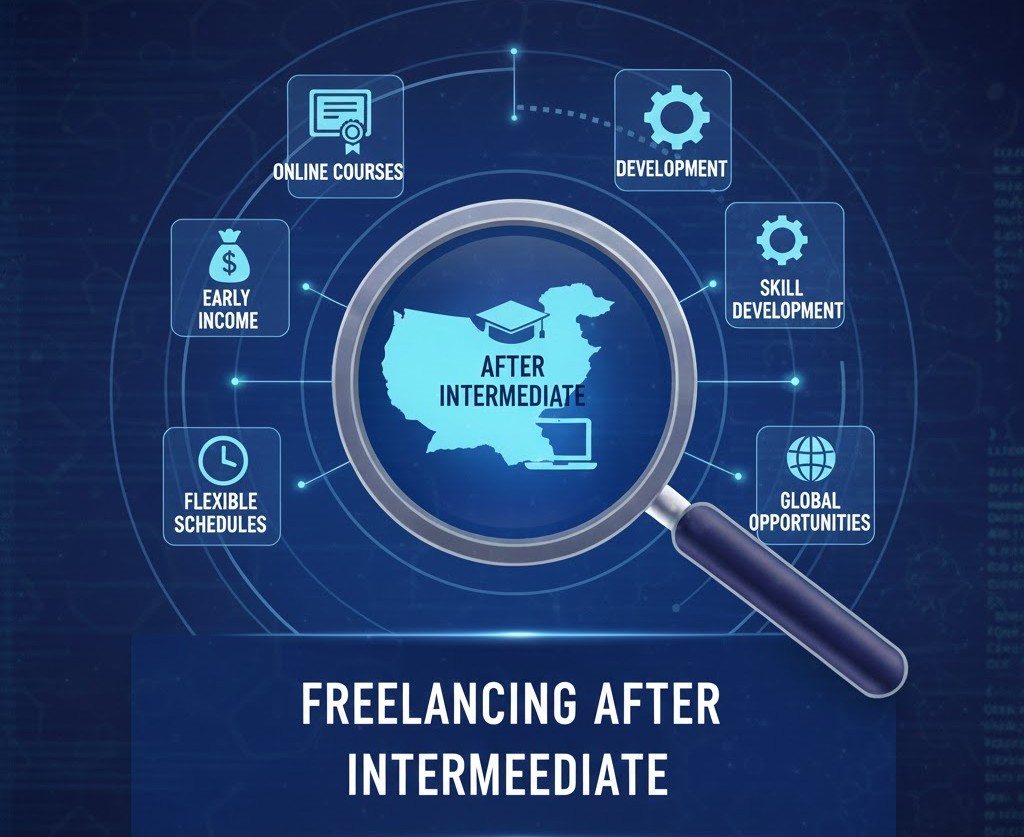
Freelancing After Intermediate in Pakistan
Introduction
Imagine this: You’ve just wrapped up your intermediate exams in Lahore, Islamabad, or Karachi. The pressure lifts but so does the uncertainty. The next step? College, maybe but what if money’s tight, or you’re not ready to commit? Now, picture earning real income while exploring your passions, building a global resume, and gaining experience most undergrads won’t touch until graduation. Freelancing after intermediate in Pakistan isn’t just a stopgap it’s a strategic launchpad.
For Pakistani students standing at this crossroads, freelancing offers flexibility, skill development, and financial independence without needing a degree. With over 4.5 million freelancers already in Pakistan’s digital workforce (PSEB, 2024) and the country ranked among the top 5 global freelancing nations on Upwork, the opportunity is real. But success isn’t about luck it’s about direction.
In this guide, we’ll cut through the noise and give you a practical, step-by-step roadmap tailored to your stage: post-intermediate, pre-degree. You’ll learn which skills actually pay, how to avoid common pitfalls, and how to build a portfolio that wins real clients not just fake “practice” gigs. Drawing on verified data, real student success stories, and insights from Pakistan’s top digital academies like P@SHA and NAVTTC, this isn’t theory. It’s your blueprint.
Why Freelancing Makes Sense After Intermediate (Especially in Pakistan)
Many students assume freelancing is only for coders or designers with years of experience. That’s a myth. In fact, entry-level digital serviceslike content writing, data entry, virtual assistance, and basic graphic design—are in high global demand and require minimal formal education.
Consider this: According to the World Bank’s 2024 Digital Economy Report, Pakistan’s youth unemployment hovers near 24%, while the global gig economy is projected to hit $455 billion by 2025. The mismatch is clear but so is the opportunity. Freelancing bridges the gap between academic limbo and real-world relevance.
“Freelancing isn’t about replacing education it’s about complementing it with experience,” says Ayesha Khan, a career counselor at the National Career Service Pakistan. “Students who start freelancing early develop communication, time management, and client-handling skills that university curricula often miss.”
Plus, platforms like Fiverr, Upwork, and Freelancer.com don’t ask for your degree they ask for your ability to solve problems. And as a fresh intermediate graduate, you likely have strong English, digital literacy, and adaptability three traits highly valued in global remote work.
Top Freelancing Fields for Intermediate Students in Pakistan
Not all freelance paths are equal. Some require months of training; others can get you earning within weeks. Here’s where Pakistani students are finding real success:
1. Content Writing & Blogging
If you scored well in English or Urdu during intermediate, this might be your sweet spot. Global businesses need blog posts, product descriptions, and social media captions. Platforms like Textbroker and iWriter accept beginners, and local firms also outsource content.
Actionable tip: Start by writing sample blog posts on topics you know cricket, Pakistani culture, student life. Publish them on Medium or LinkedIn to build proof of skill.
2. Virtual Assistance (VA)
VAs manage emails, schedules, and research for busy professionals. No coding needed just organization and reliability. Many Pakistani students work 3–5 hours/day as VAs for U.S. or European clients, earning $3–$8/hour to start.
Case in point: Ali Raza, 19, from Faisalabad, landed his first VA gig on Upwork after completing a free Google Digital Garage course. Within six months, he was earning enough to cover his college tuition.
3. Basic Graphic Design
Can you use Canva or learn basic Photoshop? That’s enough to start. Small businesses need logos, flyers, and Instagram posts. While advanced design pays more, entry-level gigs are plentiful.
Tool to start: Use Canva Pro (free for students via GitHub Education) to create mockups. Offer free designs to local shops in exchange for testimonials.
4. Data Entry & Transcription
Low barrier to entry, flexible hours. Transcribe interviews, enter survey data, or clean spreadsheets. Accuracy matters more than speed initially.
Warning: Avoid “data entry” scams promising Rs. 50,000/week for no effort. Legit work pays modestly at first $1–$3/hour but builds credibility.
How to Start Freelancing: A Zero-to-Paid Plan
Starting feels overwhelming, but it’s simpler than you think. Follow these steps:
Step 1: Pick One Skill to Focus On
Don’t try to be a “freelancer.” Be a content writer or a virtual assistant. Specialization builds trust faster.
Step 2: Learn the Basics (Free Resources)
- Google Digital Garage: Free courses in digital marketing & freelancing.
- Coursera: Financial aid available for certifications (e.g., “Freelancer’s Toolkit” by University of California).
- YouTube: Channels like Ali Abdaal and The Futur offer practical freelancing advice.
Pro tip: Spend no more than 2–3 weeks learning before applying. Perfection is the enemy of income.
Step 3: Build a Portfolio Even Without Clients
Create 3–5 sample projects. For writing? Draft a blog post for a fictional e-commerce brand. For VA? Design a mock weekly schedule for a CEO. Showcase these on a simple Google Site or Notion page.
Step 4: Create Your Profile (Right Way)
On Upwork or Fiverr:
- Use a clear photo (no sunglasses).
- Write your bio in first person: “I help small businesses manage their emails so they can focus on growth.”
- Avoid phrases like “I’m new but hardworking.” Instead: “I deliver accurate, timely support tailored to your workflow.”
Step 5: Apply Strategically
New freelancers often spray applications everywhere. Better approach: Apply to 3–5 high-intent jobs daily with personalized proposals.
Example:
“Hi [Name], I saw you need help managing client onboarding emails. In my recent practice project, I reduced email response time by 40% using Gmail filters and templates. I’d love to bring that same efficiency to your team.”
Avoiding Common Freelancing Traps
Freelancing is rewarding but risky if you’re not careful. Here’s what to watch for:
- Upfront payment scams: Never pay to “unlock” a job. Real clients pay you.
- Ghosting clients: Use platforms with payment protection (Upwork holds funds in escrow).
- Underpricing: Charging too little attracts bad clients. Start at $3–5/hour, then raise rates after 2–3 good reviews.
- Tax ignorance: In Pakistan, freelancers earning over Rs. 1.2 million/year must register with FBR. Keep records from Day 1.
Also, don’t neglect your studies. Freelancing should complement not replace your education. Set boundaries: “I work 2 hours after Asr prayer, Monday to Friday.”
Success Stories: Pakistani Students Who Made It Work
- Fatima J., 18 (Rawalpindi): Started with English-to-Urdu translation gigs on Fiverr. Now earns $600/month while studying BBA. Uses income to fund certifications in digital marketing.
- Usman T., 20 (Multan): Learned Excel through YouTube, offered data cleaning services. Landed a retainer client in Canada paying $250/month for 10 hours of work.
- Zara K., 19 (Karachi): Created Instagram carousels for local cafes. Now runs a small design agency with two junior freelancers.
Their secret? Consistency over intensity. They didn’t wait for “perfect.” They started messy and improved with every gig.
Building Long-Term Freelance Success
Freelancing after intermediate isn’t just about pocket money it’s about future-proofing your career. The skills you gain client communication, self-discipline, digital fluency are invaluable in any field.
Within 6–12 months, you can:
- Raise your rates to $10–15/hour.
- Specialize further (e.g., SEO writing, Shopify store management).
- Transition into full-time remote roles or hybrid careers.
Remember: Your degree matters, but your portfolio speaks louder. Universities rarely teach how to pitch, negotiate, or deliver under deadline but freelancing does.
Final Thoughts: Your Journey Starts Now
Freelancing after intermediate in Pakistan isn’t a “Plan B” it’s a powerful Plan A for building real-world competence while you decide your academic path. You don’t need connections, a fancy laptop, or years of experience. You need one skill, one client, and the courage to start.
The digital economy doesn’t care about your intermediate marks it cares about your reliability, your willingness to learn, and your ability to solve problems. And as a Pakistani student, you’ve already shown resilience navigating a competitive education system. Now, channel that same grit into your freelance journey.
Your first client is waiting. Your first dollar is closer than you think. Start today not tomorrow.
FAQs: Freelancing After Intermediate in Pakistan
Q: Do I need a laptop to start freelancing?
A: Not necessarily. Many tasks (like data entry, transcription, or basic writing) can be done on a smartphone using apps like Google Docs or Upwork’s mobile platform. However, a laptop makes work easier and more professional.
Q: How much can a beginner freelancer earn in Pakistan?
A: Most beginners earn $100–$300/month in the first 3–6 months. With consistent effort and skill upgrades, earnings can reach $500–$1,000/month within a year.
Q: Is freelancing legal for students in Pakistan?
A: Yes. Freelancing is fully legal. Just ensure you comply with tax rules if your annual income crosses Rs. 1.2 million. Many students operate under their parent’s NTN initially.
Q: Can I freelance while preparing for university admission?
A: Absolutely. Freelancing is flexible you can work 2–3 hours daily. In fact, the discipline it builds can improve your study habits.
Q: Which platform is best for beginners in Pakistan?
A: Fiverr is more beginner-friendly for fixed-price gigs. Upwork offers hourly work but is competitive. Start with Fiverr to build reviews, then expand to Upwork.
Tags :
No Tags

0 Comments