



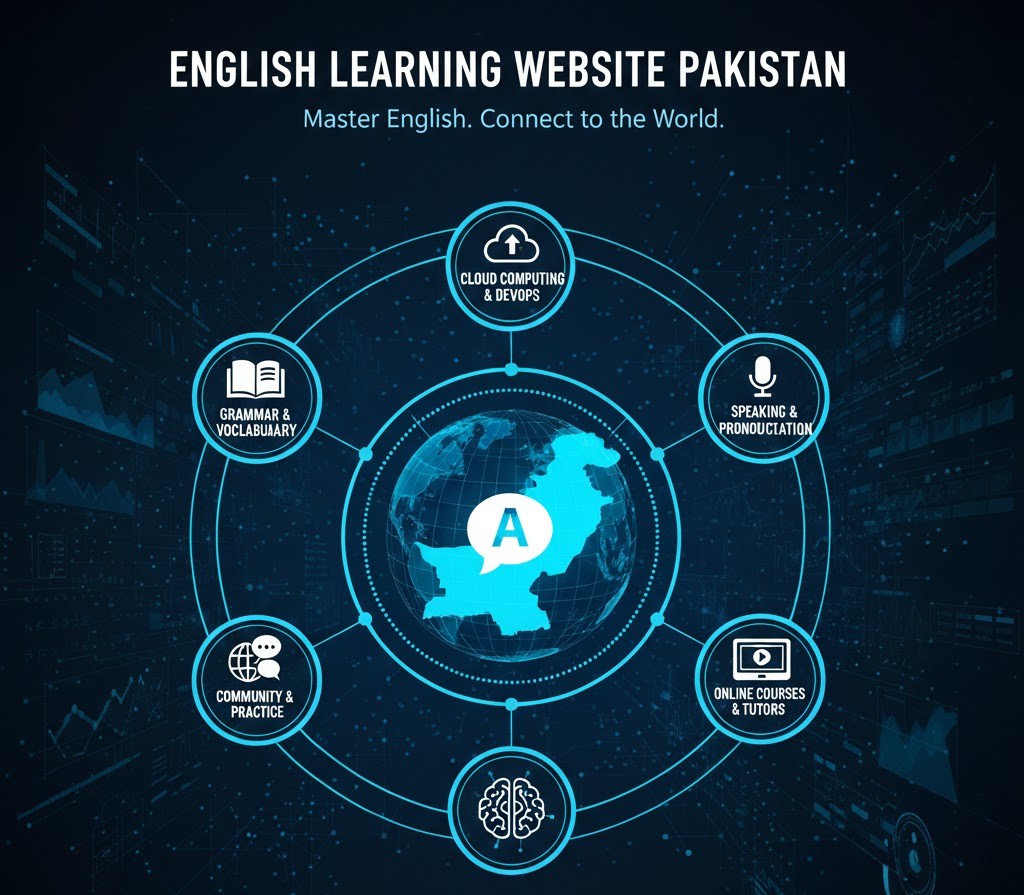
English Learning Website Pakistan
Introduction
Imagine this: you search “best English learning website in Pakistan” on Google. Within seconds, dozens of websites appear, each promising courses, practice exercises, and fluent speaking skills. But have you ever wondered why some websites appear on the first page while others remain invisible? That invisible force shaping what you see is called SEO Search Engine Optimization.
For students and beginners in Pakistan, especially those trying to improve English or build online careers, understanding SEO is no longer optional. It influences which learning platforms succeed, how blogs attract readers, and how online businesses grow. Even if you never plan to become a digital marketer, SEO affects the websites you use every day.
In this article, you’ll learn what SEO really means (beyond technical definitions), how search engines actually work, and how SEO connects with platforms like English learning websites in Pakistan. We’ll explore real-world examples, clear misconceptions, and practical skills you can start building today. By the end, you’ll see SEO not as a confusing technical topic, but as a powerful, accessible skill for your future.
What SEO Really Means in Digital Marketing
Most beginners think SEO simply means “using keywords to rank on Google.” That’s a small part of the picture.
In reality, SEO is about understanding people’s intent and building helpful content and experiences around it.
Let’s take an example. A student searches for:
-
“Free English learning website Pakistan”
-
“How to improve spoken English”
-
“Best online English course for beginners”
Each of these searches reflects a real human need: confusion, curiosity, ambition, or struggle. SEO means structuring your content so that search engines can recognize your page as the most helpful answer to that need.
Good SEO is not manipulation. It’s alignment:
-
Aligning content with what people are genuinely searching for
-
Aligning website structure with how search engines understand information
-
Aligning user experience with what visitors actually want
When done correctly, SEO becomes less about tricks and more about clarity, usefulness, and trust.
How Search Engines Work (In Simple Terms)
Search engines like Google use complex systems, but the core idea is simple. There are three basic steps.
Crawling: Discovering Content
Google sends automated programs (called bots or crawlers) across the web. They move from one page to another by following links. If your English learning website has no links pointing to it and poor structure, crawlers may struggle to discover it.
Indexing: Understanding Content
Once a page is discovered, Google tries to understand:
-
What is this page about?
-
Who is it for?
-
Is it high quality?
-
Does it match what people are searching for?
It analyzes headings, text, images, links, and overall context.
Ranking: Choosing the Best Results
When someone searches “best English learning website Pakistan,” Google doesn’t show random pages. It ranks results based on:
-
Relevance to the query
-
Quality of content
-
Trustworthiness of the website
-
User experience signals
That’s why some websites consistently appear at the top while others disappear into page 10.
Key Components of SEO
SEO is usually divided into three main areas. Understanding them gives you a complete picture of how websites grow.
On-Page SEO: Optimizing What Users See
On-page SEO focuses on the content and elements inside your website.
Content That Actually Helps
The strongest ranking factor today is helpful content. If you run an English learning website in Pakistan, this means:
-
Clear grammar explanations
-
Practical vocabulary lessons
-
Speaking tips that feel realistic
-
Exercises that solve real student problems
Search engines are increasingly good at recognizing whether content feels genuine or just written for rankings.
Headings and Structure
Using clear headings helps both readers and search engines understand your content. A well-structured article with logical sections performs better than a wall of text.
Natural Use of Keywords
If your topic is “English learning website Pakistan,” it makes sense to include related phrases naturally, such as:
-
Learn English online in Pakistan
-
Free English practice for students
-
Online English courses for beginners
But overusing them hurts readability and credibility.
User Experience Matters
If visitors land on your page and immediately leave because it’s confusing or slow, search engines notice. Good on-page SEO includes:
-
Easy navigation
-
Clean layout
-
Mobile-friendly design
-
Fast loading speed
SEO is no longer just about content; it’s about the experience around the content.
Technical SEO: The Foundation Behind the Scenes
Technical SEO sounds intimidating, but you don’t need to be a developer to understand the basics.
Website Speed
Slow websites lose users and rankings. A student accessing an English learning website from a mobile phone in Pakistan expects fast loading, even on limited internet.
Mobile Optimization
Most students browse on smartphones. If your website doesn’t work well on mobile, SEO performance suffers.
Secure Connections (HTTPS)
A secure website builds trust. Google prefers websites that protect user data.
Clear Site Structure
Pages should be logically organized. For example:
-
Homepage
-
Courses
-
Grammar Lessons
-
Speaking Practice
-
Blog
-
Contact
This helps both users and search engines navigate easily.
You don’t need to master coding to benefit from technical SEO. Even understanding the principles puts you ahead of most beginners.
Off-Page SEO: Building Trust Beyond Your Website
Off-page SEO focuses on signals from outside your site, especially backlinks.
What Are Backlinks?
A backlink is when another website links to yours. Think of it like a recommendation. If a respected education blog links to your English learning platform, it tells search engines that your site has credibility.
Why Quality Matters More Than Quantity
One link from a trusted education platform can be more powerful than 100 links from random low-quality sites.
Brand Presence Also Counts
Search engines also consider:
-
Mentions of your website name
-
Social media visibility
-
User discussions on forums or communities
If people talk about your English learning website positively, it strengthens your authority.
How SEO Fits into the Broader Digital Marketing Ecosystem
SEO doesn’t exist in isolation. It works alongside other digital marketing channels.
SEO and Content Marketing
Blogs, guides, videos, and resources fuel SEO. A strong English learning website might publish:
-
Weekly grammar tips
-
Pronunciation guides
-
Study plans for exams
-
Career-focused English lessons
Each piece of content becomes a long-term asset that attracts traffic over time.
SEO and Social Media
Social media doesn’t directly control rankings, but it amplifies reach. If students share your English learning content on Facebook or WhatsApp, more people discover it, and some may link to it.
SEO and Paid Advertising
Paid ads can bring instant traffic, while SEO builds long-term growth. Smart platforms use both. For example, an English learning website in Pakistan might use ads for quick visibility while building SEO for sustainable traffic.
SEO is the backbone of long-term digital growth. Everything else works better when SEO is strong.
Real-World Examples and Mini Case Studies
Let’s make this practical.
Case Study 1: A Small English Learning Blog
A student in Lahore starts a simple blog to help others learn spoken English. At first, she writes random topics with no structure. Her traffic stays low.
Then she learns SEO basics:
-
She researches what students actually search for
-
She writes detailed guides on common problems
-
She improves headings and readability
-
She shares her posts in student communities
Within months, her blog starts appearing for searches like “how to improve English speaking in Pakistan.” Traffic grows steadily, without spending money on ads.
Case Study 2: An Online English Academy
An academy offering paid online English courses invests in SEO. They create:
-
Separate pages for beginner, intermediate, and advanced learners
-
Blog posts targeting student questions
-
Fast-loading mobile pages
As a result, when students search “best English learning website Pakistan,” their site appears on the first page, bringing consistent enrollments.
These aren’t rare success stories. They are realistic outcomes of consistent, thoughtful SEO.
Common SEO Myths Beginners Believe
Many students feel confused about SEO because of misinformation. Let’s clear some myths.
Myth 1: SEO Is Only About Keywords
Reality: Keywords matter, but user experience, content quality, and trust matter more.
Myth 2: SEO Gives Instant Results
Reality: SEO is a long-term strategy. Results build over weeks and months, not overnight.
Myth 3: You Need to Be a Technical Expert
Reality: You can start with content, structure, and basic understanding before touching any advanced technical elements.
Myth 4: SEO Is Dead
Reality: SEO evolves constantly. As long as people use search engines, SEO remains valuable.
Understanding these truths prevents frustration and sets realistic expectations.
Practical SEO Skills Students Should Start Learning Today
You don’t need a job or a big project to start learning SEO. Here are skills you can build immediately.
Learn How to Research Topics
Instead of guessing what people want, learn to observe:
-
What questions students ask in Facebook groups
-
What appears in Google’s “People also ask”
-
What topics English learners struggle with most
This builds the foundation for strong content.
Practice Writing Helpful Content
Start a blog, even a simple one. Write about:
-
Your English learning journey
-
Common mistakes students make
-
Tips that helped you improve
This helps you develop both writing and SEO skills.
Understand Basic On-Page SEO
Learn how to:
-
Use headings properly
-
Write clear introductions
-
Structure articles logically
-
Make content easy to read
These are lifelong skills for digital communication.
Explore Website Tools Slowly
You can gradually learn:
-
How WordPress works
-
How to improve page speed
-
How to organize website structure
Step by step, your confidence grows.
SEO is one of the few fields where students can build real skills without expensive degrees.
How SEO Careers and Opportunities Are Evolving
SEO is no longer just a side skill. It has become a full career path.
Growing Demand in Pakistan
Businesses, startups, academies, and e-commerce stores all need visibility online. That means they need people who understand SEO. Students with strong SEO knowledge can work as:
-
SEO specialists
-
Content strategists
-
Digital marketers
-
Freelance consultants
Freelancing Opportunities
Many students in Pakistan earn online by offering SEO services globally. Platforms like Upwork and Fiverr are full of clients looking for people who can:
-
Optimize blog content
-
Improve website structure
-
Increase organic traffic
SEO as a Foundation Skill
Even if you don’t become an SEO specialist, SEO supports many careers:
-
Blogging
-
YouTube
-
Online teaching
-
E-commerce
-
Personal branding
If you ever plan to build an English learning website in Pakistan, start a blog, or create online courses, SEO becomes one of your most valuable assets.
FAQs (People Also Ask Style)
What is the best English learning website in Pakistan?
The best platform depends on your goals. Some focus on grammar, others on speaking practice, and others on exam preparation. Look for websites with clear lessons, real practice opportunities, and consistent updates.
Can I learn SEO as a student with no technical background?
Yes. Many successful SEO professionals started with no technical experience. You can begin with content writing, topic research, and basic on-page optimization.
How long does SEO take to show results?
SEO usually takes several weeks to months to show strong results. It’s a long-term investment, not a quick shortcut.
Is SEO still a good career in 2026 and beyond?
Absolutely. As long as businesses depend on online visibility, SEO remains one of the most in-demand digital skills.
Can SEO help promote an English learning website?
Yes. Strong SEO helps English learning websites reach more students organically, build credibility, and grow without relying only on paid ads.
Conclusion
SEO is no longer a hidden technical topic reserved for developers. It’s a practical, powerful skill that directly shapes what we see online from blogs and businesses to English learning websites in Pakistan. For students and beginners, understanding SEO means understanding how information flows on the internet.
We explored how search engines work, the real meaning of SEO, and how on-page, technical, and off-page strategies connect into one system. We also saw how SEO fits into digital marketing, how real projects grow with SEO, and why myths often confuse beginners unnecessarily.
The most important takeaway is this: SEO rewards clarity, usefulness, and consistency. If you can learn to create helpful content, understand your audience, and structure your ideas clearly, you are already on the path.
Whether you dream of building your own platform, freelancing online, or simply standing out in a competitive digital world, SEO is a skill that compounds over time. Start small, stay curious, and keep learning your future self will thank you.
Tags :
No Tags

0 Comments