



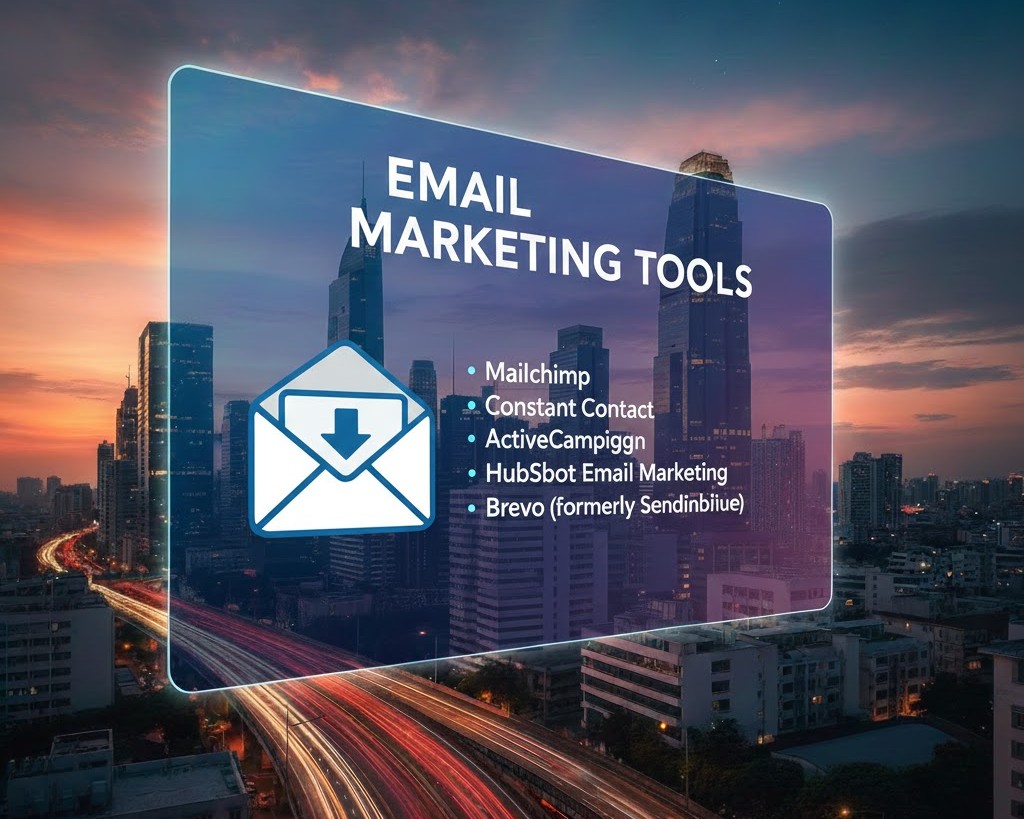
Email Marketing Tools
Introduction
Think about the last time you checked your email. Chances are, at least one message caught your attention—a discount, a class update, a newsletter you actually enjoy reading. That’s email marketing at work. Despite the rise of social media, short-form video, and messaging apps, email remains one of the most reliable and cost-effective digital marketing channels available today.
For students and beginners, email marketing can feel intimidating at first. There are platforms, dashboards, automation rules, templates, analytics, and a whole new vocabulary to learn. The good news is that modern email marketing tools are designed to simplify the process, not complicate it. With the right tool and a basic understanding of how it works, even a complete beginner can build professional campaigns that reach real people and deliver real results.
In this guide, you’ll learn what email marketing tools really do, how they fit into digital marketing, the main types of tools available, and how beginners can start using them effectively. We’ll also look at common myths, practical skills worth learning, and how email marketing tools can open doors to long-term career opportunities.
What Email Marketing Really Means (Beyond Sending Emails)
At its core, email marketing is about building relationships. It’s not just sending promotional messages it’s communicating with people who have chosen to hear from you.
Email marketing tools help marketers:
-
Collect and manage subscriber lists
-
Design professional-looking emails without coding
-
Send emails at the right time to the right audience
-
Automate follow-ups and sequences
-
Measure performance and improve future campaigns
For beginners, it’s important to understand that email marketing is permission-based. People sign up because they see value—whether that’s learning something new, receiving updates, or getting exclusive offers. Tools exist to help you respect that trust while communicating consistently and effectively.
How Email Marketing Tools Work (In Simple Terms)
Most email marketing tools follow the same basic workflow:
-
You collect subscribers
People join your list through a sign-up form, landing page, or checkout process. -
You organize your audience
Subscribers can be grouped based on interests, behavior, or demographics. -
You create an email
Using templates or drag-and-drop editors, you design the message. -
You send or automate
Emails can be sent immediately or triggered automatically by actions. -
You analyze results
The tool shows who opened, clicked, or ignored your email.
Behind the scenes, these platforms handle technical tasks like email delivery, spam compliance, and server managementthings beginners don’t need to worry about.
Key Types of Email Marketing Tools Beginners Should Know
Email Campaign Builders
These are the core tools that let you design and send emails. They typically include:
-
Drag-and-drop editors
-
Pre-designed templates
-
Image and text customization
-
Mobile-friendly layouts
For students, this removes the need for HTML or design experience while still producing professional results.
List Management and Segmentation Tools
As your email list grows, organization becomes essential. Good tools allow you to:
-
Tag subscribers based on behavior
-
Segment lists by interest or activity
-
Remove inactive subscribers
-
Manage unsubscribes automatically
Segmentation is one of the most powerful features for beginners to learn early it dramatically improves engagement.
Automation and Workflow Tools
Automation tools allow emails to be sent automatically based on actions, such as:
-
Welcome emails after signup
-
Follow-ups after downloads
-
Reminders for incomplete actions
This is where email marketing becomes scalable. Instead of sending emails manually, the tool works for you 24/7.
Analytics and Reporting Tools
Understanding performance is key to improvement. Most platforms provide:
-
Open rates
-
Click-through rates
-
Bounce rates
-
Unsubscribe data
For students, these metrics offer real-world marketing insights that textbooks can’t replicate.
Integration and CRM Features
Modern email tools often integrate with:
-
Websites and landing pages
-
E-commerce platforms
-
Customer relationship management (CRM) systems
-
Social media and ad platforms
These integrations turn email into a central part of a larger digital ecosystem.
Popular Email Marketing Tools Beginners Often Start With
While specific tools vary in features and pricing, beginner-friendly platforms usually share these qualities:
-
Intuitive interfaces
-
Free or low-cost plans
-
Strong educational resources
-
Reliable deliverability
-
Scalable features as skills grow
Students often begin with tools that allow small lists and basic automation, then upgrade as their needs evolve.
How Email Marketing Fits into the Digital Marketing Ecosystem
Email marketing doesn’t exist in isolation. It works alongside other channels to reinforce messaging and build consistency.
-
Content marketing feeds email lists through blogs, guides, and videos
-
Social media drives sign-ups and engagement
-
SEO attracts organic traffic that converts into subscribers
-
Paid advertising captures leads that email nurtures over time
Email marketing tools act as the connective tissue between these channels, helping brands stay in touch with audiences long after the first interaction.
Real-World Example: A Student Project That Scales
Imagine a student starting a small online course or study blog. At first, traffic is limited. But with a simple email sign-up form and a beginner-friendly email tool, they start collecting subscribers.
Over time:
-
A welcome email introduces the brand
-
Weekly newsletters share helpful content
-
Automated reminders promote new resources
-
Feedback emails improve future content
Within months, the email list becomes the most valuable asset more reliable than social media algorithms and easier to grow organically.
Common Email Marketing Myths Beginners Believe
“Email Marketing Is Dead”
This is one of the most persistent myths. In reality, email consistently delivers strong engagement and return on investment when done well.
“You Need a Huge List to Succeed”
Quality matters more than quantity. A small, engaged list often outperforms a large, uninterested one.
“It’s Too Technical for Beginners”
Modern tools are designed for non-technical users. Most campaigns can be built with basic digital skills.
“More Emails Mean Better Results”
Sending too often can hurt engagement. Tools help optimize timing and frequency.
Practical Email Marketing Skills Students Should Learn Today
For beginners, mastering tools is about more than clicking buttons. Focus on these foundational skills:
-
Writing clear, human subject lines
-
Understanding audience intent and value
-
Designing simple, readable emails
-
Interpreting analytics without overthinking
-
Respecting privacy and consent rules
These skills transfer easily across tools and industries.
Email Marketing Careers and Opportunities
Email marketing skills are in demand across:
-
Startups and small businesses
-
E-commerce brands
-
Agencies and consultants
-
Nonprofits and educational institutions
Roles range from email marketing specialists to lifecycle marketers and CRM managers. Many professionals start by learning tools independently, practicing on personal projects, and gradually moving into paid roles.
As automation and personalization become more sophisticated, email marketers who understand both tools and strategy will continue to be valuable.
FAQs About Email Marketing Tools
What is the best email marketing tool for beginners?
The best tool is one that’s easy to use, affordable, and offers strong learning resources. Beginners should prioritize simplicity over advanced features.
Are free email marketing tools worth using?
Yes. Free plans are ideal for students and small projects. They allow hands-on learning without financial risk.
Do I need coding skills to use email marketing tools?
No. Most tools use visual editors and templates designed for non-technical users.
How often should beginners send emails?
Consistency matters more than frequency. One to two emails per week is a common starting point.
Can email marketing help with careers and internships?
Absolutely. Demonstrating real campaign experience sets students apart in digital marketing roles.
Conclusion
Email marketing tools are more than software they’re learning platforms, communication channels, and career builders rolled into one. For students and beginners, they offer a low-risk, high-reward way to understand how digital marketing works in the real world.
By learning how to choose the right tool, build thoughtful campaigns, and analyze results, you develop skills that remain relevant regardless of trends or platforms. Email marketing rewards clarity, consistency, and respect for the audience qualities that define strong marketers at every level.
If you’re just starting out, don’t aim for perfection. Start small, experiment, learn from the data, and grow steadily. Over time, email marketing tools won’t feel like technology to master, but like trusted partners in your digital journey.
Tags :
No Tags

0 Comments