



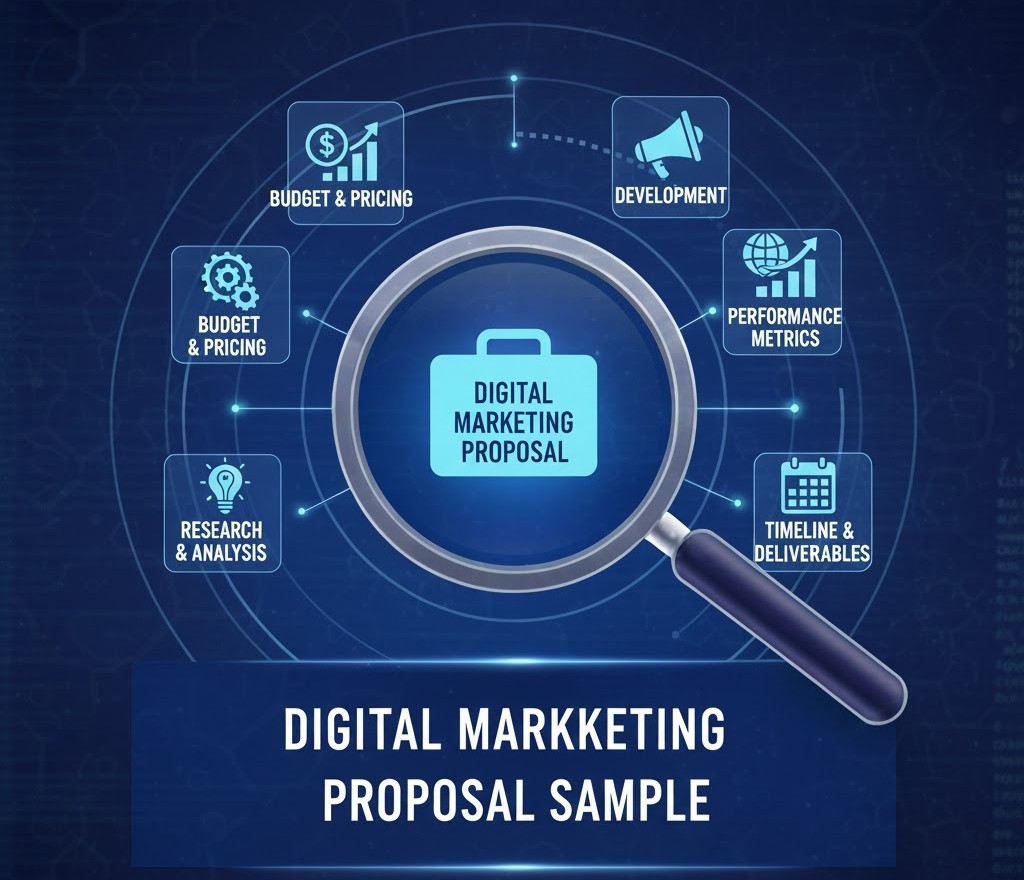
Digital Marketing Proposal Sample
Introduction
Imagine you’ve just learned the basics of digital marketing. You understand social media, SEO, paid ads, and content marketing. Now a client or maybe even a class assignment asks you for a digital marketing proposal. Suddenly, everything feels overwhelming. What should go into it? How formal should it be? And how do you explain marketing strategies to someone who may not understand the technical details?
This is a common moment of confusion for students and beginners. A digital marketing proposal isn’t just a document it’s a bridge between your ideas and a client’s business goals. It shows how you think, how you plan, and how you solve problems using digital marketing.
In this article, you’ll learn what a digital marketing proposal really is, why it matters, and how to create one step by step. We’ll walk through each section, explain the reasoning behind it, and share a practical sample-style structure you can adapt for your own use. By the end, you’ll understand not just what to write, but why each part exists and how it fits into the real-world digital marketing process.
What a Digital Marketing Proposal Really Is
At its core, a digital marketing proposal is a strategic plan presented in written form. It explains how you intend to help a business achieve specific goals such as more website traffic, leads, or sales using digital channels.
For beginners, it’s important to understand that a proposal is not:
-
A sales pitch full of buzzwords
-
A list of services copied from a website
-
A technical report filled with jargon
Instead, a strong proposal is a clear, structured explanation of three things:
-
The client’s problem
-
Your proposed solution
-
The expected outcome
Think of it as a roadmap. You’re showing the client where they are now, where they want to go, and how you’ll help them get there using digital marketing.
Why Digital Marketing Proposals Matter (Especially for Students)
Many students focus only on learning tools SEO plugins, ad platforms, analytics dashboards. While those are useful, proposals teach something deeper: strategic thinking.
Writing proposals helps you learn how to:
-
Analyze a business and its market
-
Connect marketing tactics to business goals
-
Communicate ideas clearly to non-marketers
-
Position yourself as a professional, not just a learner
In real agencies and freelance work, proposals often decide whether you get the project at all. Even entry-level roles value candidates who can think strategically and explain their ideas well.
Core Components of a Digital Marketing Proposal
While proposals can vary in length and style, most effective ones follow a similar structure. Below is a beginner-friendly breakdown of each section, explained in simple terms.
1. Proposal Overview or Introduction
This is the first section your reader sees, and it sets the tone for everything that follows.
What this section does
-
Briefly introduces who you are
-
Shows that you understand the client’s situation
-
Summarizes what the proposal will cover
What to include
-
A short introduction to your role or agency
-
A one-paragraph summary of the client’s challenge
-
A high-level overview of your proposed solution
Example (conceptual):
You might explain that the client is struggling with low online visibility, inconsistent leads, or poor engagement, and that your proposal outlines a structured digital marketing strategy to address these issues over a defined period.
2. Understanding the Client’s Business and Goals
This section proves that you’ve done your homework.
Why it matters
Clients don’t want generic marketing plans. They want solutions that fit their business. This section shows empathy and research.
What to cover
-
Brief description of the client’s business
-
Target audience overview
-
Industry or competitive challenges
-
Clear business goals (traffic, leads, sales, brand awareness)
For students, this can be based on:
-
A fictional business (for practice)
-
A real small business website
-
A case study provided by your instructor
3. Problem Statement: What’s Not Working Right Now
Before offering solutions, you need to clearly define the problem.
Common digital marketing problems
-
Website not ranking on search engines
-
Low engagement on social media
-
Poor conversion rates
-
Inconsistent branding across platforms
-
Over-reliance on paid ads without long-term strategy
Beginner takeaway
Don’t criticize the client. Frame problems as opportunities for improvement. Use neutral, professional language.
4. Proposed Digital Marketing Strategy
This is the heart of your digital marketing proposal. It explains how you plan to solve the problems identified earlier.
Break this section into clear subsections so it’s easy to read.
SEO Strategy Overview
Explain how search engine optimization will help improve visibility and long-term traffic.
You might include:
-
Keyword research basics
-
On-page optimization plans
-
Content improvements
-
Technical fixes at a high level
Focus on outcomes, not technical details. Clients care about results, not algorithms.
Content Marketing Plan
Here, explain how content will support the overall strategy.
Discuss:
-
Blog posts or articles
-
Website content improvements
-
Educational or informational content
-
How content supports SEO and trust
For students, this shows you understand how content and marketing work together.
Social Media Marketing Approach
Explain:
-
Which platforms are relevant
-
Type of content to be shared
-
Posting consistency
-
Engagement goals
Avoid listing every platform. Choose based on the audience.
Paid Advertising (If Applicable)
If paid ads are part of the proposal:
-
Explain the purpose (traffic, leads, testing)
-
Mention platforms like Google Ads or social ads
-
Emphasize budget control and measurement
5. Timeline and Phases
Clients—and instructors—want to know when things will happen.
How to explain it simply
Divide the project into phases, such as:
-
Initial research and setup
-
Implementation
-
Optimization and monitoring
You don’t need exact dates. A general timeline shows planning and realism.
6. Measurement and Reporting
This section answers a critical question: How will success be measured?
Explain:
-
Key performance indicators (KPIs)
-
Examples like traffic growth, leads, rankings, or engagement
-
Reporting frequency (monthly, quarterly)
For beginners, this shows you understand accountability, not just execution.
7. Budget or Pricing Overview (Optional for Students)
In academic or practice proposals, pricing may be hypothetical.
If included:
-
Explain what the budget covers
-
Connect cost to value, not hours
-
Keep it simple and transparent
Even a basic estimate helps you practice real-world thinking.
8. Why You or Your Team Are a Good Fit
This is where you build credibility.
As a student or beginner, focus on:
-
Relevant coursework or certifications
-
Practical projects or case studies
-
Your approach to learning and improvement
You don’t need decades of experience to sound professional. Honesty and clarity go a long way.
Common Myths Beginners Believe About Digital Marketing Proposals
Many students struggle because of misconceptions.
Myth 1: Proposals must be very long
Clarity matters more than length.
Myth 2: You need advanced technical knowledge
Strategy and communication are more important.
Myth 3: One proposal works for all clients
Every proposal should be customized.
Practical Skills Students Should Start Learning Today
If you want to get better at writing proposals, focus on these skills:
-
Basic business analysis
-
Clear writing and structure
-
Understanding customer intent
-
Explaining complex ideas simply
-
Connecting tactics to goals
These skills are valuable across all digital marketing roles.
How Digital Marketing Proposal Skills Help Your Career
Knowing how to write proposals opens doors.
You’ll be better prepared for:
-
Agency roles
-
Freelancing
-
Client presentations
-
Strategy interviews
-
Entrepreneurship
Even if you never write proposals full-time, the thinking process behind them will shape how you approach marketing problems.
FAQs: Digital Marketing Proposal Questions Students Ask
What is a digital marketing proposal in simple words?
It’s a document that explains how you plan to use digital marketing to help a business achieve its goals.
Do students really need to learn proposal writing?
Yes. It builds strategic thinking, communication skills, and professional confidence.
How long should a digital marketing proposal be?
It depends on the project, but clarity is more important than length. Even 3–5 pages can be effective.
Can I use a sample digital marketing proposal to learn?
Yes, but always customize it. Samples are guides, not templates to copy blindly.
Is a proposal the same as a digital marketing plan?
They are closely related, but a proposal is written for approval, while a plan is for execution.
Conclusion
A digital marketing proposal is more than an academic exercise or a client requirement. It’s a way of thinking. When you learn to write one well, you learn how to understand businesses, define problems, and design solutions that make sense in the real world.
For students and beginners, mastering proposals can feel challenging at first but it’s one of the most valuable skills you can develop early in your digital marketing journey. It forces you to slow down, think strategically, and communicate clearly.
As digital marketing continues to evolve, professionals who can combine practical skills with clear strategic thinking will always stand out. Start practicing now, experiment with sample proposals, and treat every attempt as a step toward becoming a confident digital marketing professional.
Tags :
No Tags

0 Comments