



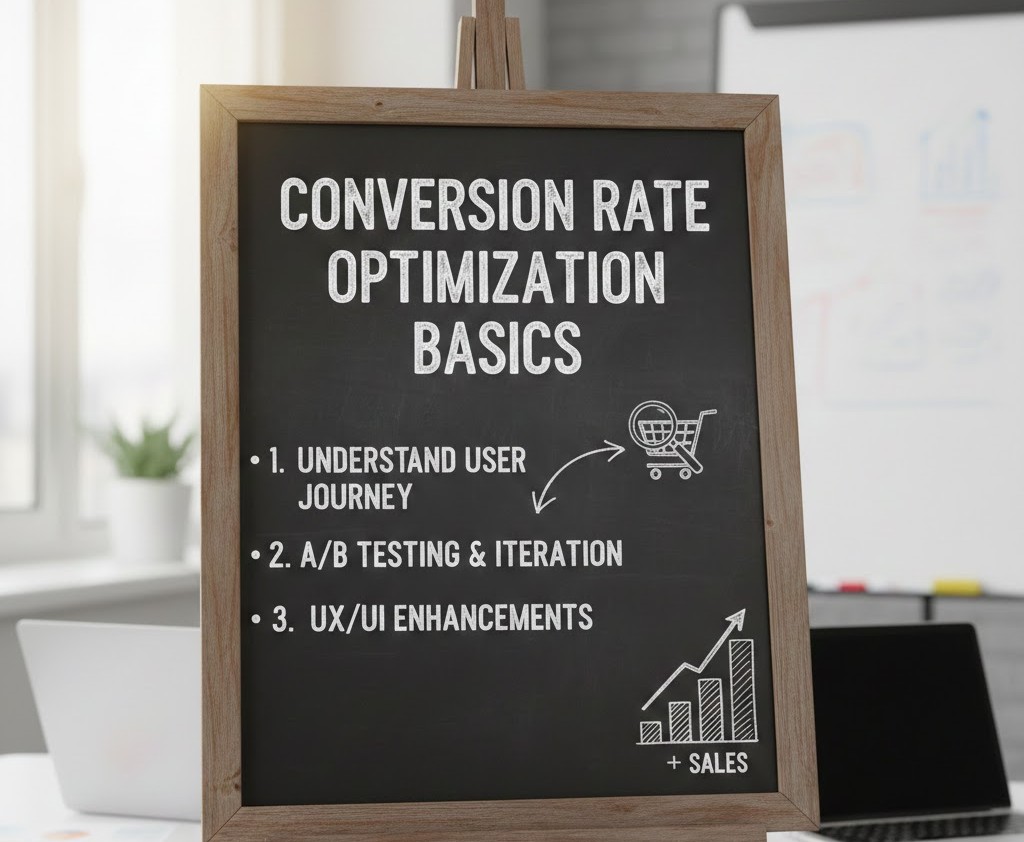
Conversion Rate Optimization Basics
Introduction
Imagine this: you run a small online store. Hundreds of people visit your website every day, scroll through your products, and then… leave without buying anything. The traffic looks great on paper, but sales remain disappointing. This is one of the most common frustrations in digital marketing, and it’s exactly where Conversion Rate Optimization (CRO) comes in.
For students and beginners, CRO can sound technical or intimidating. In reality, it’s one of the most practical and human-focused areas of digital marketing. At its core, CRO is about understanding why people behave the way they do online and using that understanding to gently guide them toward taking action, whether that’s signing up for a newsletter, downloading an app, or making a purchase.
In today’s competitive digital landscape, driving traffic is no longer enough. Businesses want results, not just visitors. This is why CRO matters so much, especially for students who want real, job-ready skills. In this guide, you’ll learn what conversion rate optimization really means, how it works in practice, common beginner mistakes, and how you can start building CRO skills today even with limited experience.
What Conversion Rate Optimization Really Means (Beyond the Definition)
Most definitions say something like: Conversion Rate Optimization is the process of increasing the percentage of website visitors who take a desired action. While accurate, this explanation barely scratches the surface.
In practice, CRO is about reducing friction and increasing clarity. Every website asks visitors to make small decisions:
-
Should I trust this site?
-
Is this product right for me?
-
Is it worth my time or money?
CRO focuses on removing doubt at each of these moments. It blends psychology, design, copywriting, and data analysis to make digital experiences feel intuitive and trustworthy.
For beginners, it’s helpful to think of CRO as:
-
Improving how a website communicates
-
Making actions easier and clearer
-
Aligning business goals with user needs
Unlike some marketing tactics, CRO doesn’t rely on guessing. It relies on observation, testing, and learning what actually works for real people.
How Conversions Work on Websites (In Simple Terms)
Before optimizing conversions, you need to understand how users typically move through a website. This journey is often called a conversion funnel.
The Basic Conversion Funnel
-
Awareness – A user arrives from a search engine, social media, or an ad.
-
Interest – They explore content, products, or services.
-
Decision – They compare options or look for reassurance.
-
Action – They convert: buy, sign up, or contact you.
At each step, users can drop off. CRO focuses on identifying where and why this happens.
For example:
-
A slow-loading page may stop users at step one.
-
Confusing navigation may kill interest.
-
Weak copy may prevent decision-making.
-
A complicated form may block action.
Understanding this flow helps students see CRO as a structured problem-solving process, not guesswork.
Key Components of Conversion Rate Optimization
User Research: Understanding Real People
Good CRO always starts with understanding users. This means going beyond assumptions and listening to what visitors are telling you through their behavior.
Beginner-friendly research methods include:
-
Analyzing page bounce rates and exit pages
-
Reading customer reviews or feedback emails
-
Watching session recordings or heatmaps
-
Running simple on-site surveys
The goal is to uncover user intent and pain points. Why did they come? What confused them? What stopped them from converting?
On-Page CRO: Optimizing What Users See
On-page CRO focuses on elements directly visible to users.
Key areas include:
-
Headlines and copy: Clear, benefit-focused messaging matters more than clever wording.
-
Calls to action (CTAs): Buttons should be obvious, specific, and action-oriented.
-
Layout and design: Clean structure helps users scan and decide faster.
-
Trust signals: Testimonials, reviews, guarantees, and security badges reduce hesitation.
For students, this is where CRO feels most approachable. Small changes like rewriting a button from “Submit” to “Get My Free Guide”can lead to noticeable improvements.
Technical Factors That Affect Conversions
While CRO is often associated with design and psychology, technical performance plays a huge role.
Important technical factors include:
-
Page speed and load time
-
Mobile responsiveness
-
Broken links or errors
-
Form usability
Even the most persuasive page won’t convert if it loads slowly or breaks on mobile. CRO works best when technical basics are solid.
Testing and Experimentation
One of the defining features of CRO is testing. Instead of arguing over opinions, marketers test variations to see what performs better.
Common beginner-friendly tests:
-
A/B testing headlines or CTAs
-
Comparing short vs. long forms
-
Testing different page layouts
The key lesson for students is that CRO is about learning, not perfection. Even failed tests provide valuable insights.
How CRO Fits Into the Bigger Digital Marketing Picture
Conversion rate optimization doesn’t exist in isolation. It connects closely with other digital marketing disciplines.
-
SEO and CRO: SEO brings traffic; CRO makes that traffic valuable.
-
Paid advertising and CRO: Better conversion rates lower cost per acquisition.
-
Content marketing and CRO: High-quality content builds trust and moves users toward action.
-
Email marketing and CRO: Optimized landing pages amplify email results.
For beginners, this makes CRO a powerful multiplier skill. You’re not just improving one channel you’re improving the performance of everything connected to it.
Real-World Examples of CRO in Action
Consider an online course website struggling with low sign-ups.
Problem: Plenty of visitors, very few enrollments.
What they discovered:
-
Visitors didn’t understand who the course was for.
-
The pricing page caused confusion.
-
The sign-up process felt long and risky.
CRO improvements:
-
Clear audience-focused headline
-
Added student testimonials near the CTA
-
Simplified the registration form
-
Offered a money-back guarantee
Result: Conversion rate increased significantly without increasing traffic.
This example shows an important CRO principle: growth often comes from clarity, not persuasion.
Common CRO Myths Beginners Believe
“More traffic automatically means more conversions”
Not true. Poor user experience can waste even the best traffic.
“CRO is just about changing button colors”
Design details matter, but strategy and messaging matter more.
“You need advanced tools to do CRO”
While tools help, observation and critical thinking matter more at the beginner level.
“CRO is a one-time task”
CRO is an ongoing process of learning and improvement.
Understanding these myths helps students avoid frustration and unrealistic expectations.
Practical CRO Skills Students Should Start Learning Today
If you’re a student or beginner, focus on skills that build strong foundations:
-
Basic user psychology and decision-making
-
Website usability principles
-
Copywriting for clarity and benefits
-
Data interpretation (not advanced math)
-
Hypothesis-driven testing
You can practice CRO by:
-
Analyzing popular websites and landing pages
-
Redesigning mock pages for better clarity
-
Running small experiments on personal projects
These skills transfer easily across industries and job roles.
How CRO Careers and Opportunities Are Evolving
As digital competition increases, CRO skills are becoming more valuable not less.
Today, CRO professionals work as:
-
Conversion optimization specialists
-
UX-focused marketers
-
Growth marketers
-
Product optimization analysts
Businesses value CRO because it directly impacts revenue. For students, this means strong career potential, even without a technical background. CRO rewards curiosity, empathy, and critical thinking as much as technical knowledge.
Frequently Asked Questions About Conversion Rate Optimization
What is a good conversion rate for beginners?
It depends on the industry, but improvement matters more than benchmarks.
Is CRO only for eCommerce websites?
No. CRO applies to blogs, apps, SaaS products, and service websites.
Do I need coding skills to learn CRO?
Basic HTML helps, but it’s not required to get started.
How long does CRO take to show results?
Some changes show results quickly; others require longer testing cycles.
Can students practice CRO without real clients?
Yes. Personal projects, case studies, and mock redesigns are excellent practice.
Conclusion
Conversion rate optimization is one of the most practical and empowering skills in digital marketing. Instead of chasing more traffic or bigger budgets, CRO teaches you how to make better use of what you already have. It’s about understanding people, simplifying decisions, and building trust through thoughtful design and messaging.
For students and beginners, CRO offers a unique advantage. It doesn’t require expensive tools or years of experience to start learning. What it requires is curiosity, patience, and a willingness to test and learn from real behavior.
As digital platforms continue to grow, the ability to turn attention into action will only become more valuable. By learning CRO basics now, you’re not just improving websites you’re building a long-term skill that can shape your career in meaningful ways.
Tags :
No Tags

0 Comments