



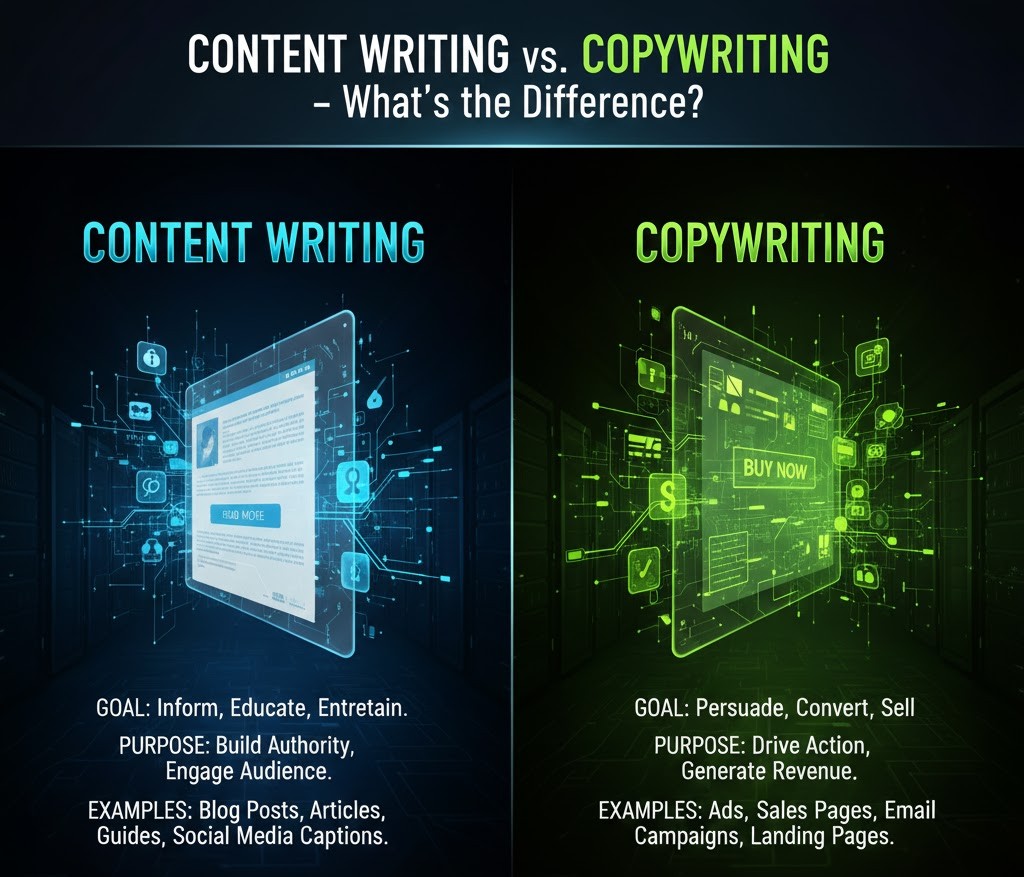
Content Writing vs. Copywriting – What’s the Difference?
Introduction
If you’ve ever Googled “how to become a writer,” you’ve probably seen two terms pop up everywhere: content writing and copywriting. At first glance, they sound like the same job after all, both involve writing. But in the world of digital communication and modern marketing, the differences between the two are significant and worth understanding, especially if you're a student planning a career in writing, marketing, or communications.
The distinction matters because businesses today rely heavily on words. The right words can help a brand educate, connect, persuade, or sell. Knowing whether you’re more aligned with content writing or copywriting can determine what skills you should develop, what jobs fit you best, and even how much you can earn.
In this comprehensive guide, you’ll learn the true difference between content writing and copywriting through examples, expert perspectives, real-world scenarios, and practical tips. We’ll dive into the purpose of each, explore where they overlap, break down their skills, salaries, and career paths, and help you confidently choose the one that matches your strengths.
Content Writing vs. Copywriting: What’s the Difference?
What Is Content Writing?
Content writing focuses on informing, educating, or entertaining an audience. The key objective is providing value, not directly selling.
Content writers create materials that help build trust, establish a brand’s authority, or guide readers through a topic. According to the Content Marketing Institute, high-quality content increases brand credibility and long-term audience retention—core goals of modern marketing.
Types of content writers produce:
-
Blog posts
-
Articles
-
Tutorials and how-to guides
-
Case studies
-
Email newsletters
-
E-books
-
Whitepapers
-
Social media captions (non-sales focused)
Purpose of content writing:
-
Educate readers
-
Improve search visibility
-
Build long-term relationships
-
Demonstrate expertise
-
Support brand storytelling
Real-world example:
A healthcare brand publishing an article titled “10 Tips for Better Sleep” is doing content writing. The purpose isn’t to sell something immediately, but to earn trust and provide actionable information.
What Is Copywriting?
Copywriting, on the other hand, is persuasive writing designed to motivate action. That action could be making a purchase, signing up for a newsletter, clicking a button, or requesting a quote.
The American Marketing Association notes that persuasive messaging is a critical part of revenue-driven marketing, and that’s exactly what copywriters specialize in.
Types of copywriters produce:
-
Advertisements
-
Landing page copy
-
Sales pages
-
Product descriptions
-
Social media ads
-
Taglines and slogans
-
Email sales sequences
-
Website homepage copy
Purpose of copywriting:
-
Drive sales
-
Influence buying decisions
-
Trigger emotional responses
-
Encourage quick action
-
Convert readers into customers
Real-world example:
A landing page headline like “Sleep Better Tonight Your Perfect Mattress Awaits” is classic copywriting. It’s short, emotional, and designed to get the reader to buy.
Core Differences: Content Writing vs. Copywriting
Below is a clear, student-friendly breakdown:
| Feature | Content Writing | Copywriting |
|---|---|---|
| Primary Goal | Educate, inform, engage | Persuade & sell |
| Tone | Informative, conversational | Emotional, concise, compelling |
| Style | Long-form, detailed, research-heavy | Short-form, punchy, action-driven |
| Metrics of Success | Page views, dwell time, engagement, SEO | Conversions, sales, CTR, ROI |
| Typical Length | 800–2,500+ words | 5–300 words |
| Where Used | Blogs, newsletters, guides | Ads, landing pages, product pages |
| Time Horizon | Long-term brand growth | Immediate action |
Why Students Often Confuse the Two
Students entering the digital space often mix up content writing and copywriting because the two involve similar tools writing, research, tone, structure but the purpose behind each is different.
A helpful analogy is:
-
Content writing is like teaching.
-
Copywriting is like selling.
Both require communication skills, clarity, empathy, and creativity. But the outcome they aim for is dramatically different.
Skills Required for Content Writing
Content writing demands a wide skill set that blends research, creativity, SEO expertise, and storytelling.
1. Strong Research Ability
Whether writing about AI, finance, or lifestyle tips, content writers must extract accurate information. Reputable sources such as Harvard Business Review, Forbes, or government data are often referenced.
2. SEO Knowledge
Search engine optimization is essential, especially with Google’s 2024–2025 updates prioritizing Helpful Content, author expertise, and user-first writing. Content writers must:
-
Use semantic keywords
-
Structure content logically
-
Maintain strong readability
-
Optimize for featured snippets
3. Long-Form Attention Span
Content writers produce well-organized articles that sometimes exceed 2,000 words.
4. Storytelling Skills
Readers stay longer when the writing feels human and personal. Students who enjoy explaining concepts often excel at this.
5. Patience and Consistency
Content marketing is a long-term game. Results appear gradually, not instantly.
Skills Required for Copywriting
Copywriting is an art of precision. Every word must justify its presence.
1. Understanding Human Psychology
Copywriters learn what motivates people to click, buy, or take action. Techniques often come from behavioral science frameworks like:
-
FOMO (Fear of Missing Out)
-
Social proof
-
Reciprocity
-
Scarcity
-
Authority
2. Emotional Intelligence
Copywriting connects quickly. It speaks to the reader's desires, pains, or aspirations.
3. Ability to Write Concisely
Copywriters often reduce a big idea into a short, persuasive sentence.
4. Creativity with Constraints
Headlines, email subject lines, and slogans must grab attention instantly.
5. Performance Mindset
Copywriters track conversion rates, A/B tests, and ROI. It's a data-driven career.
Examples to Clearly Show the Difference
Example Topic: Healthy Eating
Content writing version:
A 1,200-word article explaining the benefits of eating whole foods, backed by studies, recipes, and expert opinions.
Copywriting version:
A Facebook ad that says: “Transform your health in 7 days Get your meal plan today!”
Example Topic: Fitness App
Content writing version:
A blog post: “How to Stay Motivated to Work Out When You’re Busy.”
Copywriting version:
A landing page headline: “Your Fitness Habit Starts Today Try the App Free!”
These examples show the different emotional tone and business objectives of each style.
Do Content Writers Make More Money, or Do Copywriters?
While both fields offer strong earning potential, industry reports (HubSpot, Semrush, Glassdoor) show that copywriters often earn more, especially in:
-
Direct response marketing
-
High-ticket sales pages
-
Email funnels
-
Ad campaigns
This is because copywriting directly impacts revenue, so businesses are willing to pay more for measurable conversions.
Typical earning comparison (US-based):
-
Content writers: $40,000–$75,000/year
-
Copywriters: $55,000–$120,000/year
-
Freelance copywriters: Can charge $150–$500/hour for high-impact projects
However, skilled content writers with niche expertise (AI, finance, healthcare) can also earn premium rates.
Which Career Path Should Students Choose?
Your personality and strengths can guide the choice:
Choose content writing if you:
-
Enjoy research
-
Love explaining topics
-
Prefer long-form writing
-
Like storytelling
-
Want to build authority through education
Choose copywriting if you:
-
Like psychology and persuasion
-
Enjoy creative writing
-
Prefer short, impactful pieces
-
Want to work in advertising
-
Thrive on measurable performance (sales, conversions)
You can also do both
Many professional writers blend the two, especially in digital marketing roles.
How Content Writing and Copywriting Work Together
A successful business uses both:
-
Content writing builds trust → brings the audience in
-
Copywriting converts the audience → generates sales
Think of it like this:
Content attracts attention; copywriting transforms that attention into action.
A blog post may attract readers through Google search (content writing).
A landing page may convert those visitors into customers (copywriting).
Both are essential in a holistic marketing ecosystem.
Actionable Tips for Students Who Want to Start Either Career
1. Build a Portfolio
Start writing on topics you enjoy. Even 3–5 sample pieces can help you stand out.
2. Learn the Basics of SEO
Google’s Helpful Content and Core Updates now reward:
-
Expertise
-
Real-world experience
-
Clear value
-
Original insights
3. Practice Writing Daily
Even 10–20 minutes a day improves your style and confidence.
4. Follow Industry Experts
Such as:
-
Ann Handley
-
Neil Patel
-
Joanna Wiebe (copywriting pioneer)
-
Copyblogger
5. Study Real Ads and Articles
Analyze what works tone, structure, storytelling, emotional appeal.
6. Use Real-Life Observations
Pay attention to slogans, emails, push notifications, and blog articles. They’re all examples of writing in the wild.
Tags :
No Tags

0 Comments