



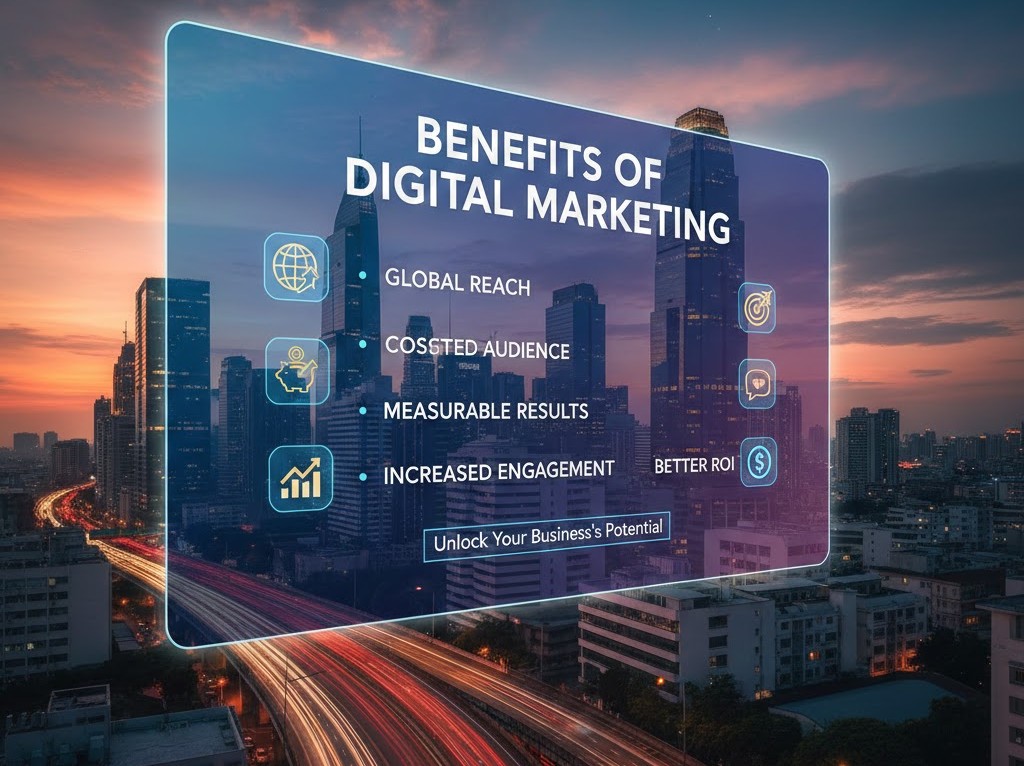
Benefits of Digital Marketing
Introduction
Think about the last time you wanted to buy something, learn a new skill, or find a local service. Chances are, you searched on Google, scrolled through social media, or watched a short video explaining your options. This everyday behavior highlights a powerful truth: marketing has moved where people spend their time online. For students and beginners, understanding digital marketing is no longer optional; it’s a practical life and career skill.
Digital marketing matters today because it connects businesses and audiences in faster, more measurable, and more cost-effective ways than traditional marketing ever could. Whether you dream of launching your own startup, freelancing online, or working for a global company, digital marketing knowledge gives you an edge. It helps you understand how brands grow, how customers make decisions, and how technology shapes modern communication.
In this article, you’ll learn what digital marketing really means beyond buzzwords, how core channels like SEO work, and why digital marketing skills are valuable for students right now. We’ll break down concepts simply, share real-world examples, clear up common myths, and explain how digital marketing careers are evolving. By the end, you’ll see digital marketing not as a confusing trend but as a long-term opportunity.
What Digital Marketing Really Means (Beyond Definitions)
Digital marketing is often described as “marketing using digital channels,” but that definition barely scratches the surface. In practice, digital marketing is about understanding online behavior and using that insight to communicate value at the right time and place.
At its core, digital marketing focuses on:
-
How people search for information
-
How they interact with content
-
How trust is built online
-
How data guides smarter decisions
Unlike traditional marketing such as TV ads or billboards digital marketing is interactive. People can click, comment, share, and respond instantly. This two-way communication allows brands to learn from audiences and adjust strategies in real time.
For students, this is powerful. You’re not just learning how to “promote something,” but how psychology, technology, and creativity work together. Digital marketing teaches you how the internet economy functions and that knowledge applies to almost every modern career.
How Search Engines Work (In Simple Terms)
Search engines are a central part of digital marketing, especially through SEO (Search Engine Optimization). Understanding them helps explain why digital marketing is so effective.
Search engines work in three basic steps:
-
Crawling – Bots scan websites and discover new pages
-
Indexing – Content is stored and organized
-
Ranking – Pages are ordered based on relevance and quality
When someone types a question into Google, the search engine’s goal is to deliver the most helpful answer, not the most popular brand. That’s why digital marketing rewards clarity, usefulness, and trust.
For beginners, this highlights a key benefit: digital marketing isn’t just about big budgets. It’s about providing value. A well-written blog post or helpful video can outperform expensive ads if it truly answers user needs.
Key Components of Digital Marketing (And Their Benefits)
Digital marketing isn’t one skill it’s a system of connected channels. Each plays a role, and together they create long-term growth.
On-Page SEO: Making Content Useful and Clear
On-page SEO focuses on what’s on your website:
-
Content quality
-
Headings and structure
-
Keywords used naturally
-
User experience
The benefit here is clarity. On-page SEO teaches students how to communicate ideas clearly, organize information, and write with the reader in mind. These skills apply to blogging, academic writing, and professional communication.
Technical SEO: Building Strong Foundations
Technical SEO includes:
-
Website speed
-
Mobile responsiveness
-
Site structure
-
Security (HTTPS)
While it sounds technical, the benefit is understanding how technology affects visibility. Students gain insight into how websites function behind the scenes valuable knowledge in a digital-first job market.
Off-Page SEO: Trust and Authority
Off-page SEO is about reputation:
-
Backlinks from other websites
-
Brand mentions
-
Online reviews
This shows how trust works online. Digital marketing teaches that credibility isn’t claimed it’s earned. For students, this mirrors real-life networking and reputation-building skills.
How Digital Marketing Fits into the Bigger Picture
SEO is just one piece of digital marketing. The real power comes from how channels work together:
-
Content marketing educates and informs
-
Social media marketing builds community
-
Email marketing nurtures relationships
-
Paid ads provide quick visibility
-
Analytics guide decisions
The benefit of digital marketing is integration. You learn how different platforms support each other. For example, a blog post optimized for search can be shared on social media, promoted via email, and tracked through analytics to improve future content.
This holistic thinking is valuable in any profession not just marketing.
Real-World Examples of Digital Marketing Benefits
Consider a small online course creator. Instead of spending thousands on ads, they publish helpful blog posts answering common student questions. Over time, these posts rank on Google, attract organic traffic, and build trust. Sales grow without massive budgets.
Or think of a local café that uses Instagram to share behind-the-scenes stories, Google Maps for visibility, and email offers for loyal customers. Digital marketing helps them compete with larger chains.
For students, these examples show a key benefit: digital marketing levels the playing field. Creativity and strategy matter more than size.
Common Digital Marketing Myths Beginners Believe
Many beginners hesitate because of misconceptions:
-
“Digital marketing is just social media.”
In reality, it includes SEO, content, data, email, and strategy. -
“You need advanced technical skills.”
Many skills start with writing, research, and critical thinking. -
“Results are instant.”
Digital marketing rewards consistency, not shortcuts.
Understanding these myths helps students approach learning with realistic expectations and confidence.
Practical Digital Marketing Skills Students Should Learn Today
Digital marketing offers practical, job-ready skills that can be learned step by step:
-
Writing clear, helpful content
-
Basic keyword and audience research
-
Understanding analytics and metrics
-
Creating simple campaigns
-
Evaluating online credibility
The benefit is flexibility. These skills can be used for personal projects, freelancing, internships, or full-time roles. Even students in non-marketing fields benefit from knowing how digital visibility works.
How Digital Marketing Careers Are Evolving
Digital marketing careers are expanding, not shrinking. Roles now include:
-
SEO specialist
-
Content strategist
-
Social media manager
-
Digital analyst
-
Growth marketer
What’s changing is the emphasis on strategy and understanding, not just tools. Employers value people who can think critically, adapt, and communicate clearly.
For students, digital marketing offers diverse paths. You can specialize, freelance, work remotely, or combine marketing with other interests like design, education, or technology.
Frequently Asked Questions About Digital Marketing
Is digital marketing hard to learn for beginners?
No. While it has many parts, digital marketing is beginner-friendly when learned step by step. Many concepts build on common sense and curiosity.
How long does it take to see results in digital marketing?
Some channels like paid ads work quickly, while SEO and content take time. The long-term benefit is sustainable growth.
Do I need coding skills for digital marketing?
Basic technical understanding helps, but coding is not required for most entry-level roles.
Is digital marketing a good career for students?
Yes. It offers flexibility, global opportunities, and skills that remain relevant across industries.
Conclusion
Digital marketing is more than a trend it’s a reflection of how modern life works. People search, scroll, compare, and decide online, and digital marketing connects those moments with meaningful communication. For students and beginners, the benefits go beyond job opportunities. You gain practical skills, strategic thinking, and a deeper understanding of the digital world.
By learning digital marketing, you’re not just preparing for a career you’re learning how influence, trust, and value are built online. Whether you apply these skills to a business, a personal project, or a future profession, they grow with you.
The digital world isn’t slowing down. The earlier you understand it, the more confidently you can shape your place within it.
Tags :
No Tags

0 Comments